

A Complete Guide to Visiting Yellowstone National Park
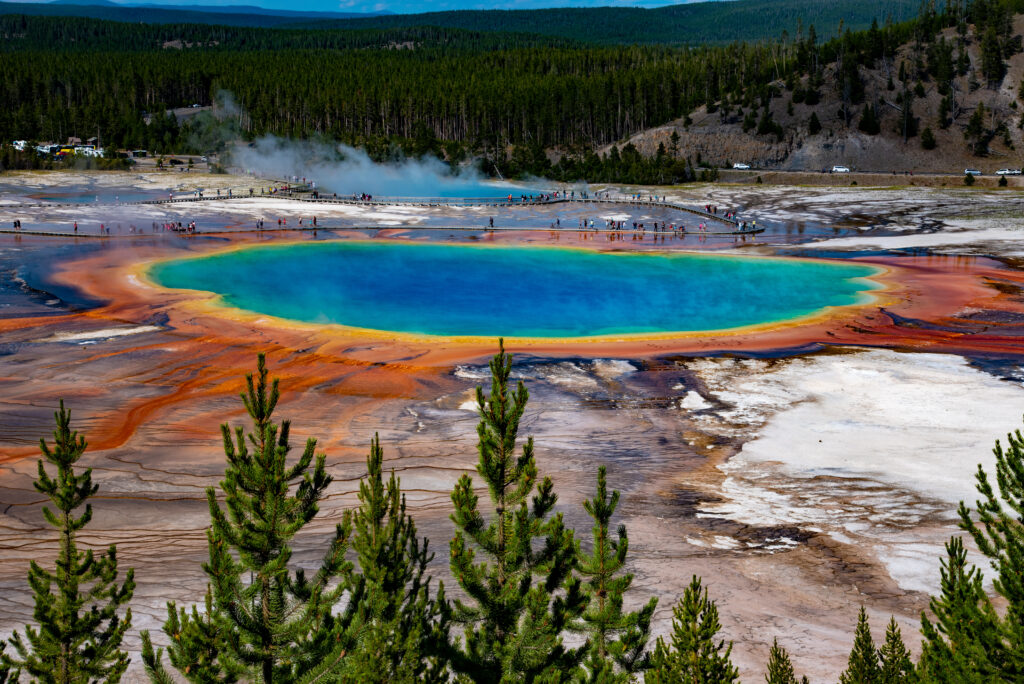
Yellowstone National Park is one of those places that almost feels impossible until you see it for yourself. That’s where this Yellowstone National Park visitor guide comes in! Geysers erupt from the ground. Brilliant blue and orange hot springs look almost unreal. Huge herds of bison wander through wide-open valleys. Wolves move across the landscape in the distance. Waterfalls plunge into colorful canyons. And beneath all of it sits one of the largest active volcanic systems in the world. Established in 1872, Yellowstone became the world’s first national park—and more than 150 years later, it is still one of the most extraordinary places in America. But Yellowstone is also much bigger and more complicated to plan than many first-time visitors expect. The park covers more than 2 million acres, has five entrances, hundreds of miles of roads, several major geothermal regions, huge wildlife valleys, and enough things to do that you could easily spend a full week here. This free Yellowstone National Park visitor guide covers the basics you need to start planning, including: The best time to visit The main areas of Yellowstone How to get there and get around The top things to do A few of the best hikes and walks How much time you need Where to stay Wildlife safety What to pack For the full planning breakdown, our Premium Yellowstone National Park Ultimate Guide includes the exact 3-day itinerary, regional planning strategy, complete hike and boardwalk profiles, wildlife-viewing advice, detailed lodging options, photography tips, road and entrance information, and everything you need to confidently organize your trip. 👉 Grab the complete Yellowstone National Park Ultimate Guide in our shop and take the stress out of planning your adventure. About Yellowstone National Park Yellowstone National Park covers approximately 2.2 million acres across Wyoming, Montana, and Idaho, with most of the park located in Wyoming. The park is famous for: Old Faithful Grand Prismatic Spring The Grand Canyon of the Yellowstone Lamar Valley Hayden Valley Mammoth Hot Springs Yellowstone Lake Hundreds of geysers and hot springs Bison, wolves, grizzly bears, elk, and other wildlife Nearly everything that makes Yellowstone unique connects back to the volcanic system beneath the park. The heat underground powers an incredible collection of: Geysers Hot springs Mudpots Fumaroles Yellowstone contains more geothermal features than anywhere else on Earth and roughly half of the world’s known geysers. But what surprises many first-time visitors most is not the geology. It is the size. Yellowstone is not one compact destination where every attraction sits close together. The roads form a large figure-eight through several different regions, and driving between them can take much longer than it appears on a map. That is why a realistic plan matters so much here. Before visiting, remember to follow Leave No Trace principles, respect wildlife, stay on designated trails, and never step off the boardwalk in a thermal area. The ground around geothermal features can look completely solid while hiding scalding water and dangerously thin crust underneath. The Main Areas of Yellowstone National Park You do not need to memorize the entire park before your trip, but understanding the major regions will make planning much easier. Old Faithful and the Upper Geyser Basin For most first-time visitors, this is the classic Yellowstone experience. Old Faithful is the park’s most famous geyser, but the surrounding Upper Geyser Basin contains much more than one eruption. You will also find: Geothermal boardwalks Hot springs Other major geysers Historic Old Faithful Inn Visitor services Dining and lodging One of the biggest mistakes visitors make is watching Old Faithful erupt and immediately leaving. The larger basin is absolutely worth exploring. Grand Prismatic Spring and the Midway Area Grand Prismatic Spring is one of Yellowstone’s most recognizable landmarks. The brilliant blue center and rings of yellow, orange, and green create one of the most incredible natural landscapes in the park. There are different ways to experience the spring, including: A closer boardwalk view An elevated view from a nearby trail Each gives you a completely different perspective. The full premium guide explains how to work this area into your day without duplicating unnecessary driving. The Grand Canyon of the Yellowstone The Yellowstone River carved a dramatic canyon filled with yellow, orange, and pink rock. This area is known for: Upper Falls Lower Falls Artist Point North Rim viewpoints South Rim viewpoints Short hikes and overlooks It is one of the most visually dramatic areas in the entire park. Do not treat it as one quick roadside photo stop. Lamar Valley Lamar Valley is one of the greatest wildlife-viewing destinations in the United States. Visitors come here hoping to see: Wolves Bison Grizzly bears Pronghorn Coyotes Other wildlife The valley is especially popular with serious wildlife watchers carrying: Binoculars Spotting scopes Long camera lenses Early mornings and evenings are generally the most rewarding. Hayden Valley Hayden Valley is another major wildlife corridor. Large bison herds are common, and wildlife frequently creates traffic backups. Because Hayden Valley is more centrally located than Lamar Valley, it can be easier to combine with other sightseeing areas. Just remember that a road that looks like a short drive on a map can become a much longer one when a herd of bison decides to stand in the road. Mammoth Hot Springs Mammoth looks completely different from Yellowstone’s other thermal areas. Instead of colorful pools and erupting geysers, hot water flowing through limestone creates enormous white, orange, and cream-colored travertine terraces. The Mammoth area is also known for: Historic Fort Yellowstone Elk Nearby lodging The North Entrance Year-round vehicle access from Gardiner Yellowstone Lake and West Thumb Yellowstone Lake is one of the largest high-elevation lakes in North America. Nearby West Thumb Geyser Basin combines: Hot springs Geysers Lake views Mountain scenery This area works especially well for travelers moving between Yellowstone and Grand Teton National Park. Best Time to Visit Yellowstone is open year-round, but each season offers a completely different experience. Spring: April–May Spring is one of the best