
Mount Rainier National Park Guide: Paradise, Sunrise, Wildflowers, Hikes & 2026 Planning Tips
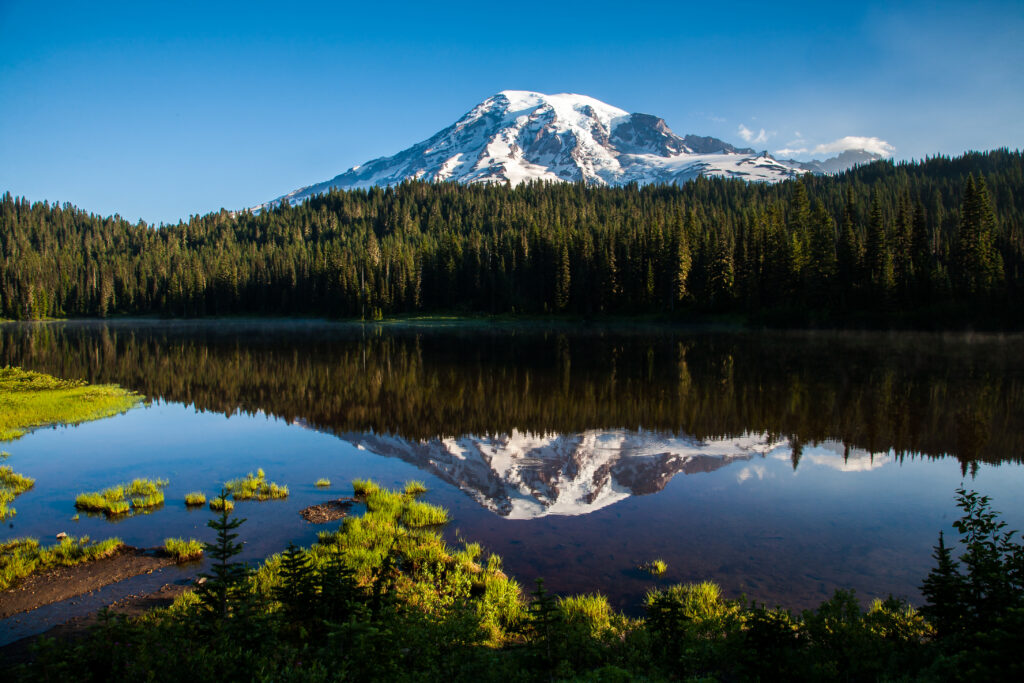
Mount Rainier National Park is one of the most breathtaking national parks in the Pacific Northwest. This is where you’ll find wildflower meadows, glacier views, old-growth forests, waterfalls, historic lodges, alpine hikes, and one of the most iconic mountain views in the country. But Mount Rainier is also one of those parks that can be a little tricky to plan. The park is huge, the entrances are spread out, the roads are seasonal, weather can change quickly, and different areas of the park feel like completely different experiences. Paradise is famous for wildflowers and iconic mountain views. Sunrise is the highest point in the park you can drive to. Longmire is the historic year-round area. Ohanapecosh is known for old-growth forest, but has major 2026 closures. Carbon River and Mowich Lake are beautiful, but access is extremely limited in 2026. That’s where this Mount Rainier National Park guide comes in. This free guide gives you a strong starting point for planning your trip, including: The best time to visit Mount Rainier Important 2026 access updates How to get there Which entrance to use The best areas of the park Easy hikes and scenic stops Where to stay Camping basics Family tips Photography spots What to pack Common planning mistakes For the full planning breakdown, our Ultimate Mount Rainier National Park Guide 2026 includes detailed area comparisons, trail spotlights, sample itineraries, lodging strategy, camping notes, family tips, photography locations, safety advice, packing lists, and quick-reference planning tools. 👉 Grab the complete Mount Rainier National Park Guide in our shop and plan your Washington adventure with confidence. About Mount Rainier National Park Mount Rainier National Park is located in west-central Washington, about 60 miles southeast of Seattle. The park protects more than 236,000 acres of mountains, forests, rivers, waterfalls, glaciers, and alpine meadows. Mount Rainier itself rises to 14,410 feet and is the most glaciated peak in the contiguous United States. It’s also an active volcano. But for most visitors, the magic of Mount Rainier is not just the mountain itself — it’s the way the entire park changes as you move through it. At lower elevations, you’ll find old-growth forest, rivers, waterfalls, historic buildings, and mossy trails. Higher up, you’ll find wildflower meadows, glacier viewpoints, alpine ridges, snowfields, and huge mountain views. Mount Rainier is especially great for: Families Hikers Photographers Wildflower lovers Scenic road-trippers Pacific Northwest travelers National park lovers Anyone planning a Washington national parks trip But because the park is so seasonal, planning matters. A summer visit looks completely different than a fall, winter, or spring visit. Important 2026 Mount Rainier Access Updates Before planning your trip, there are several major 2026 updates you need to know. No timed-entry reservations in 2026 Mount Rainier is not requiring timed-entry reservations anywhere in the park for 2026. You still need a valid entrance pass, but you do not need to reserve a specific entry time. That said, popular parking lots still fill early — especially at Paradise and Sunrise on summer weekends. Sunrise Road and White River close October 1, 2026 For 2026, Sunrise Road and White River are scheduled to close for the season on October 1, 2026. That is earlier than some typical shoulder-season years. This matters if you’re planning a late September or early October trip and hoping to visit Sunrise. Ohanapecosh developed area is closed in 2026 The Ohanapecosh campground, visitor center, restrooms, picnic area, river access, and associated parking are closed for construction during the 2026 season. Grove of the Patriarchs remains closed The Grove of the Patriarchs Trail remains closed indefinitely after bridge damage from flooding. Silver Falls access is changed Silver Falls can still be reached in 2026, but not as the normal loop from Ohanapecosh Campground. The route is currently an out-and-back from the Grove of the Patriarchs parking area via the Eastside Trail. Carbon River and Mowich Lake are not normal day-trip options in 2026 Public vehicle access from SR 165 is blocked because the Fairfax Bridge is permanently closed. That means Carbon River, Mowich Lake, Tolmie Peak, and Spray Park are not standard drive-up day-trip options in 2026. 💡 Adventure Family Tip: Always check current park alerts before your trip. Mount Rainier changes quickly because of snow, construction, weather, and road conditions. Best Time to Visit Mount Rainier National Park The best time to visit Mount Rainier depends on what you want to see. July and August July and August are the most popular months. This is usually the best window for: Wildflowers Alpine hiking Sunrise access Paradise meadows Full summer facilities Clearer mountain views Family trips Wildflower bloom at Paradise often peaks from late July through mid-August, but exact timing depends on snowpack. This is also the busiest season, so arrive early. September September is one of the best months to visit Mount Rainier. Crowds start to thin, temperatures cool down, and fall color begins showing up in some areas. Sunrise and White River are scheduled to close October 1 in 2026, so September is your last realistic window for those areas. Late May and June Longmire and Paradise may be open, but higher trails can still be snow-covered. This can be a beautiful time to visit waterfalls and forested areas, but don’t expect full summer hiking access. October through April This is the winter and shoulder-season window. Longmire stays open year-round, and Paradise may be accessible depending on road and weather conditions. However, winter driving rules apply, and tire chains are required for all vehicles in the park from November 1 through May 1. Getting To and Around Mount Rainier Mount Rainier has several entrances, and choosing the right one is one of the most important parts of planning your trip. There is no simple loop road that lets you easily see everything in one quick drive. Mountain roads are slow, seasonal, and spread out. Main Entrances Nisqually Entrance Best for: Paradise Longmire Skyline Trail Myrtle Falls Nisqually Vista Paradise Inn First-time visitors This is the most