

Mount Rainier National Park is one of the most breathtaking national parks in the Pacific Northwest.
This is where you’ll find wildflower meadows, glacier views, old-growth forests, waterfalls, historic lodges, alpine hikes, and one of the most iconic mountain views in the country.
But Mount Rainier is also one of those parks that can be a little tricky to plan.
The park is huge, the entrances are spread out, the roads are seasonal, weather can change quickly, and different areas of the park feel like completely different experiences.
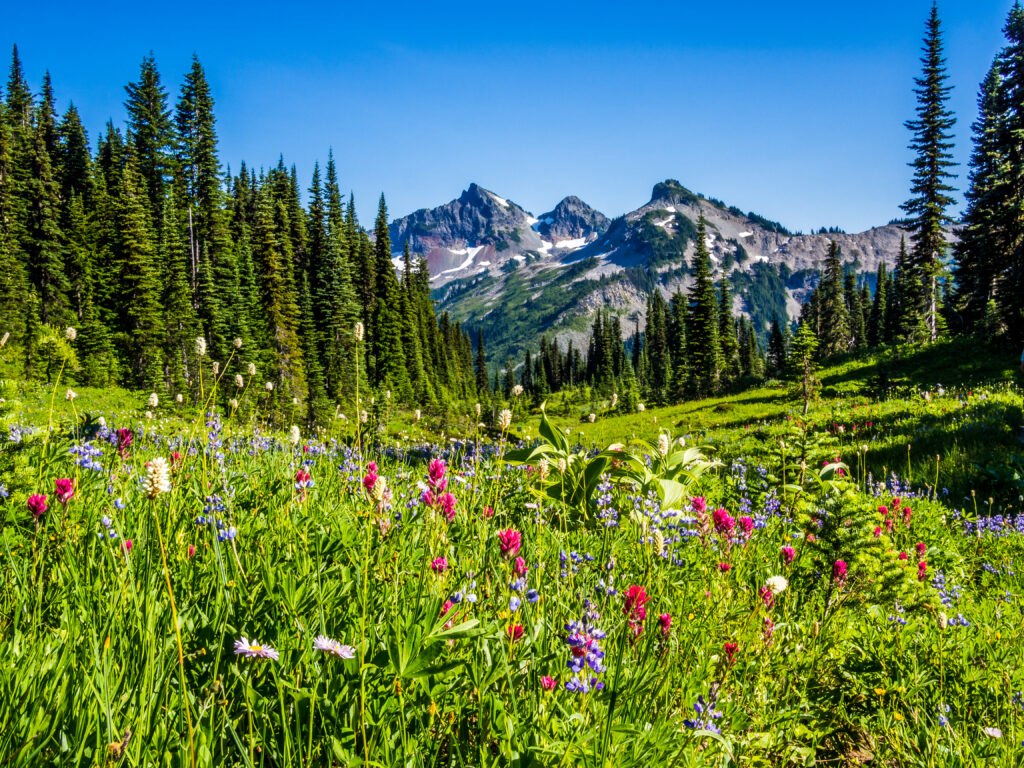
Paradise is famous for wildflowers and iconic mountain views.
Sunrise is the highest point in the park you can drive to.
Longmire is the historic year-round area.
Ohanapecosh is known for old-growth forest, but has major 2026 closures.
Carbon River and Mowich Lake are beautiful, but access is extremely limited in 2026.
That’s where this Mount Rainier National Park guide comes in.
This free guide gives you a strong starting point for planning your trip, including:
- The best time to visit Mount Rainier
- Important 2026 access updates
- How to get there
- Which entrance to use
- The best areas of the park
- Easy hikes and scenic stops
- Where to stay
- Camping basics
- Family tips
- Photography spots
- What to pack
- Common planning mistakes
For the full planning breakdown, our Ultimate Mount Rainier National Park Guide 2026 includes detailed area comparisons, trail spotlights, sample itineraries, lodging strategy, camping notes, family tips, photography locations, safety advice, packing lists, and quick-reference planning tools.
👉 Grab the complete Mount Rainier National Park Guide in our shop and plan your Washington adventure with confidence.
Table of Contents
About Mount Rainier National Park
Mount Rainier National Park is located in west-central Washington, about 60 miles southeast of Seattle.
The park protects more than 236,000 acres of mountains, forests, rivers, waterfalls, glaciers, and alpine meadows. Mount Rainier itself rises to 14,410 feet and is the most glaciated peak in the contiguous United States.
It’s also an active volcano.
But for most visitors, the magic of Mount Rainier is not just the mountain itself — it’s the way the entire park changes as you move through it.
At lower elevations, you’ll find old-growth forest, rivers, waterfalls, historic buildings, and mossy trails.
Higher up, you’ll find wildflower meadows, glacier viewpoints, alpine ridges, snowfields, and huge mountain views.
Mount Rainier is especially great for:
- Families
- Hikers
- Photographers
- Wildflower lovers
- Scenic road-trippers
- Pacific Northwest travelers
- National park lovers
- Anyone planning a Washington national parks trip
But because the park is so seasonal, planning matters.
A summer visit looks completely different than a fall, winter, or spring visit.
Important 2026 Mount Rainier Access Updates
Before planning your trip, there are several major 2026 updates you need to know.
No timed-entry reservations in 2026
Mount Rainier is not requiring timed-entry reservations anywhere in the park for 2026.
You still need a valid entrance pass, but you do not need to reserve a specific entry time.
That said, popular parking lots still fill early — especially at Paradise and Sunrise on summer weekends.
Sunrise Road and White River close October 1, 2026
For 2026, Sunrise Road and White River are scheduled to close for the season on October 1, 2026. That is earlier than some typical shoulder-season years.
This matters if you’re planning a late September or early October trip and hoping to visit Sunrise.
Ohanapecosh developed area is closed in 2026
The Ohanapecosh campground, visitor center, restrooms, picnic area, river access, and associated parking are closed for construction during the 2026 season.
Grove of the Patriarchs remains closed
The Grove of the Patriarchs Trail remains closed indefinitely after bridge damage from flooding.
Silver Falls access is changed
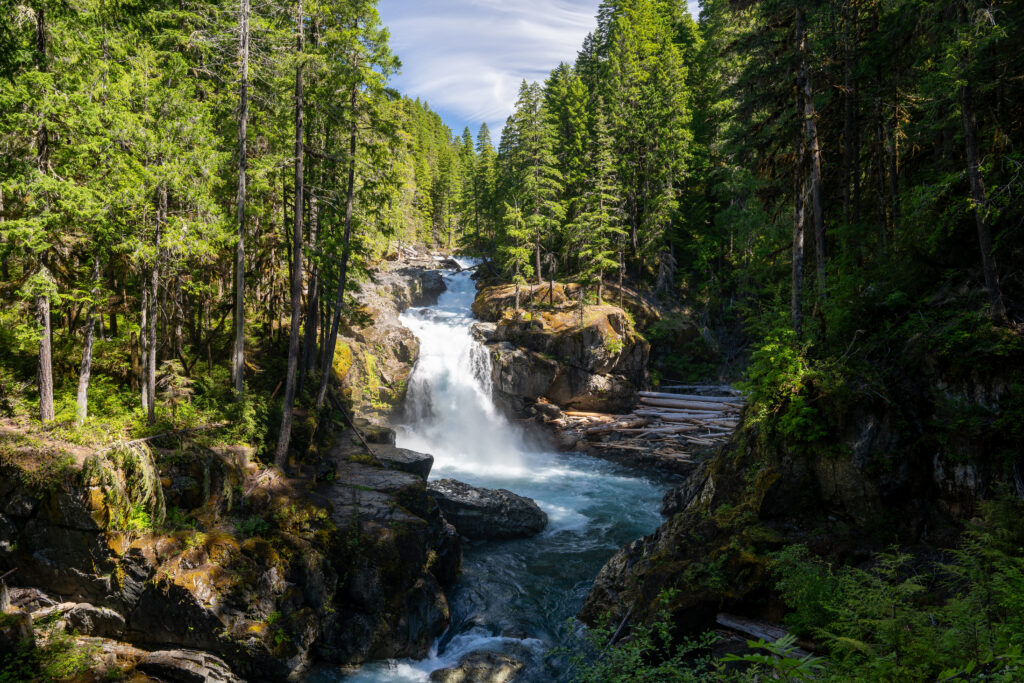
Silver Falls can still be reached in 2026, but not as the normal loop from Ohanapecosh Campground. The route is currently an out-and-back from the Grove of the Patriarchs parking area via the Eastside Trail.
Carbon River and Mowich Lake are not normal day-trip options in 2026
Public vehicle access from SR 165 is blocked because the Fairfax Bridge is permanently closed. That means Carbon River, Mowich Lake, Tolmie Peak, and Spray Park are not standard drive-up day-trip options in 2026.
💡 Adventure Family Tip: Always check current park alerts before your trip. Mount Rainier changes quickly because of snow, construction, weather, and road conditions.
Best Time to Visit Mount Rainier National Park
The best time to visit Mount Rainier depends on what you want to see.
July and August
July and August are the most popular months.
This is usually the best window for:
- Wildflowers
- Alpine hiking
- Sunrise access
- Paradise meadows
- Full summer facilities
- Clearer mountain views
- Family trips
Wildflower bloom at Paradise often peaks from late July through mid-August, but exact timing depends on snowpack.
This is also the busiest season, so arrive early.
September
September is one of the best months to visit Mount Rainier.
Crowds start to thin, temperatures cool down, and fall color begins showing up in some areas.
Sunrise and White River are scheduled to close October 1 in 2026, so September is your last realistic window for those areas.
Late May and June
Longmire and Paradise may be open, but higher trails can still be snow-covered.
This can be a beautiful time to visit waterfalls and forested areas, but don’t expect full summer hiking access.
October through April
This is the winter and shoulder-season window.
Longmire stays open year-round, and Paradise may be accessible depending on road and weather conditions.
However, winter driving rules apply, and tire chains are required for all vehicles in the park from November 1 through May 1.
Getting To and Around Mount Rainier
Mount Rainier has several entrances, and choosing the right one is one of the most important parts of planning your trip.
There is no simple loop road that lets you easily see everything in one quick drive.
Mountain roads are slow, seasonal, and spread out.
Main Entrances
Nisqually Entrance
Best for:
- Paradise
- Longmire
- Skyline Trail
- Myrtle Falls
- Nisqually Vista
- Paradise Inn
- First-time visitors
This is the most popular and most reliable entrance because it leads to Longmire and Paradise.
It is also the main year-round vehicle entrance.
White River / Sunrise Entrance
Best for:
- Sunrise
- Sourdough Ridge
- Burroughs Mountain
- Emmons Glacier views
- Naches Peak Loop
- Drier summer weather
Sunrise is the highest point in the park reachable by vehicle, but it has a short season.
In 2026, plan to visit before October 1.
Stevens Canyon / Ohanapecosh Entrance
Best for:
- Stevens Canyon Road
- Bench and Snow Lakes
- Connecting toward the southeast side of the park
The road is typically seasonal, and the Ohanapecosh developed area is closed for 2026.
Carbon River / Mowich Lake
Normally known for rainforest, Mowich Lake, Tolmie Peak, and Spray Park.
But in 2026, this area is not accessible as a normal public vehicle day trip due to the Fairfax Bridge closure.
Approximate Drive Times
From Seattle, expect around 2 hours to reach the Nisqually Entrance and Paradise without major stops.
From Portland, expect around 3 hours to reach the Nisqually Entrance.
From Yakima, the eastern side of the park may be closer, but seasonal road access matters.
💡 Adventure Family Tip: Do not plan Mount Rainier by mileage alone. Roads are slow, parking can be difficult, and areas that look close on a map can take hours to connect.
Entrance Fees and Passes
Mount Rainier requires an entrance pass.
Current guide pricing includes:
- $30 per private vehicle for a 7-day pass
- $25 per motorcycle
- $15 per individual on foot or bicycle
- America the Beautiful Annual Pass accepted
Entrance stations are cashless, so bring a card or buy a pass ahead of time.
The Main Areas of Mount Rainier National Park
Mount Rainier is easier to understand once you break it into regions.
Paradise
Paradise is the classic Mount Rainier experience.
This is the area most people picture when they dream about visiting the park — wildflower meadows, glacier views, the historic Paradise Inn, Myrtle Falls, and the Skyline Trail.
Paradise is best for:
- First-time visitors
- Wildflowers
- Skyline Trail
- Myrtle Falls
- Nisqually Vista Trail
- Iconic mountain views
- Visitor center access
Parking fills early during summer, especially on weekends.
For the best experience, arrive before mid-morning.
Sunrise
Sunrise sits at 6,400 feet and is the highest point you can drive to in Mount Rainier National Park.
This area feels more open, dry, and alpine than Paradise.
Sunrise is best for:
- Big mountain views
- Emmons Glacier
- Sourdough Ridge
- Burroughs Mountain
- Naches Peak Loop
- Sunrise photography
- Fewer trees and more open ridges
Sunrise has a short access season, and in 2026, the road closes October 1.
Longmire
Longmire is the historic heart of the park.
It sits near the Nisqually Entrance and stays open year-round.
Longmire is best for:
- History
- National Park Inn
- Trail of the Shadows
- Shoulder-season visits
- Easy forest walks
- A quieter park experience
This is a good area to add before or after Paradise.
Ohanapecosh
Ohanapecosh is known for old-growth forest and the Ohanapecosh River.
However, in 2026, the developed area is closed for construction.
That means no campground, visitor center, restrooms, picnic area, or river access in that area for the season.
Silver Falls may still be reached from a different access point, but the normal loop is not available.
Carbon River and Mowich Lake
This northwest corner is beautiful, wild, and less visited.
But in 2026, it is not a normal drive-up area due to the permanent Fairfax Bridge closure.
For most first-time visitors in 2026, focus on Paradise, Sunrise, and Longmire instead.
👉 Our full Mount Rainier guide includes a complete area comparison chart so you can quickly decide which part of the park fits your trip, season, and travel style.
Best Things to Do in Mount Rainier National Park
Visit Paradise
Paradise is the must-see area for most first-time visitors.
Here you can walk through meadows, see waterfalls, visit the Jackson Visitor Center, admire the historic Paradise Inn, and hike with views of Mount Rainier towering above you.
Even a short visit to Paradise can feel unforgettable.
Good options include:
- Myrtle Falls
- Nisqually Vista Trail
- Skyline Trail
- Paradise Inn
- Jackson Visitor Center
Hike the Skyline Trail
The Skyline Trail is the park’s signature day hike.
It is a challenging loop through wildflower meadows, mountain views, and alpine scenery.
This is not the easiest hike in the park, but it is one of the most rewarding.
Start early, bring layers, and be prepared for changing weather.
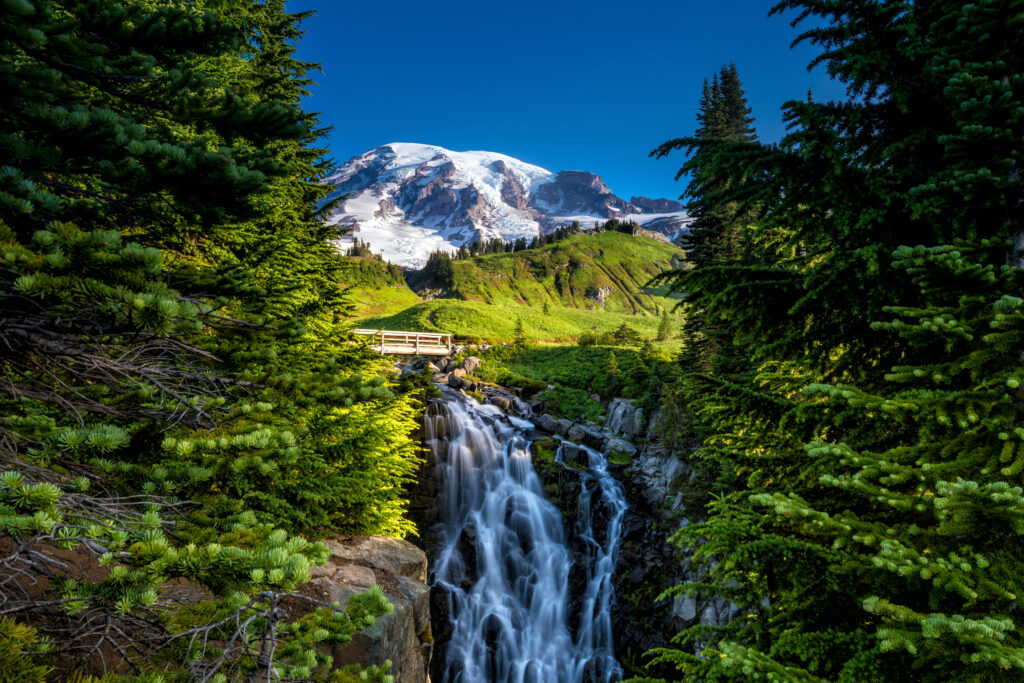
See Myrtle Falls
Myrtle Falls is one of the most photographed spots in Mount Rainier National Park.
It is a short walk from the Paradise area and gives you a classic waterfall-and-mountain view.
This is a great stop for families or anyone who wants a big payoff without a long hike.
Walk the Nisqually Vista Trail
Nisqually Vista is one of the easier trails at Paradise.
It gives you glacier views without committing to a longer hike.
This is a good choice if you’re visiting with kids, short on time, or looking for a gentler walk.
Drive to Sunrise
Sunrise is completely worth the drive when the road is open.
The views feel different from Paradise, and the higher elevation gives you a more open alpine experience.
Good options include:
- Sunrise Visitor Center area
- Sourdough Ridge Trail
- Burroughs Mountain
- Emmons Glacier views
- Sunrise photography
Explore Longmire
Longmire is an easy area to overlook, but it adds history and year-round access to your trip.
Stop at the National Park Inn, walk the Trail of the Shadows, and take time to appreciate the park’s historic roots.
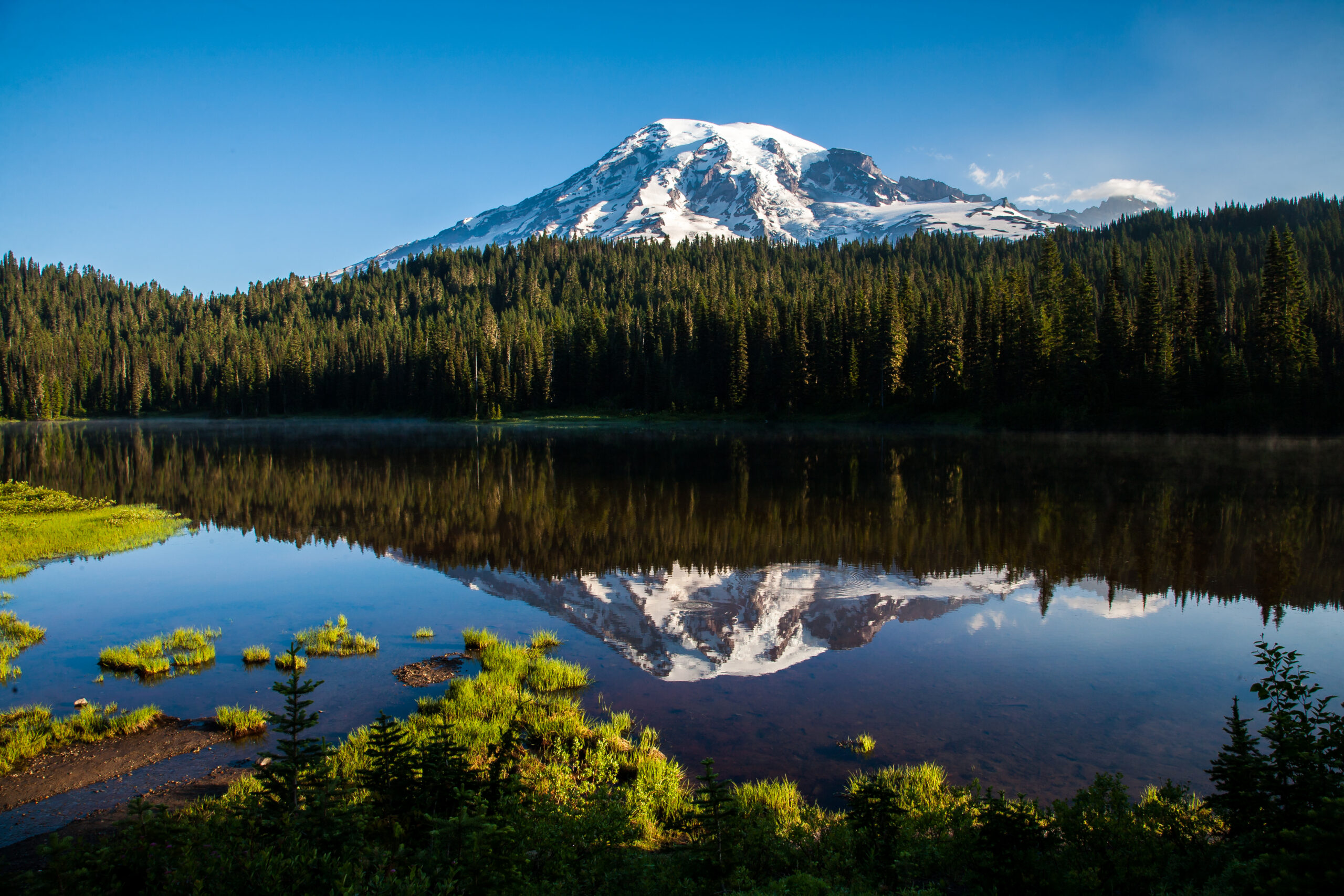
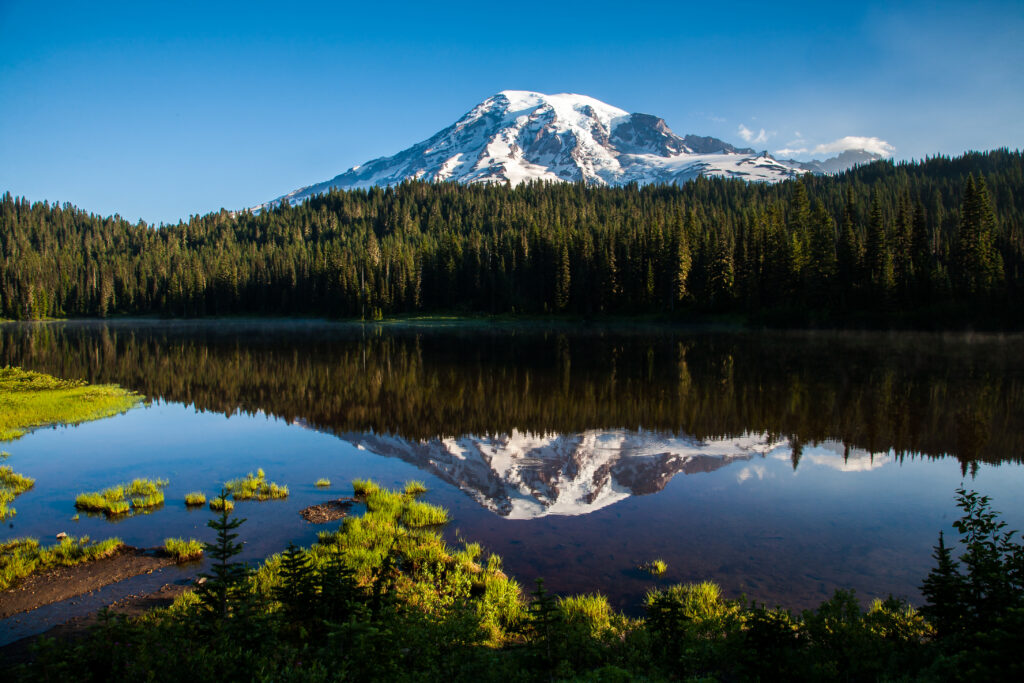
Visit Reflection Lakes
Reflection Lakes is one of the classic Mount Rainier photography stops.
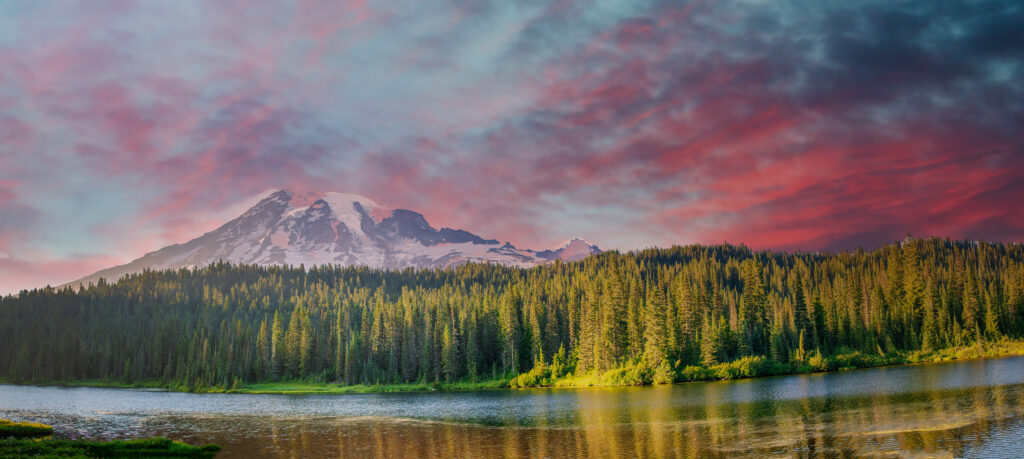
On a calm morning, the mountain can reflect beautifully in the water.
This area is especially popular with photographers, so go early for the best light and fewer crowds.
Hike Bench and Snow Lakes
Bench and Snow Lakes is a quieter option along Stevens Canyon Road.
It’s a good choice if you want a shorter lake hike away from the busiest Paradise trails.
Seasonal road access matters, so verify conditions before building your day around it.
See Waterfalls
Mount Rainier has several beautiful waterfalls.
Some popular options include:
- Myrtle Falls
- Christine Falls
- Comet Falls
- Silver Falls, with 2026 access changes
Comet Falls is a more challenging hike, while Christine Falls is a much easier roadside stop.
Best Hikes in Mount Rainier National Park
Mount Rainier has hikes for almost every ability level, but trail conditions change with snow, season, and weather.
Easier Hikes
Good easier options include:
- Trail of the Shadows
- Nisqually Vista Trail
- Myrtle Falls
- Sourdough Ridge Trail
- Silver Falls, with 2026 access changes
These are good options for families, shorter visits, and less experienced hikers.
Moderate Hikes
Consider:
- Naches Peak Loop
- Bench and Snow Lakes
- Comet Falls
- Portions of Skyline Trail
These hikes offer bigger rewards but require more time, effort, and preparation.
Challenging Hikes
More serious hikes include:
- Skyline Trail Loop
- Burroughs Mountain
- Summerland
- Wonderland Trail sections
The Wonderland Trail is a major backpacking route that circles the mountain over 93 miles and requires overnight permits.
👉 The full Mount Rainier guide includes detailed trail spotlights, distances, difficulty notes, access caveats, family considerations, and 2026 planning tips.
Where to Stay Near Mount Rainier
Where you stay should depend on which area of the park you plan to visit most.
Mount Rainier is too spread out to choose lodging randomly.
Paradise and Longmire
Best bases:
- Ashford
- Longmire
- Near the Nisqually Entrance
This is the best area for first-time visitors who want Paradise, Skyline Trail, Myrtle Falls, and the most iconic mountain views.
Sunrise
Best bases:
- Enumclaw
- Greenwater
These make more sense if Sunrise is a major part of your trip.
Staying here helps avoid long drives from the southwest side of the park.
Stevens Canyon / Eastern Side
Best base:
- Packwood
This can work well for Stevens Canyon Road, eastern approaches, and certain multi-area trips.
Multi-Area Trips
For a trip that includes both Paradise and Sunrise, a split stay can be much more efficient.
One night near Ashford or Longmire and another near Enumclaw, Greenwater, or Packwood can save a lot of driving.
Camping in Mount Rainier
Camping is popular and competitive in summer.
Important 2026 notes:
- Cougar Rock is open and reservable.
- Ohanapecosh Campground is closed for the 2026 season.
- White River Campground is first-come, first-served with no potable water in 2026.
- Mowich Lake is not a normal drive-up or short walk-in campground option in 2026 due to access issues.
With Ohanapecosh closed, expect other campgrounds to be even more competitive.
Book early and check current conditions before you go.
Where to Eat
Dining inside Mount Rainier is limited and seasonal.
Inside the park, options may include:
- Grab-and-go food at Paradise
- National Park Inn Dining Room in Longmire
- Seasonal snack bar at Sunrise
Gateway towns like Ashford and Packwood have more options outside the park.
For longer hiking days, pack lunch, snacks, and extra water.
Do not count on being able to easily grab food once you’re deep into a park day.
How Many Days Do You Need at Mount Rainier?
One Day
With one day, focus on Paradise and Longmire.
A good first-time visit might include:
- Nisqually Entrance
- Longmire
- Trail of the Shadows
- Paradise
- Myrtle Falls
- Nisqually Vista
- Skyline Trail, if time and weather allow
This gives you the classic Mount Rainier experience without spending the entire day driving.
Two Days
With two days, add Sunrise if the road is open.
Day one can focus on Paradise and Longmire.
Day two can focus on Sunrise, Sourdough Ridge, Burroughs Mountain, or Naches Peak Loop.
Three Days
With three days, slow down instead of trying to force every area.
A third day is great for:
- A second Paradise-area hike
- A quieter Sunrise hike
- Longmire history
- Photography
- Rest time
- A less rushed family pace
Because Ohanapecosh and Carbon River / Mowich Lake have major 2026 access issues, most visitors are better off going deeper in Paradise, Sunrise, and Longmire.
Visiting Mount Rainier With Kids
Mount Rainier can be a great family national park, but it requires realistic planning.
A few things to know:
- Roads are slow.
- Parking fills early.
- Elevation can affect kids.
- Weather changes fast.
- Short hikes can still feel tiring at altitude.
- Areas that look close on a map may be hours apart by car.
Good family-friendly options include:
- Trail of the Shadows
- Nisqually Vista Trail
- Myrtle Falls
- Paradise Visitor Center
- Sunrise viewpoints
- Junior Ranger programs
- Christine Falls
- Reflection Lakes
Pack snacks, layers, water, and patience.
This is not a park where you want to overpack the day.
Best Photo Spots in Mount Rainier National Park
Mount Rainier is a dream for photographers, but weather can make or break your shots.
Morning is often best because the mountain can build afternoon clouds.
Great photo spots include:
- Reflection Lakes
- Myrtle Falls
- Paradise meadows
- Tipsoo Lake
- Sunrise
- Christine Falls
- Skyline Trail viewpoints
- Wildflower meadows in late July and August
💡 Photo Tip: For the best chance of seeing the mountain clearly, plan your most important photo stops early in the day.
What to Pack for Mount Rainier
Mount Rainier weather changes quickly, even in summer.
Bring:
- Rain shell
- Warm mid-layer
- Hat and gloves
- Sturdy hiking shoes
- Trekking poles
- Sun protection
- Refillable water bottle
- Offline maps
- Snacks and lunch
- Portable charger
- Cash-free payment method
- Binoculars
- Extra layers for kids
- Tire chains during the required winter season
Even in summer, it can feel cold and windy at higher elevations.
Do not pack like you’re just visiting a city park.
Common Mount Rainier Planning Mistakes
Avoid these mistakes:
- Assuming the whole park is easy to see in one day
- Arriving too late for Paradise or Sunrise parking
- Not checking 2026 closures before building an itinerary
- Planning Ohanapecosh like a normal year
- Assuming Grove of the Patriarchs is open
- Trying to visit Carbon River or Mowich Lake as a normal day trip in 2026
- Underestimating drive times between Paradise and Sunrise
- Forgetting layers in summer
- Ignoring snow on early-season trails
- Not packing food and water
- Assuming no timed entry means no crowds
- Visiting in winter without tire chains
A little planning makes Mount Rainier much easier and more enjoyable.
Mount Rainier FAQ
Do you need timed-entry reservations for Mount Rainier in 2026?
No. Mount Rainier is not using a timed-entry reservation system in 2026.
You still need a valid entrance pass.
When do wildflowers bloom at Paradise?
Peak bloom typically happens from late July through mid-August, but it changes each year depending on snowpack.
Is Sunrise worth visiting?
Yes, when the road is open.
Sunrise gives you a completely different view of Mount Rainier and is the highest point in the park reachable by vehicle.
Is Grove of the Patriarchs open?
No. Grove of the Patriarchs remains closed indefinitely due to bridge damage.
Can you drive to the summit of Mount Rainier?
No. The highest point you can drive to is Sunrise at 6,400 feet.
The summit requires technical mountaineering experience.
How many days do you need?
One day works for Paradise and Longmire.
Two days is better if you want to add Sunrise.
Three days gives you time to slow down, hike more, and avoid feeling rushed.
Is Mount Rainier good for families?
Yes, but choose shorter hikes, start early, plan around elevation, and do not underestimate driving time.
Looking for the Complete Mount Rainier National Park Guide?
This free article gives you a strong starting point.
But the real planning questions begin when you start building your actual trip:
Should you focus on Paradise or Sunrise?
Which entrance should you use?
Where should you stay to avoid unnecessary driving?
Which hikes are realistic for your family?
How do the 2026 closures change your plans?
Is one day enough?
Which trails are best for wildflowers, glaciers, waterfalls, or photography?
How early do you need to arrive for parking?
That is exactly what our Ultimate Mount Rainier National Park Guide 2026 is designed to solve.
Inside the complete premium guide, you’ll find:
- Mount Rainier planning overview
- 2026 access updates
- Entrance and road guidance
- Entrance fees and pass information
- Best time to visit
- Area comparison chart
- Paradise planning
- Sunrise planning
- Longmire planning
- Ohanapecosh closure notes
- Carbon River and Mowich Lake access updates
- Hiking charts
- Trail spotlights
- Where to stay by area
- Camping notes
- Where to eat
- Sample itineraries
- How much time you need
- Family tips
- Photography spots
- Gear recommendations
- Practical safety tips
- Packing checklist
- FAQ
- Real-world travel planning advice
It is designed to help you stop piecing together your Mount Rainier trip from dozens of websites and start planning with confidence.
👉 Grab the complete Ultimate Mount Rainier National Park Guide in our shop and plan your Washington national park adventure with confidence.
We hope this guide helps you plan an unforgettable trip to Mount Rainier National Park.
✨ Keep Adventuring, Keep Exploring, and we’ll see you on the next Adventure! ✨