

Planning a Washington State national parks road trip?
This is one of the most diverse national park road trips in the country.
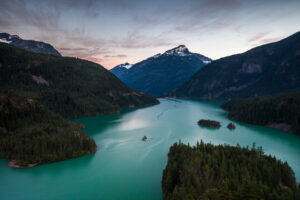
In a single trip, you can hike beneath moss-covered trees in a temperate rainforest, walk wild Pacific beaches surrounded by sea stacks, stand below the glaciers of Mount Rainier, and drive through the jagged alpine peaks and turquoise lakes of North Cascades National Park.
And the best part?
You can connect all three parks in one loop from Seattle:
Seattle → Olympic National Park → Mount Rainier National Park → North Cascades National Park → Seattle
We’re Heather and Jesse from Adventure Family Vlog, and after exploring Washington’s national parks ourselves, we can tell you that this trip is absolutely incredible — but it requires more planning than the map makes it seem.
Olympic is enormous and spread around an entire peninsula. Mount Rainier has multiple sides that are hours apart. North Cascades has very limited services. Seasonal roads can completely change your route. Ferries can save time — or cost you time. And there are several drive days that you do not want to underestimate.
That is why we built our complete Ultimate Washington State National Park Road Trip Guide 2026 around realistic drive times, lodging strategy, food stops, current 2026 conditions, multiple itinerary lengths, family logistics, hiking, and backup plans when Washington weather refuses to cooperate.
Want the Complete Washington National Parks Road Trip Plan?
This free blog will help you understand the route and start planning, but our Ultimate Washington State National Park Road Trip Guide 2026 goes much deeper.
The premium guide includes the complete 11–12 day itinerary, alternate 7-, 9–10-, 14-, and 16-day routes, lodging recommendations, restaurant picks, route maps, ferry strategy, reservation timeline, exact drive-time tables, park mini-guides, family planning, photography, budgets, packing lists, backup plans, and screenshot-ready reference pages.
👉 Want the complete plan? Check out our premium Washington State National Park Road Trip Guide here.
Why This Washington National Parks Road Trip Is So Special
Washington gives you three national parks that feel almost nothing alike.
Olympic National Park
Olympic combines:
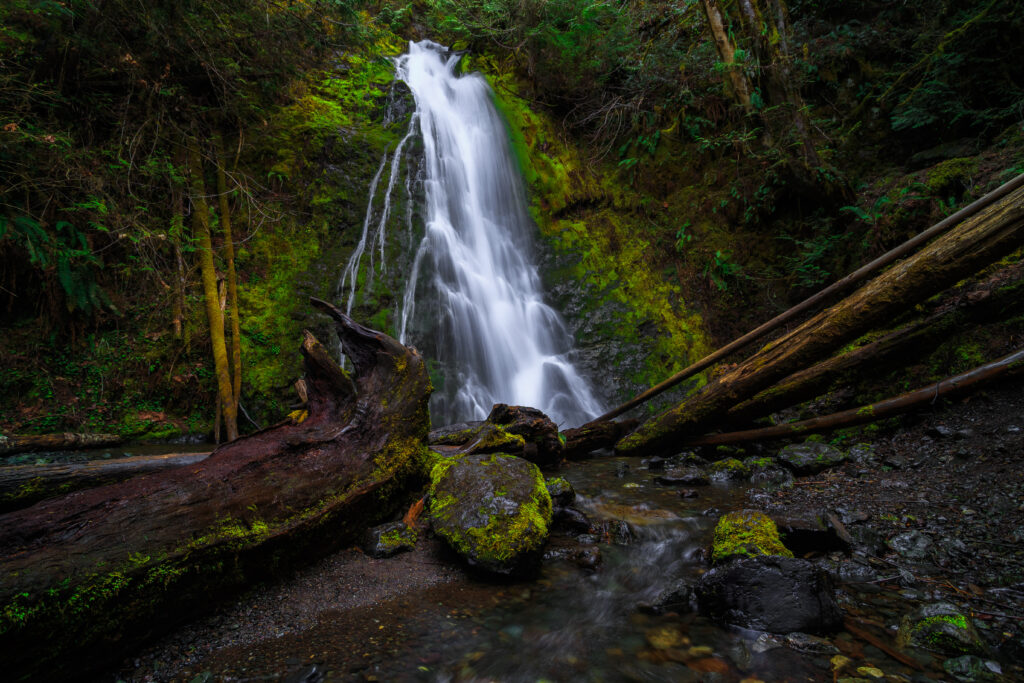
- Temperate rainforest
- Wild Pacific coastline
- Alpine mountains
- Waterfalls
- Lakes
- Roosevelt elk
- Tide pools
- Some of the moodiest photography conditions in the country
Mount Rainier National Park
Mount Rainier gives you:
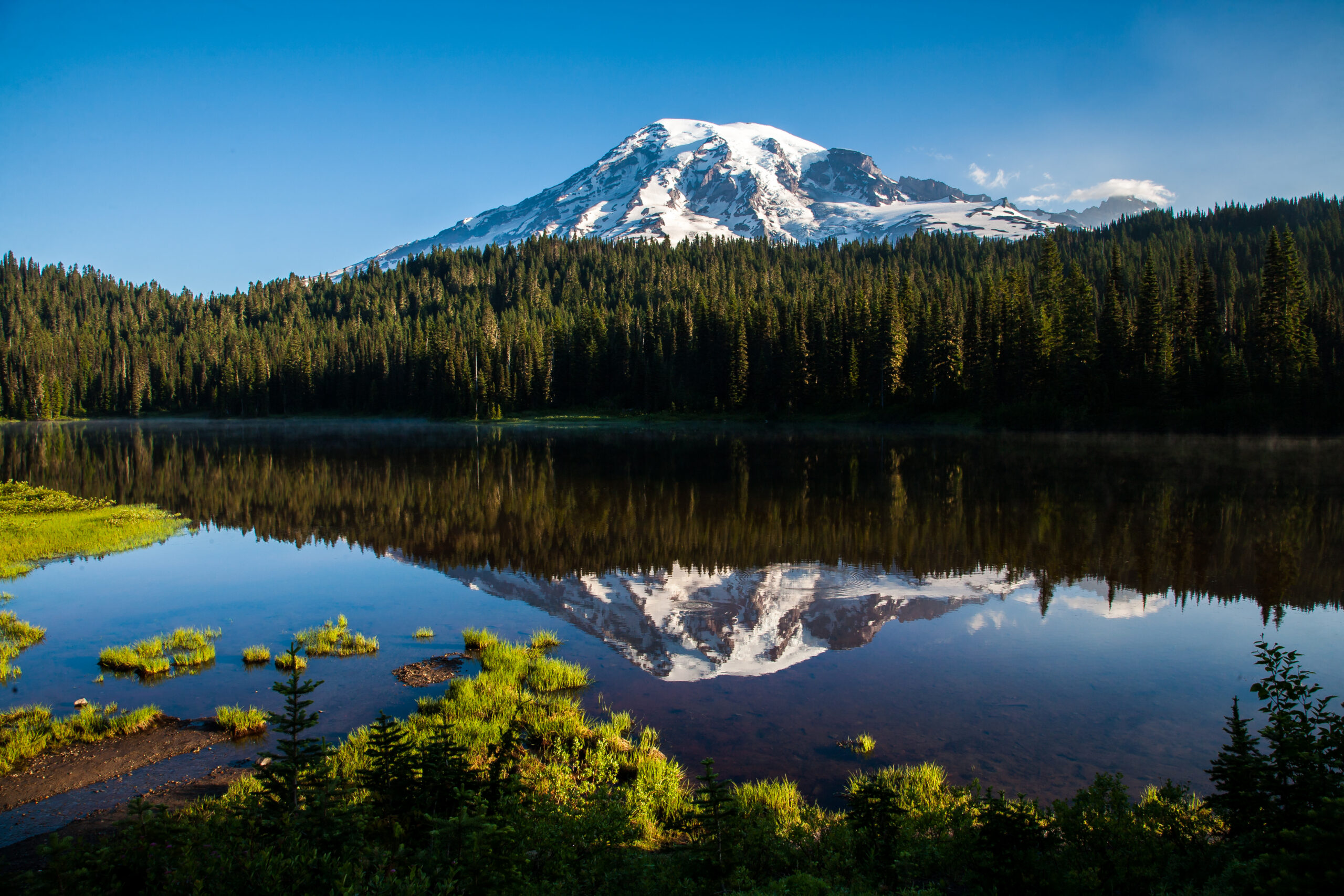
- A 14,410-foot active volcano
- Glaciers
- Waterfalls
- Wildflower meadows
- Alpine trails
- Incredible sunrise views
- Some of Washington’s most recognizable mountain scenery
North Cascades National Park
North Cascades feels far more remote.
Think:
- Jagged peaks
- Turquoise glacial lakes
- Alpine passes
- Fewer developed services
- Huge hiking opportunities
- Washington Pass
- Diablo Lake
- Some of the wildest mountain terrain in the Lower 48
Together, they create one of our favorite national park road trips.
How Many Days Do You Need for a Washington National Parks Road Trip?
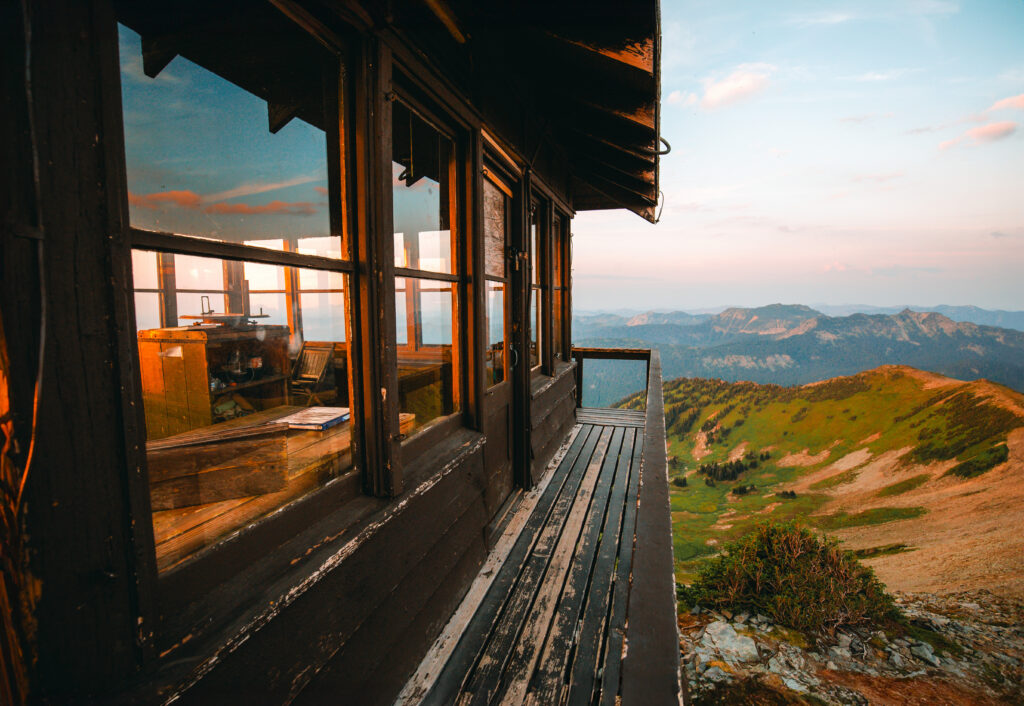
Our recommendation for a first trip is 11–12 days.
That gives you enough time to experience the major areas without turning every day into a race against Google Maps.
Our premium guide uses 11–12 days as the flagship itinerary, with seven days treated as the absolute minimum realistic length and 14–16 days as the better extended option.
7 Days
Possible, but fast.
You will need to be extremely selective and accept that several days will mostly be driving.
9–10 Days
A much better option for active travelers or families with older kids.
You can experience all three parks but will probably need to skip either Sunrise at Mount Rainier or some of Olympic’s deeper areas.
11–12 Days
This is the sweet spot.
It gives you:
- Seattle
- Multiple Olympic regions
- Paradise at Mount Rainier
- Sunrise at Mount Rainier
- North Cascades Highway
- A real North Cascades hiking day
- Enough breathing room to enjoy the trip
14 Days
Excellent for families, photographers, or travelers who want less rushing.
16 Days
This lets you add something like:
- Leavenworth
- San Juan Islands
- Mount St. Helens
without destroying the pacing of the core trip.
Not Sure Which Trip Length Is Right for You?
The premium guide includes six itinerary options and a full “Which Itinerary Should You Choose?” comparison based on family age, hiking goals, photography, available vacation time, and season.
👉 See the complete Washington road-trip itineraries here.
Best Route for Washington’s Three National Parks
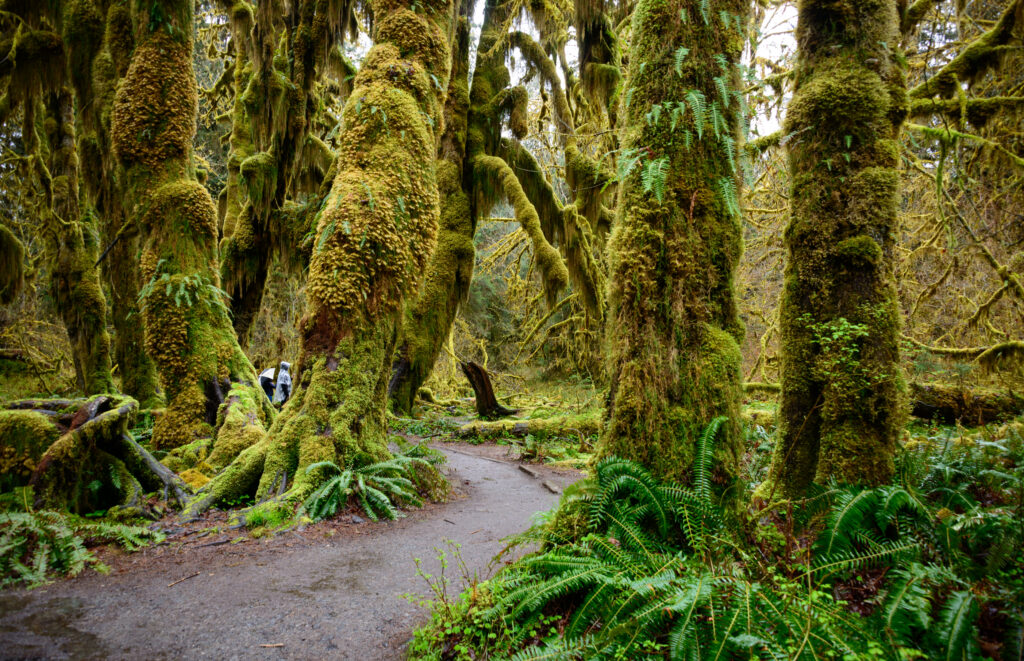
For most first-time travelers, we recommend:
Seattle → Olympic → Mount Rainier → North Cascades → Seattle
That creates a logical counterclockwise loop.
The full route is roughly 700–800 miles before adding your in-park driving.
The route works because you gradually move from:
Pacific coast and rainforest → volcanic alpine terrain → rugged Cascades
It also gives you flexibility at the beginning of the trip to decide whether a Puget Sound ferry makes sense.
Should You Take the Ferry to Olympic National Park?
Maybe.
And this is one of those Washington questions where the answer is not automatically “yes.”
Two common options are:
- Seattle–Bainbridge Island Ferry
- Edmonds–Kingston Ferry
Or you can skip the ferry entirely and drive around Puget Sound through Tacoma and Olympia.
The Bainbridge crossing itself is only about 35 minutes, while Edmonds–Kingston is roughly 30 minutes. But vehicle lines can erase that advantage during busy summer periods. Your premium guide specifically recommends checking same-day ferry wait times before committing.
What We’d Do
Check ferry waits the morning you leave Seattle.
If the wait looks reasonable, take the ferry. It is a beautiful way to start the trip.
If the line is backed up?
Drive around.
Do not lose half your first vacation day proving that you are determined to ride a ferry.
Olympic National Park: Give It More Time Than You Think
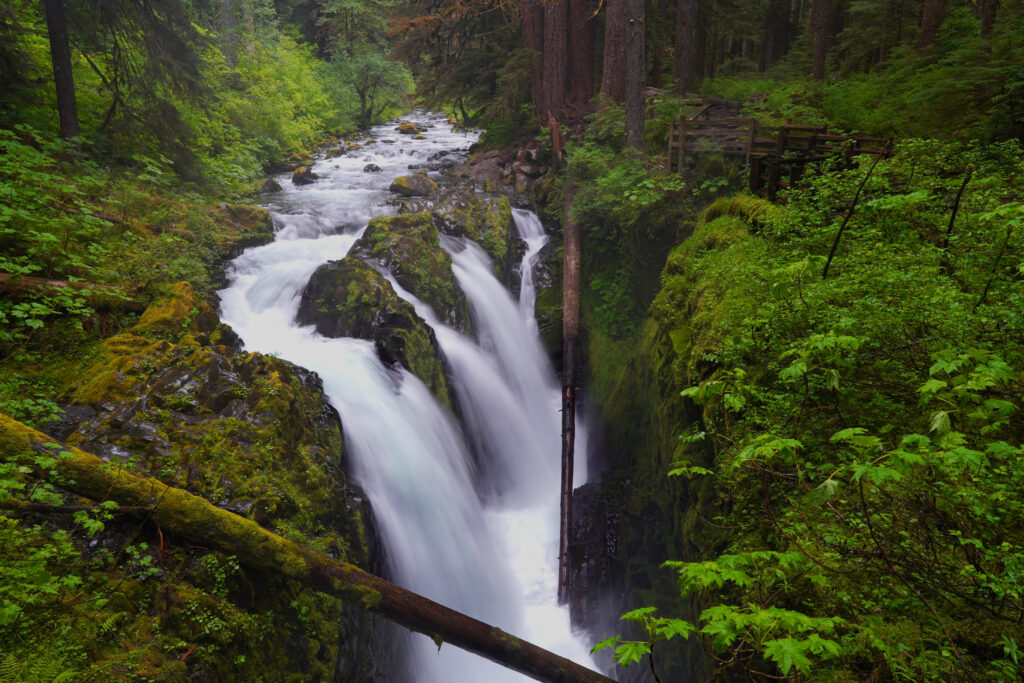
Olympic is where travelers most often underestimate the geography.
There is no road through the middle of the park.
Instead, Highway 101 circles the peninsula, and you repeatedly drive inward on separate spur roads to reach areas like:
- Hurricane Ridge
- Lake Crescent
- Sol Duc
- Hoh Rain Forest
- Rialto Beach
- La Push
- Ruby Beach
- Kalaloch
- Lake Quinault
That is why we recommend multiple nights and more than one Olympic base rather than trying to stay in one town and commute everywhere.
Olympic Highlights We Would Prioritize
For a first trip, we would build around:
Hurricane Ridge
Your alpine Olympic experience.
You get massive mountain views and relatively easy ways to get above tree line without committing to an enormous hike.
Lake Crescent
One of the most beautiful lakes in Washington.
Pair it with:
- Marymere Falls
- Lake Crescent Lodge
- Kayaking or paddling
- Mount Storm King for experienced hikers
Sol Duc Falls
A beautiful forest waterfall and one of the easiest high-payoff stops to fit between Lake Crescent and Forks.
Hoh Rain Forest
This is one of Olympic’s defining experiences.
The Hall of Mosses is the classic first-time hike, and stronger hikers can continue farther on the Hoh River Trail.
The Olympic Coast
You should experience at least one wild Pacific beach.
Our favorites to build into a first trip include:
- Ruby Beach
- Rialto Beach
- La Push
But coastal planning comes with one huge caveat:
Tides matter.
Olympic Coast: Check the Tide Before You Go
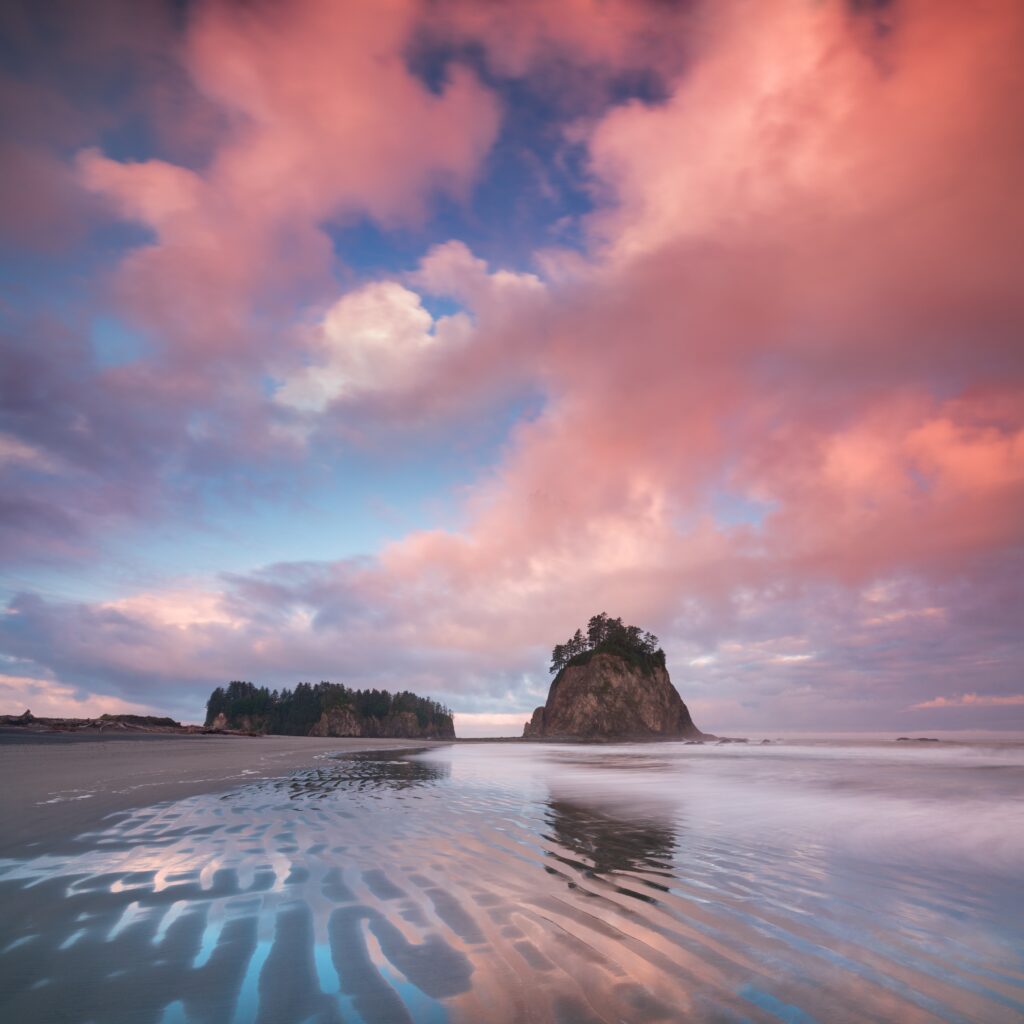
Do not treat Olympic beaches like a typical beach day.
Tides can affect:
- Headland crossings
- Tide pools
- Beach access
- Hole-in-the-Wall
- Hiking distances
- Photography
And the Pacific itself demands respect.
Sneaker waves, cold water, large driftwood, and incoming tides can create dangerous conditions surprisingly quickly.
Our premium guide includes an entire Olympic Coast tide-planning chapter, because this is one of those areas where five minutes of planning can prevent a major problem.
AFV Tip
Check the tide table before deciding what time to leave your hotel, not after you arrive at the beach.
Where Should You Stay in Olympic National Park?
For most first trips, we would divide Olympic into at least two bases.
Port Angeles or Sequim
Best for:
- Hurricane Ridge
- Lake Crescent
- First night on the peninsula
Port Angeles is closer to Hurricane Ridge.
Sequim is drier and works well if you are approaching from the east or adding Dungeness Spit.
Lake Crescent
If your budget and availability allow it, staying directly on Lake Crescent changes the feel of the trip.
The guide specifically recommends Lake Crescent Lodge for the full immersive experience.
Forks
Best for:
- Hoh Rain Forest
- Rialto
- La Push
- Western Olympic
It is not a luxury resort town.
It is a practical base — and that is exactly what you need.
Kalaloch or Lake Quinault
Worth considering if you are continuing south around the peninsula instead of returning through Forks.
Want Our Exact Olympic Lodging Picks?
The premium guide includes specific recommendations for Port Angeles/Sequim, Lake Crescent, Forks/La Push, Kalaloch, and Quinault — including our personal lodging picks and the tradeoffs of each base.
👉 See our complete Olympic lodging strategy in the premium Washington guide.
Mount Rainier National Park: Paradise vs. Sunrise
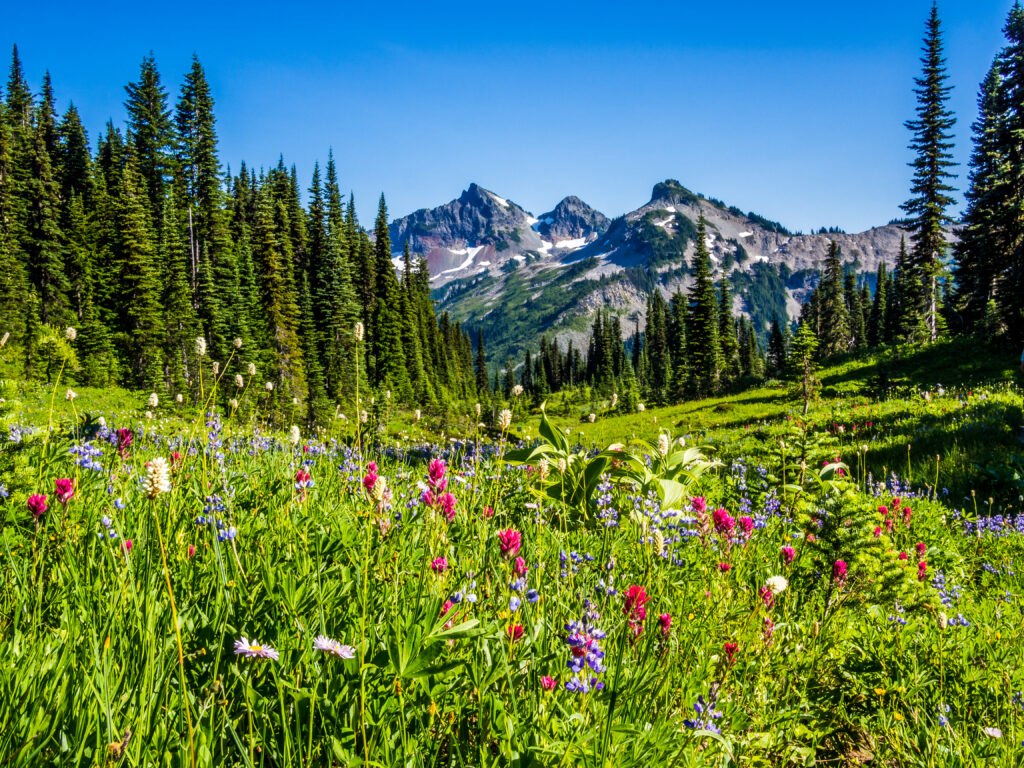
One of the biggest planning mistakes at Mount Rainier is assuming Paradise and Sunrise are right next to each other.
They are not.
During the summer season they are connected by road, but the trip between them can realistically take 2–2.5 hours one way depending on traffic, construction, and seasonal road conditions.
That means we generally treat them as separate days.
Paradise
For most first-time visitors, Paradise is the priority.
This is where you will find:
- Skyline Trail
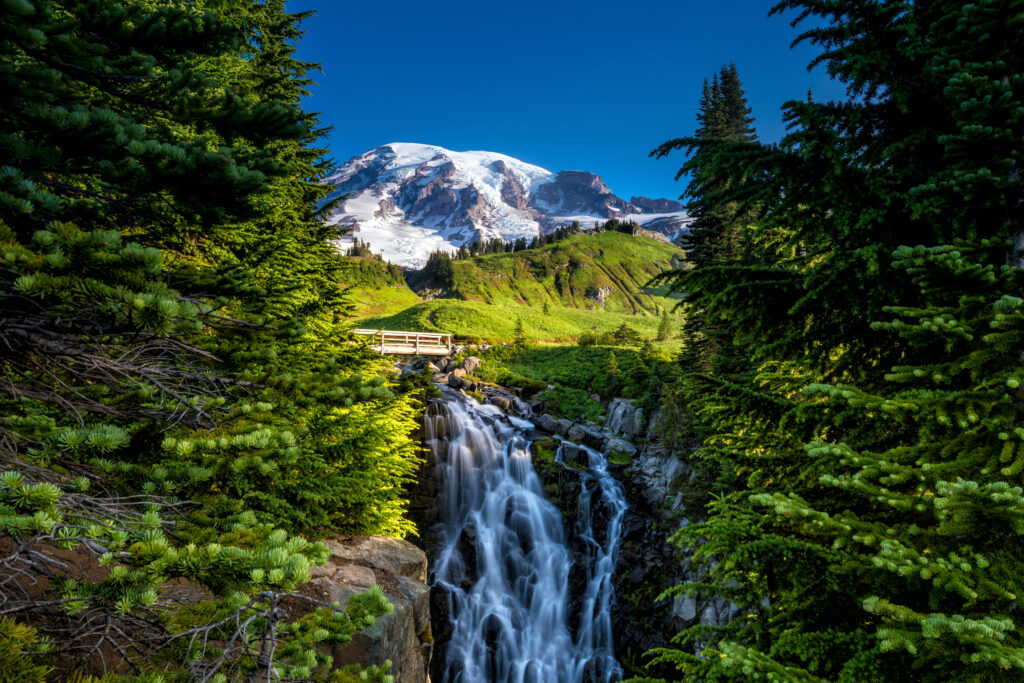
- Myrtle Falls
- Nisqually Vista
- Wildflower meadows
- Some of the most iconic close-up views of Mount Rainier
If your group is strong, hike more of Skyline.
If you have younger kids or limited time?
Myrtle Falls and Nisqually Vista still deliver huge payoff.
Sunrise
Sunrise gives you a completely different perspective.
Popular options include:
- Sourdough Ridge
- Mount Fremont Lookout
- Sunrise Point
- Big mountain views with less dense forest
But Sunrise is seasonal, so always verify road status.
Mount Rainier 2026: One Big Change
Mount Rainier does not require a timed-entry reservation in 2026.
That does not mean parking magically became easy.
Parking is still the major constraint, especially at Paradise.
The guide recommends arriving before 7 a.m. or later in the afternoon during peak summer periods.
There are also important 2026 construction impacts, including closures around Ohanapecosh and Grove of the Patriarchs, so check current NPS conditions immediately before your visit.
Want the Complete Mount Rainier Strategy?
Our premium Washington road-trip guide includes Paradise vs. Sunrise planning, lodging-base comparisons, hiking recommendations by ability, wildflower timing, current 2026 closures, parking strategy, and realistic drive times.
👉 Get the full Washington trip planner here.
Where Should You Stay at Mount Rainier?
The answer depends on which side you are exploring.
Paradise Inn
Our top choice if you can get it and want the full in-park experience.
You eliminate the morning entrance drive and can enjoy the mountain early and late in the day.
Ashford
Best for the Nisqually Entrance and Paradise.
This is the classic southern gateway.
Packwood
A little farther from Paradise but a great option if you want:
- Cabins
- Groceries
- Restaurants
- More small-town atmosphere
Greenwater / Enumclaw
Better if your trip is focused on Sunrise.
The premium guide includes a full “Which Rainier Base Should You Choose?” comparison so you do not accidentally book on the wrong side of the mountain.
North Cascades National Park: Washington’s Wild Finale
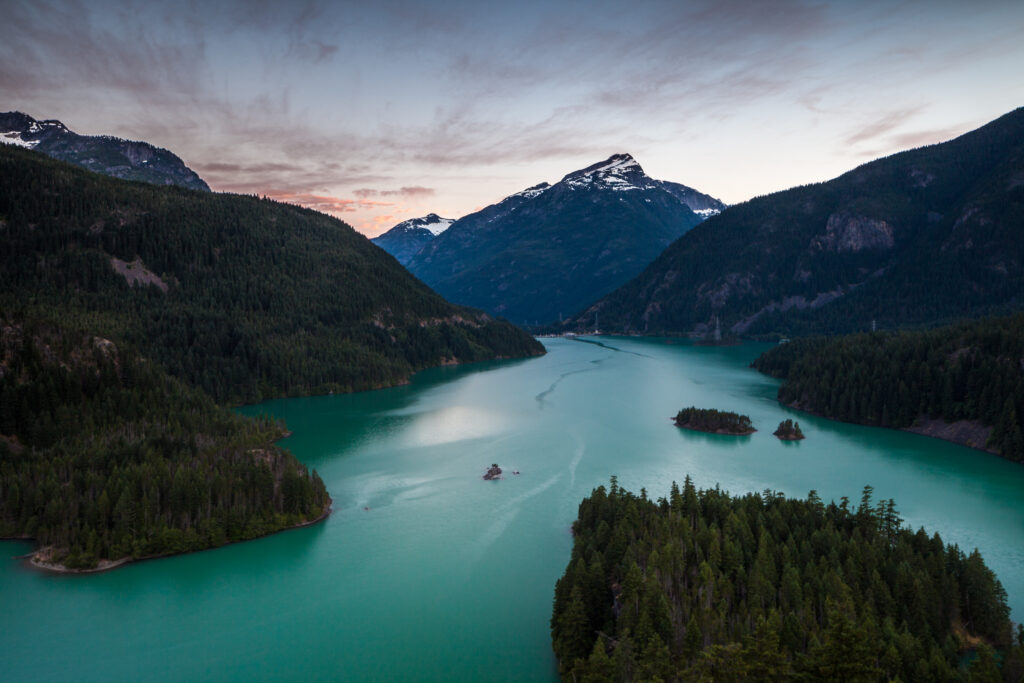
North Cascades is the park where the trip starts feeling much more remote.
Unlike Olympic and Rainier, there is no general park entrance fee.
But services are sparse, cell service is limited, fuel planning matters, and some trailheads on adjacent Forest Service land may have separate pass requirements.
For most first-time visitors, we would build the trip around the North Cascades Highway.
Best Things to See in North Cascades
Diablo Lake Overlook
One of the easiest high-payoff stops anywhere on this entire Washington trip.
You get turquoise glacial water and enormous mountain scenery without a major hike.
Gorge Creek / Newhalem
Good short stops as you enter the corridor.
Washington Pass Overlook
Another massive-payoff roadside stop.
Especially beautiful late in the day and during fall.
Cascade Pass
For serious hikers, this is one of the best hikes of the trip.
But this deserves its own day.
Cascade River Road is a substantial side trip from Marblemount, and access conditions can vary. Your premium guide specifically warns against treating Cascade Pass as a casual add-on to an SR-20 sightseeing day.
Maple Pass / Blue Lake
Great alternatives if you want a major alpine hike without committing to Cascade Pass logistics.
Want the Detailed North Cascades Plan?
The premium guide includes west-side vs. east-side lodging, Cascade Pass strategy, Diablo/Ross Lake planning, hiking choices, Washington Pass, Winthrop/Mazama, food and supply planning, and what to do if wildfire smoke changes the plan.
Where Should You Stay for North Cascades?
This decision changes the entire feel of the trip.
West Side: Marblemount or Rockport
Best for:
- Cascade Pass
- Shorter return to Seattle
- Standard Washington loop itineraries
The downside is limited dining and lodging.
East Side: Winthrop or Mazama
Best for:
- Washington Pass
- Blue Lake
- Maple Pass
- Better restaurant selection
- A more enjoyable town atmosphere
Winthrop is a fun destination by itself.
But going east means more driving if you need to return toward Seattle.
For the standard loop, we generally recommend staying west.
For a 14–16 day trip, adding Winthrop makes a lot more sense.
What About Seattle?
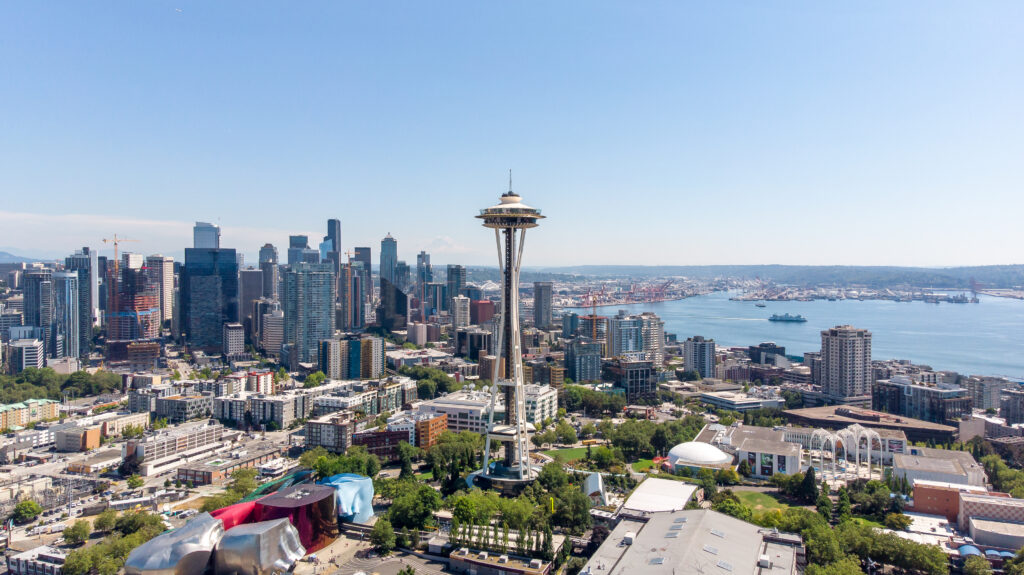
Do not treat Seattle as nothing more than an airport.
Give it at least half a day — preferably a full day at the beginning or end.
Good first-time stops include:
- Pike Place Market
- Space Needle
- Chihuly Garden and Glass
- Kerry Park
- Ballard Locks
- Seattle waterfront
- MoPOP
- Museum of Flight
For food, we love treating Pike Place as a grazing experience rather than committing to one sit-down meal.
Grab a few things from different vendors and make the market itself your lunch.
The guide specifically highlights Pike Place Chowder and Piroshky Piroshky as two enduring market stops.
What to Book First
This trip has a few reservations that matter much more than everything else.
We would prioritize:
First
Mount Rainier lodging — especially Paradise Inn.
Next
Olympic’s most popular in-park lodging:
- Lake Crescent Lodge
- Kalaloch Lodge
- Sol Duc Hot Springs Resort
Then
Peak summer gateway hotels and campgrounds.
The complete premium guide has a month-by-month master reservation timeline, starting 9–12 months ahead and continuing all the way through the morning of your trip.
That alone can save you from building an entire route around lodging that no longer exists.
Washington Road Trip Food Strategy
This is not the trip where we recommend assuming you will “grab something later.”
Several park days have extremely limited food.
Pack lunch for:
- Hoh Rain Forest
- Olympic coast days
- Paradise hiking days
- Sunrise
- Most North Cascades hiking days
Forks, Packwood, Port Angeles/Sequim, and Winthrop are important supply points.
The premium guide includes curated restaurant recommendations and a Food & Grocery Cheat Sheet showing where to eat, where to stock up, and which days absolutely require a packed lunch.
Best Time for a Washington National Parks Road Trip
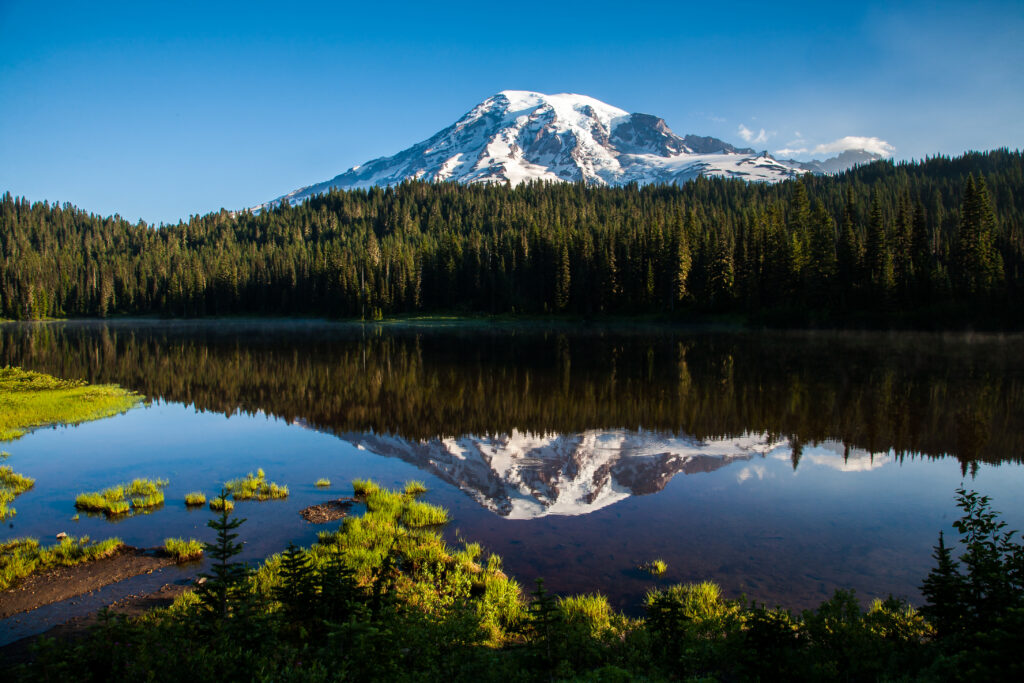
For the complete three-park loop, we prefer:
Mid-July through September
That gives you the best odds that:
- North Cascades Highway is open
- Sunrise is accessible
- Mountain trails have melted out
- High-elevation roads are operating
But each month has tradeoffs.
July
Wildflowers start appearing and most mountain roads should be opening.
August
Usually the most reliable mountain access, but wildfire smoke becomes a bigger concern.
September
One of our favorite times because crowds begin to decline, but smoke can remain an issue and higher roads start moving toward seasonal closures.
October
Beautiful, especially for North Cascades larches, but this is no longer a reliable version of the full summer itinerary.
The guide’s flagship itineraries assume summer or early fall conditions with the seasonal roads open.
Is This Washington National Parks Road Trip Good With Kids?
Yes.
But we would not call it a slow family vacation.
There are several substantial driving days, especially between:
- Olympic and Mount Rainier
- Mount Rainier and North Cascades
For younger kids, we strongly prefer the 11–12 day version over trying to squeeze everything into a week.
Some of our favorite family stops include:
Olympic
- Hall of Mosses
- Marymere Falls
- Ruby Beach
- Hurricane Ridge
Mount Rainier
- Myrtle Falls
- Nisqually Vista
- Reflection Lakes
North Cascades
- Diablo Lake Overlook
- Newhalem
- Washington Pass Overlook
The full guide includes an honest Family Reality Check, bathroom planning, Junior Ranger ideas, snack strategy, accessible stops, and which itinerary days are hardest for younger kids.
Common Washington National Parks Road Trip Mistakes
Trying to See Paradise and Sunrise in One Quick Day
The drive is much longer than it looks.
Give them separate days whenever possible.
Staying in One Hotel for All of Olympic
Olympic is too spread out.
Changing bases actually saves time.
Ignoring Tide Tables
Some Olympic coastal experiences depend on the tide.
Arriving at Paradise Late
No timed-entry reservation does not mean unlimited parking.
Treating Cascade Pass as a Roadside Attraction
It is a full hiking day.
Depending on Restaurants Inside the Parks
Pack lunch.
Not Checking Road Conditions
Washington’s mountain roads are seasonal and construction-heavy.
Trying to Do the Whole Trip in Seven Days
You can.
But we would not recommend it for most families.
Washington State National Parks Road Trip FAQ
How many national parks are in Washington State?
Washington has three national parks: Olympic National Park, Mount Rainier National Park, and North Cascades National Park.
Can you visit all three Washington national parks in one trip?
Yes. The three parks work well as a loop from Seattle. We recommend about 11–12 days for a first trip, although shorter and longer routes are possible.
What is the best order for Washington’s national parks?
Our preferred order is:
Seattle → Olympic → Mount Rainier → North Cascades → Seattle
It minimizes unnecessary backtracking and creates a natural loop.
How many days do you need at Olympic National Park?
For a first visit, we would give Olympic at least 3–4 days because Hurricane Ridge, Lake Crescent, Hoh Rain Forest, and the coast are spread far apart.
How many days do you need at Mount Rainier?
We recommend two days if you want to experience both Paradise and Sunrise without rushing.
How many days do you need at North Cascades?
At least one full day for the highway corridor, but two days is much better if you want a major hike.
What is the best month for a Washington national parks road trip?
July through September usually offers the most reliable access to the full route because seasonal mountain roads are more likely to be open.
Does Mount Rainier require a reservation in 2026?
No timed-entry reservation is required in 2026. Parking is still limited, so arriving early remains important.
Is North Cascades National Park free?
North Cascades National Park Service Complex does not charge a general entrance fee, although some adjacent Forest Service trailheads can have separate parking/pass requirements.
Should you rent a car for this Washington national parks trip?
Yes. A rental car is effectively essential for this itinerary because the three parks are spread across the state and there is no practical public-transportation network connecting the full route.
Looking for the Complete Washington State National Park Road Trip Guide?
This free blog is meant to help you understand the route and decide whether this trip is right for you.
Our Ultimate Washington State National Park Road Trip Guide 2026 is the complete planning system.
Inside the premium guide, you’ll find:
- Seattle planning
- Olympic National Park mini-guide
- Mount Rainier mini-guide
- North Cascades mini-guide
- Complete route strategy
- Ferry vs. drive-around comparison
- Realistic drive-time table
- Route maps
- Master reservation planner
- Specific lodging recommendations
- Restaurant recommendations
- Grocery and packed-lunch strategy
- Tide planning
- Current 2026 closures and construction
- Hiking comparisons
- Photography planning
- Family strategy
- 7-day itinerary
- 9–10 day itinerary
- Flagship 11–12 day itinerary
- 14-day photography/relaxed itinerary
- 16-day ultimate Washington itinerary
- Shoulder-season planning
- Four budget levels
- Packing matrices
- Backup plans
- Quick-reference pages
- Current-condition links
- Emergency and safety reminders
The goal is simple:
Instead of spending hours researching three national parks, Seattle, ferries, hotels, restaurants, seasonal roads, hikes, and backup plans — we’ve already organized it for you.
👉 Get the Ultimate Washington State National Park Road Trip Guide 2026 here.
✨ Keep Adventuring, Keep Exploring, and we’ll see you on the next Adventure! ✨
— Heather & Jesse
Adventure Family Vlog