

Yellowstone National Park is one of those places that almost feels impossible until you see it for yourself. That’s where this Yellowstone National Park visitor guide comes in!
Geysers erupt from the ground. Brilliant blue and orange hot springs look almost unreal. Huge herds of bison wander through wide-open valleys. Wolves move across the landscape in the distance. Waterfalls plunge into colorful canyons. And beneath all of it sits one of the largest active volcanic systems in the world.
Established in 1872, Yellowstone became the world’s first national park—and more than 150 years later, it is still one of the most extraordinary places in America.
But Yellowstone is also much bigger and more complicated to plan than many first-time visitors expect.
The park covers more than 2 million acres, has five entrances, hundreds of miles of roads, several major geothermal regions, huge wildlife valleys, and enough things to do that you could easily spend a full week here.
This free Yellowstone National Park visitor guide covers the basics you need to start planning, including:
- The best time to visit
- The main areas of Yellowstone
- How to get there and get around
- The top things to do
- A few of the best hikes and walks
- How much time you need
- Where to stay
- Wildlife safety
- What to pack
For the full planning breakdown, our Premium Yellowstone National Park Ultimate Guide includes the exact 3-day itinerary, regional planning strategy, complete hike and boardwalk profiles, wildlife-viewing advice, detailed lodging options, photography tips, road and entrance information, and everything you need to confidently organize your trip.
👉 Grab the complete Yellowstone National Park Ultimate Guide in our shop and take the stress out of planning your adventure.
About Yellowstone National Park
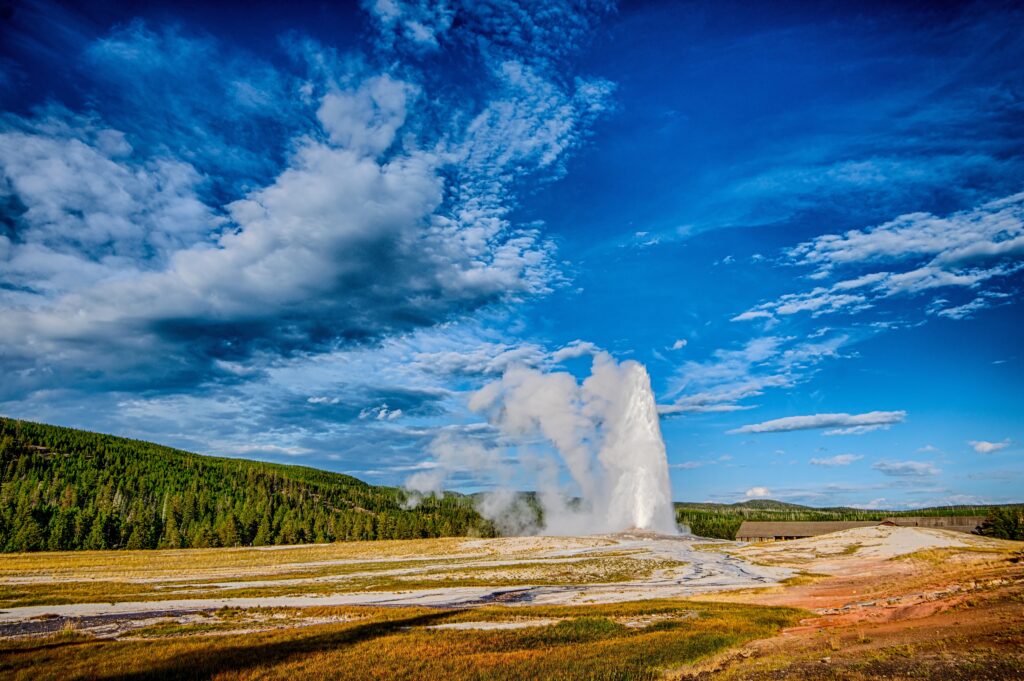
Yellowstone National Park covers approximately 2.2 million acres across Wyoming, Montana, and Idaho, with most of the park located in Wyoming.
The park is famous for:
- Old Faithful
- Grand Prismatic Spring
- The Grand Canyon of the Yellowstone
- Lamar Valley
- Hayden Valley
- Mammoth Hot Springs
- Yellowstone Lake
- Hundreds of geysers and hot springs
- Bison, wolves, grizzly bears, elk, and other wildlife
Nearly everything that makes Yellowstone unique connects back to the volcanic system beneath the park.
The heat underground powers an incredible collection of:
- Geysers
- Hot springs
- Mudpots
- Fumaroles
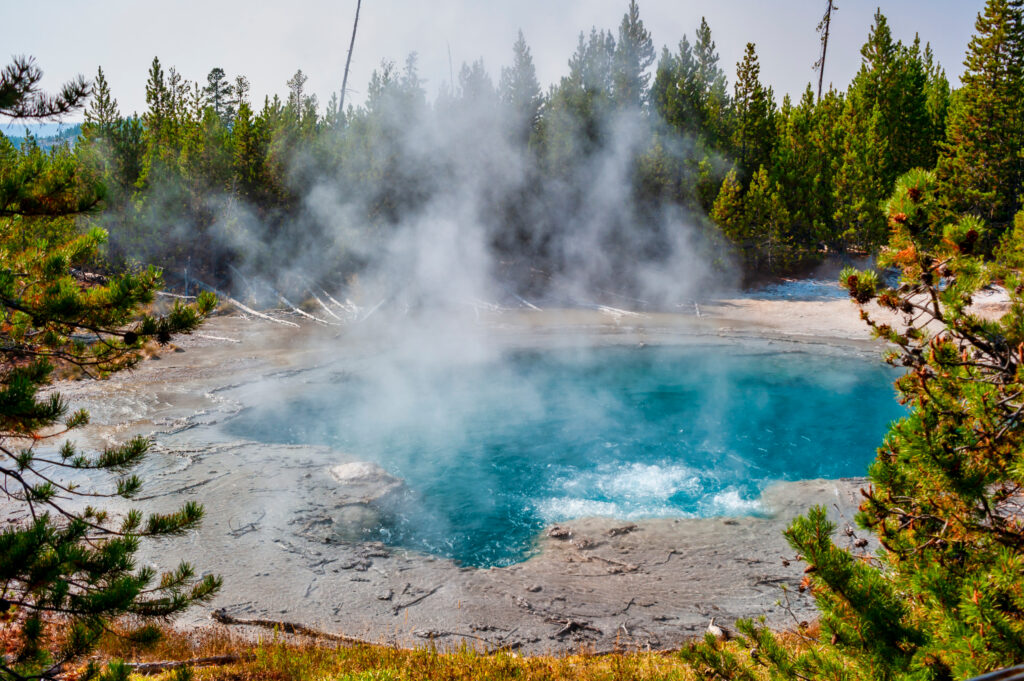
Yellowstone contains more geothermal features than anywhere else on Earth and roughly half of the world’s known geysers.
But what surprises many first-time visitors most is not the geology.
It is the size.
Yellowstone is not one compact destination where every attraction sits close together.
The roads form a large figure-eight through several different regions, and driving between them can take much longer than it appears on a map.
That is why a realistic plan matters so much here.
Before visiting, remember to follow Leave No Trace principles, respect wildlife, stay on designated trails, and never step off the boardwalk in a thermal area.
The ground around geothermal features can look completely solid while hiding scalding water and dangerously thin crust underneath.
The Main Areas of Yellowstone National Park
You do not need to memorize the entire park before your trip, but understanding the major regions will make planning much easier.
Old Faithful and the Upper Geyser Basin
For most first-time visitors, this is the classic Yellowstone experience.
Old Faithful is the park’s most famous geyser, but the surrounding Upper Geyser Basin contains much more than one eruption.
You will also find:
- Geothermal boardwalks
- Hot springs
- Other major geysers
- Historic Old Faithful Inn
- Visitor services
- Dining and lodging
One of the biggest mistakes visitors make is watching Old Faithful erupt and immediately leaving.
The larger basin is absolutely worth exploring.
Grand Prismatic Spring and the Midway Area
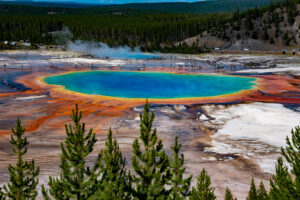
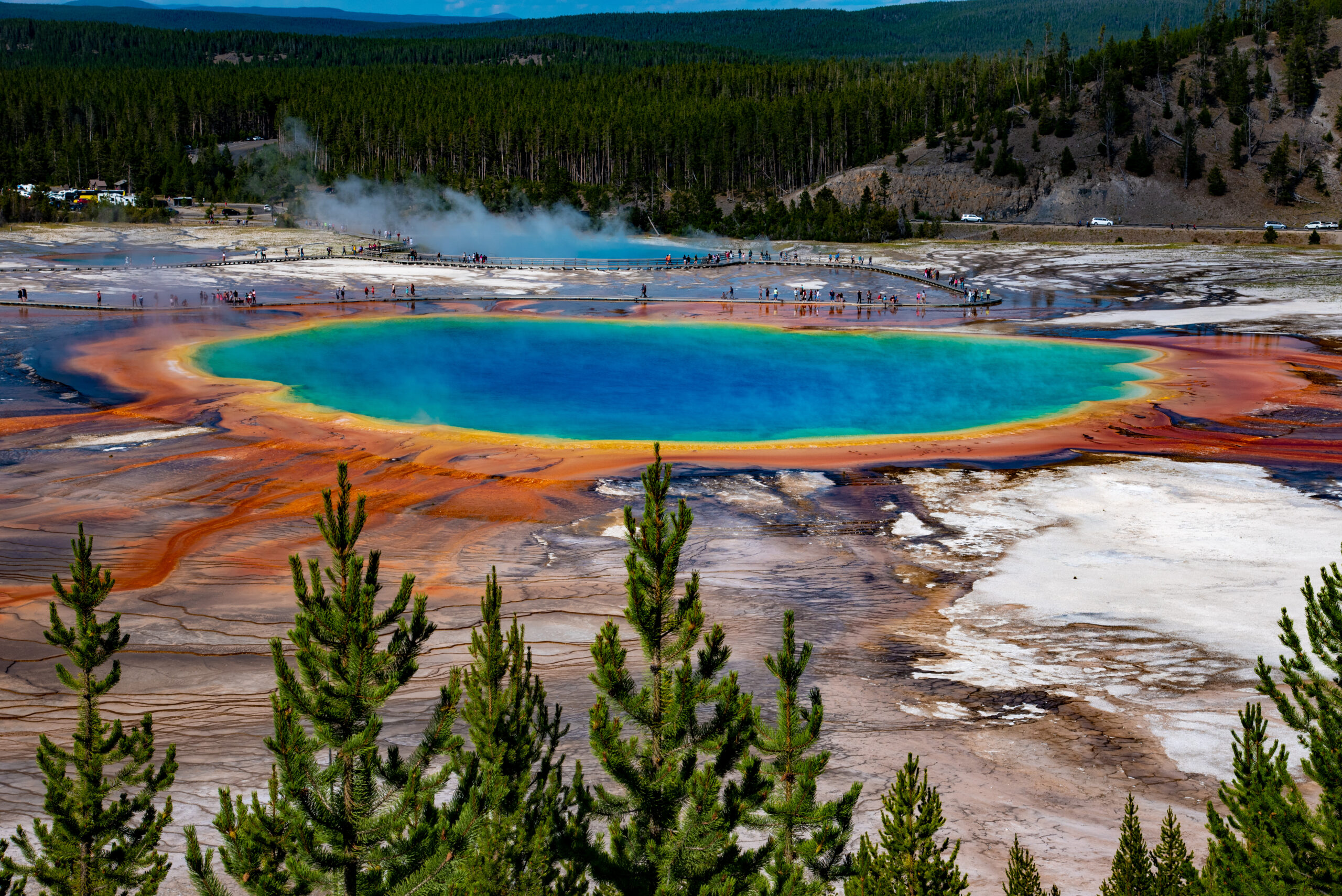
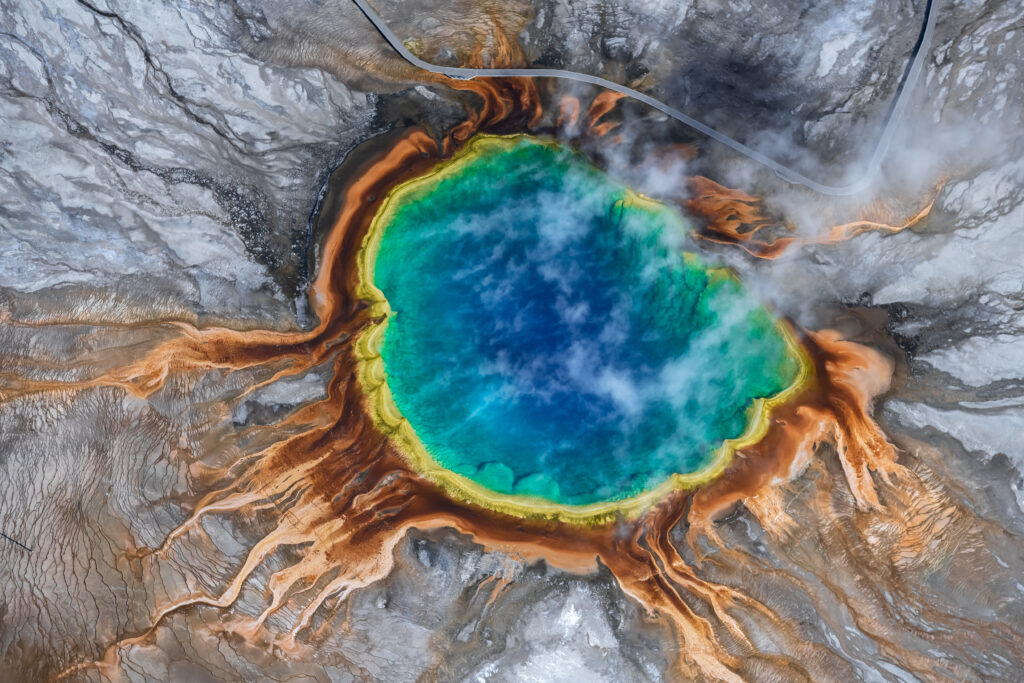
Grand Prismatic Spring is one of Yellowstone’s most recognizable landmarks.
The brilliant blue center and rings of yellow, orange, and green create one of the most incredible natural landscapes in the park.
There are different ways to experience the spring, including:
- A closer boardwalk view
- An elevated view from a nearby trail
Each gives you a completely different perspective.
The full premium guide explains how to work this area into your day without duplicating unnecessary driving.
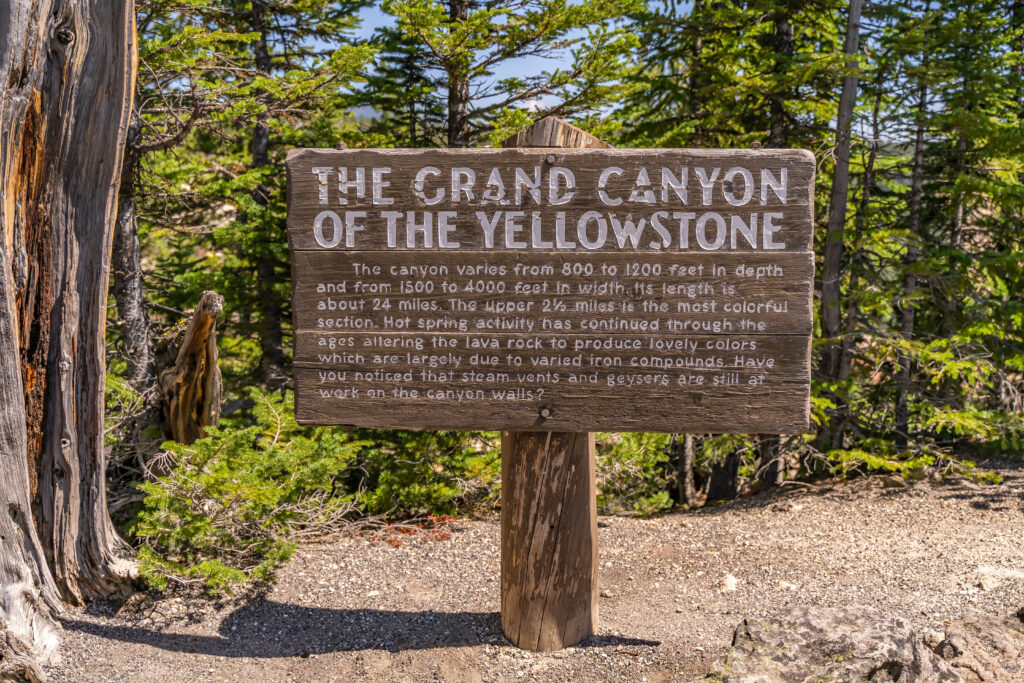
The Grand Canyon of the Yellowstone
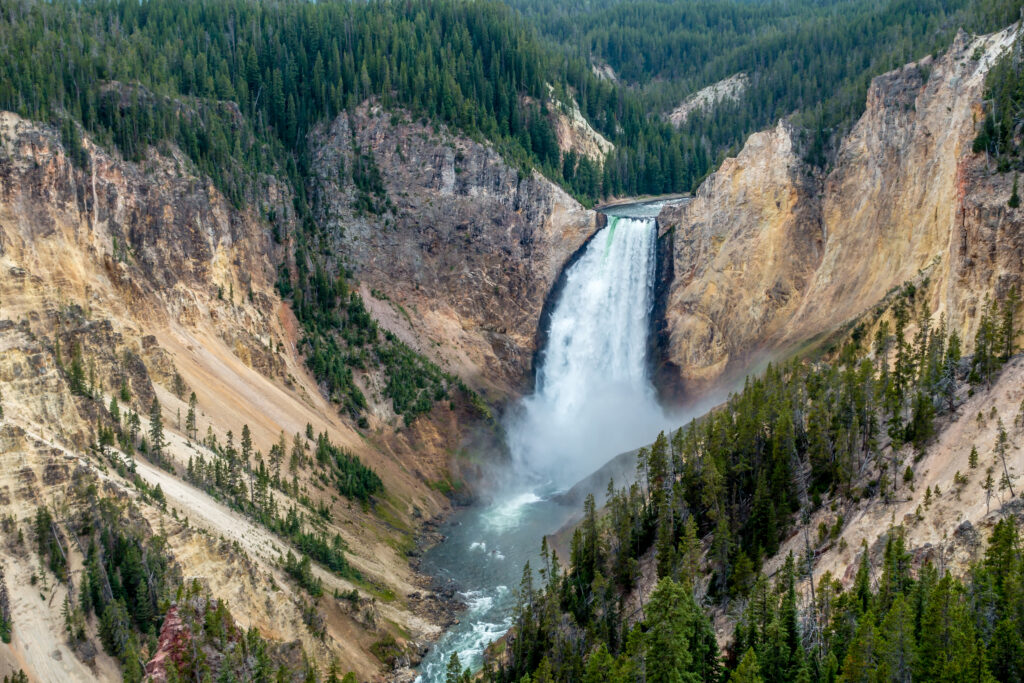
The Yellowstone River carved a dramatic canyon filled with yellow, orange, and pink rock.
This area is known for:
- Upper Falls
- Lower Falls
- Artist Point
- North Rim viewpoints
- South Rim viewpoints
- Short hikes and overlooks
It is one of the most visually dramatic areas in the entire park.
Do not treat it as one quick roadside photo stop.
Lamar Valley
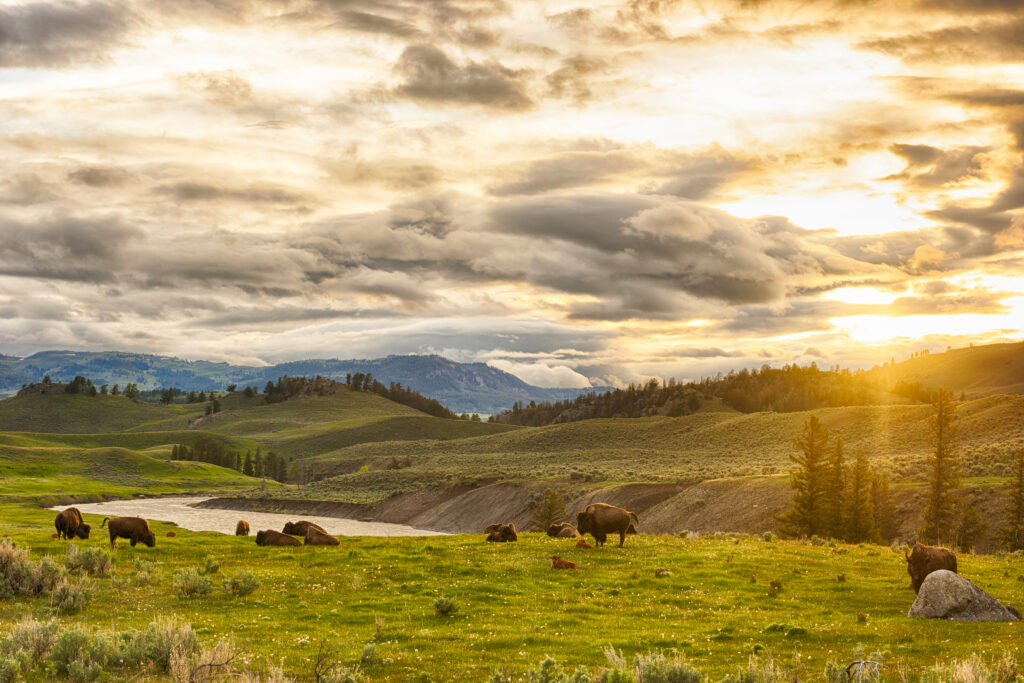
Lamar Valley is one of the greatest wildlife-viewing destinations in the United States.
Visitors come here hoping to see:
- Wolves
- Bison
- Grizzly bears
- Pronghorn
- Coyotes
- Other wildlife
The valley is especially popular with serious wildlife watchers carrying:
- Binoculars
- Spotting scopes
- Long camera lenses
Early mornings and evenings are generally the most rewarding.
Hayden Valley
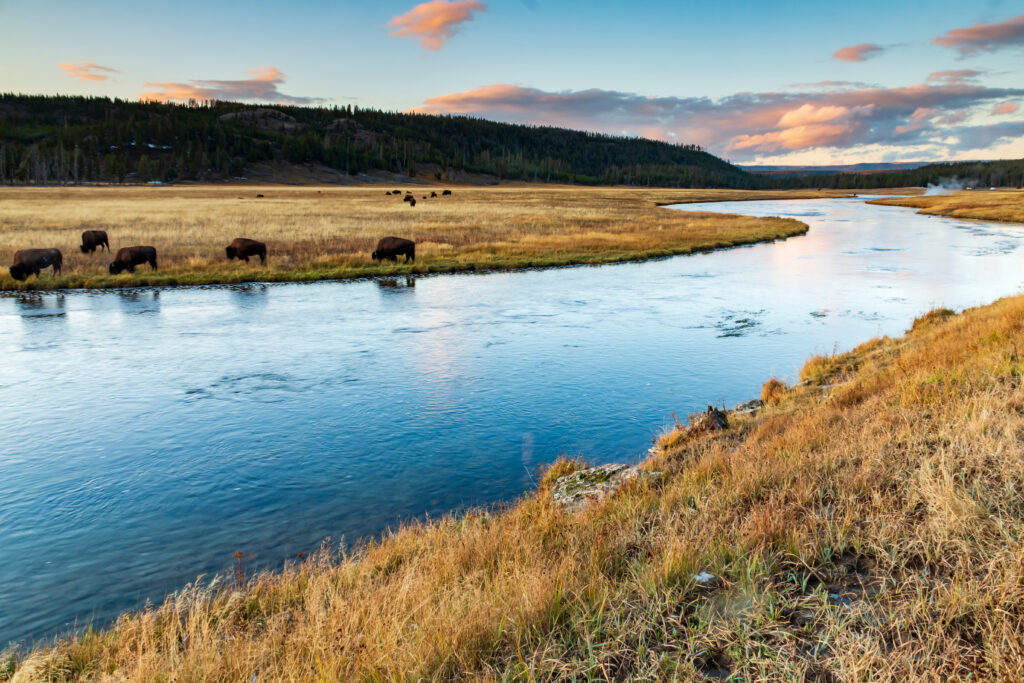
Hayden Valley is another major wildlife corridor.
Large bison herds are common, and wildlife frequently creates traffic backups.
Because Hayden Valley is more centrally located than Lamar Valley, it can be easier to combine with other sightseeing areas.
Just remember that a road that looks like a short drive on a map can become a much longer one when a herd of bison decides to stand in the road.
Mammoth Hot Springs
Mammoth looks completely different from Yellowstone’s other thermal areas.
Instead of colorful pools and erupting geysers, hot water flowing through limestone creates enormous white, orange, and cream-colored travertine terraces.
The Mammoth area is also known for:
- Historic Fort Yellowstone
- Elk
- Nearby lodging
- The North Entrance
- Year-round vehicle access from Gardiner
Yellowstone Lake and West Thumb
Yellowstone Lake is one of the largest high-elevation lakes in North America.
Nearby West Thumb Geyser Basin combines:
- Hot springs
- Geysers
- Lake views
- Mountain scenery
This area works especially well for travelers moving between Yellowstone and Grand Teton National Park.
Best Time to Visit
Yellowstone is open year-round, but each season offers a completely different experience.
Spring: April–May
Spring is one of the best times for wildlife.
You may see:
- Newborn bison calves
- Active bears
- Wolves
- Fewer visitors than summer
The challenge is access.
Yellowstone’s roads and entrances open gradually as snow is cleared, so spring trips require flexibility.
Summer: June–August
Summer offers the greatest access.
This is generally when:
- Major park roads are open
- Lodges and campgrounds are operating
- Most trails are accessible
- The widest range of services is available
It is also the busiest time of year.
Popular parking areas can become extremely crowded in the middle of the day.
Early mornings help.
Fall: September–October
Fall is one of our favorite seasons in Yellowstone.
You may find:
- Cooler temperatures
- Fewer crowds
- Active wildlife
- The elk rut
- Beautiful fall scenery
September can be an especially good month, but snow can arrive earlier than many travelers expect.
Winter: November–March
Winter transforms Yellowstone.
Most interior roads close to standard vehicles, and many areas are reached by snowcoach or snowmobile.
Winter can be incredible for:
- Wolves
- Snow-covered landscapes
- Photography
- Snowshoeing
- Cross-country skiing
It is beautiful—but it requires much more planning.
Getting To and Around Yellowstone National Park
Yellowstone has five entrances:
- North Entrance
- Northeast Entrance
- West Entrance
- East Entrance
- South Entrance
Which entrance you use matters because Yellowstone is enormous.
The main road system forms a figure-eight known as the Grand Loop Road.
It connects major areas including:
- Mammoth Hot Springs
- Norris Geyser Basin
- Canyon Village
- Yellowstone Lake
- West Thumb
- Old Faithful
- Madison
There is no park-wide visitor shuttle.
You will need your own vehicle for most Yellowstone trips.
A few things to know:
- Drive times are often longer than expected.
- Wildlife jams are normal.
- Parking fills at popular attractions.
- Road construction can create additional delays.
- Cell service is limited.
- Gas and food are spread far apart.
- Seasonal road openings affect spring and fall travel.
💡 Pro Tip: Do not plan Yellowstone by simply making a list of everything you want to see. Plan geographically.
Trying to visit Old Faithful, Lamar Valley, Mammoth Hot Springs, and Yellowstone Lake in the same day can leave you spending most of your trip in the car.
The premium guide gives you the complete regional strategy and shows how we group the park into manageable days.
Top Things to Do
You could spend a week in Yellowstone and still not see everything.
For a first trip, these are some of the experiences worth knowing about.
See Old Faithful
Old Faithful is Yellowstone’s most famous geyser.
Predicted eruption times are posted in the Old Faithful area, making it easier to plan your visit.
Watching the eruption is worth doing—but do not immediately leave afterward.
Spend time exploring the surrounding geothermal basin.
You may discover that some of your favorite features are not Old Faithful at all.
Explore More of the Geyser Basins
Yellowstone’s thermal areas each feel different.
You will find:
- Powerful geysers
- Colorful hot springs
- Milky-blue pools
- Bubbling mud
- Steaming landscapes
Old Faithful is only the beginning.
The premium guide includes full profiles of the major basins and helps you decide which ones deserve your limited time.
See Grand Prismatic Spring
Grand Prismatic Spring is one of Yellowstone’s most unforgettable sights.
Its enormous scale is difficult to understand until you see it in person.
The bright colors come from heat-loving microorganisms living in different temperature zones around the water.
You can experience the area from ground level or from above.
Both are worth considering.
Visit the Grand Canyon of the Yellowstone
The Grand Canyon of the Yellowstone is one of the most dramatic landscapes in the park.
Lower Falls plunges into the canyon below, surrounded by brilliantly colored rock.
There are viewpoints on both sides of the canyon.
Some require almost no walking.
Others involve much steeper trails.
Choose based on your time and energy.
Go Wildlife Watching
Wildlife is one of the biggest reasons to visit Yellowstone.
You may see:
- Bison
- Elk
- Bears
- Wolves
- Pronghorn
- Coyotes
- Moose
Some animals are common.
Others may require:
- Patience
- Very early mornings
- Binoculars
- Long camera lenses
Wildlife viewing is never guaranteed.
That is part of what makes it exciting.
Walk the Mammoth Hot Springs Terraces
Mammoth offers a geothermal landscape that looks completely different from the rest of Yellowstone.
Boardwalks allow you to explore the terraces and see how mineral-rich water constantly reshapes the area.
This can be a good shorter activity for families and visitors entering through Gardiner.
Visit Yellowstone Lake
Yellowstone Lake provides a different kind of scenery.
It is quieter and more open than many of the geothermal basins.
Nearby areas can be good for:
- Scenic drives
- Short walks
- Photography
- Pairing with a trip toward Grand Teton
A Few of the Best Hikes in Yellowstone National Park
Yellowstone is famous for geysers and wildlife, but there are also plenty of hiking opportunities.
A few types of experiences include:
Geothermal Boardwalks
Best for:
- Families
- First-time visitors
- Shorter walks
- Seeing the park’s famous thermal features
Waterfall Trails
Several trails take you closer to waterfalls and canyon viewpoints.
Some are short.
Others involve steep elevation changes.
Forest Hikes
There are quieter trails away from the most crowded geothermal areas.
These can be a great option for visitors who want something beyond boardwalks.
Mountain Hikes
Higher-elevation trails offer:
- Panoramic views
- Wildlife opportunities
- A more traditional hiking experience
The premium guide includes detailed profiles of the major hikes and walks, including distance, difficulty, time, logistics, crowd strategy, photography notes, and safety information.
Where To Stay Near Yellowstone National Park
Where you stay can completely change your trip.
Inside Yellowstone
Staying inside the park can reduce some driving and make early mornings easier.
Popular areas include:
- Old Faithful
- Canyon Village
- Mammoth Hot Springs
- Yellowstone Lake
- Grant Village
Some of Yellowstone’s most famous lodging options are historic destinations themselves.
In-park rooms can book far in advance.
West Yellowstone
West Yellowstone is one of the most popular gateway towns.
It offers:
- Hotels
- Restaurants
- Shops
- Gas
- Easy access to the West Entrance
It works especially well for travelers focusing on the geyser side of the park.
Gardiner
Gardiner is located at the North Entrance.
It can be useful for:
- Mammoth Hot Springs
- Northern Yellowstone
- Year-round access
Cooke City and Silver Gate
These small gateway communities sit near the Northeast Entrance.
They work especially well for travelers focused on Lamar Valley and wildlife.
Cody
Cody is a larger town east of Yellowstone.
It can make sense for road trips approaching through the East Entrance.
Jackson
Jackson is farther south and works best when combining Yellowstone with Grand Teton National Park.
Our Premium Yellowstone Guide includes the more detailed lodging strategy and helps you decide where to stay based on what you actually want to see.
Where To Eat Near Yellowstone National Park
Yellowstone does have food inside the park, but dining options are spread out and can be crowded during peak season.
You’ll find restaurants, cafeterias, general stores, and other food options in several developed areas.
For long sightseeing days, we recommend:
- Eating breakfast before starting
- Packing lunch
- Carrying plenty of snacks
- Keeping extra water in your vehicle
- Filling your gas tank whenever it is convenient
Gateway towns such as West Yellowstone and Gardiner offer additional dining options.
The premium guide includes our more detailed recommendations and shows you how to plan meals around where you will actually be each day.
How Much Time Do You Need at Yellowstone National Park?
Yellowstone is not a park we recommend squeezing into a few rushed hours.
One Day
With one day, choose a region.
For many first-time visitors, that means focusing on:
- Old Faithful and nearby geothermal areas
Or:
- The Grand Canyon of the Yellowstone and nearby wildlife country
Trying to see opposite sides of the park in one day can mean spending more time driving than exploring.
Two Days
With two days, you can begin to combine several major experiences.
You may be able to include:
- Geysers
- Grand Prismatic Spring
- The canyon
- Wildlife viewing
But your route matters.
Three Days
Three full days gives first-time visitors a much better introduction.
You can begin to experience:
- Old Faithful
- More geothermal areas
- The canyon
- A wildlife valley
- Mammoth Hot Springs
Our premium guide includes a complete 3-day itinerary so you do not have to guess how to organize those experiences.
Four to Five Days
Four or five days allows for:
- More wildlife mornings
- Additional hikes
- Yellowstone Lake
- More geothermal basins
- Photography
- Unexpected delays
This is a much more relaxed way to experience the park.
One Week
With a full week, you can slow down and potentially combine Yellowstone with Grand Teton National Park.
Things to Know Before You Go
- Yellowstone is much larger than many first-time visitors expect.
- There is no park-wide shuttle.
- Plan each day geographically.
- Drive times can be unpredictable.
- Wildlife jams are normal.
- Parking fills at major attractions.
- Cell service is limited.
- Download offline maps.
- Fill your gas tank whenever convenient.
- Weather changes quickly.
- Stay on every thermal boardwalk.
- Never approach wildlife.
- Carry bear spray when hiking.
- Check current road and trail conditions before your trip.
💡 Pro Tip: Build flexibility into every day. One incredible wildlife sighting may be worth changing your plans for.
What To Pack
-
Bring:
- Daypack
- Comfortable walking or hiking shoes
- Plenty of water
- Snacks or packed lunch
- Bear spray for hiking
- Layers
- Rain jacket
- Hat
- Sunglasses
- Sunscreen
- Offline maps
- Portable phone charger
- Camera
- Binoculars
- Basic first aid supplies
For wildlife photography:
- The longest lens you have
- Extra batteries
- Plenty of memory card space
Yellowstone mornings can be cold even when afternoons become warm.
Layers are essential.
Best Photo Spots in Yellowstone
Yellowstone is an incredible place for landscape and wildlife photography.
A few classic areas include:
- Old Faithful
- Grand Prismatic Spring overlook
- Upper Geyser Basin
- Artist Point
- Grand Canyon of the Yellowstone
- Lamar Valley
- Hayden Valley
- Mammoth Hot Springs
- Yellowstone Lake
The ideal time of day varies significantly depending on the location.
Our Premium Yellowstone Guide includes more detailed photography recommendations and helps you fit the best locations into your itinerary.
Is Yellowstone National Park Good for Families?
Absolutely.
Yellowstone is one of the best national parks for families because many of its most famous attractions do not require long hikes.
Family-friendly experiences can include:
- Watching Old Faithful erupt
- Walking geothermal boardwalks
- Looking for wildlife
- Visiting waterfalls
- Exploring Yellowstone Lake
- Junior Ranger activities
- Short scenic walks
The biggest challenges for families are often:
- Long drive times
- Crowds
- Limited cell service
- Keeping children safely on boardwalks
- Wildlife safety
- Trying to do too much
The best family itinerary is often the one that does less—but does it better.
Looking for a Complete Yellowstone National Park Guide?
This free guide gives you a strong starting point.
But the real Yellowstone planning questions begin when you try to organize the trip:
Which areas belong together?
How much can you realistically see in one day?
Where should you stay to reduce unnecessary driving?
Which geyser basins are worth your time?
Which hikes work best for your family?
How do you plan wildlife viewing without spending the entire day in the car?
That is exactly what our Premium Yellowstone National Park Ultimate Guide is designed to solve.
Inside the complete guide, you’ll find:
- A detailed 3-day Yellowstone itinerary
- Complete regional planning strategy
- 2026 entrance and road information
- Major geyser and thermal basin profiles
- Best hikes and walks with difficulty notes
- Grand Canyon viewpoints and trail information
- Lamar Valley wildlife strategy
- Family-friendly recommendations
- Permit and access information
- Bear safety
- Stargazing tips
- Wildlife information
- Where to stay
- Gateway town comparisons
- Where to eat
- Photography recommendations
- Yellowstone and Grand Teton planning
- Packing advice
- Common mistakes to avoid
- Quick-reference trip planning information
- Our real first-hand recommendations
It is designed to help you spend less time piecing together information from dozens of websites and more time actually experiencing Yellowstone.
👉 Grab the complete Yellowstone National Park Ultimate Guide in our shop and plan your trip with confidence.
We hope this guide helps you plan an unforgettable Yellowstone adventure.
✨ Keep Adventuring, Keep Exploring, and we’ll see you on the next Adventure! ✨