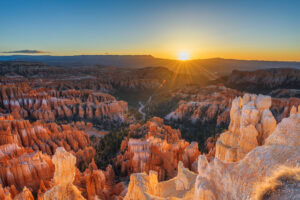


Moab is famous for red rock arches, towering sandstone cliffs, dramatic canyons, and some of the most unforgettable landscapes in Utah.
But when the sun goes down, an entirely different side of Moab comes to life.
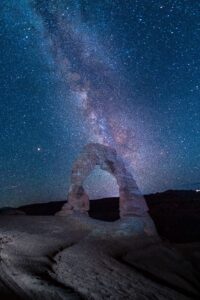
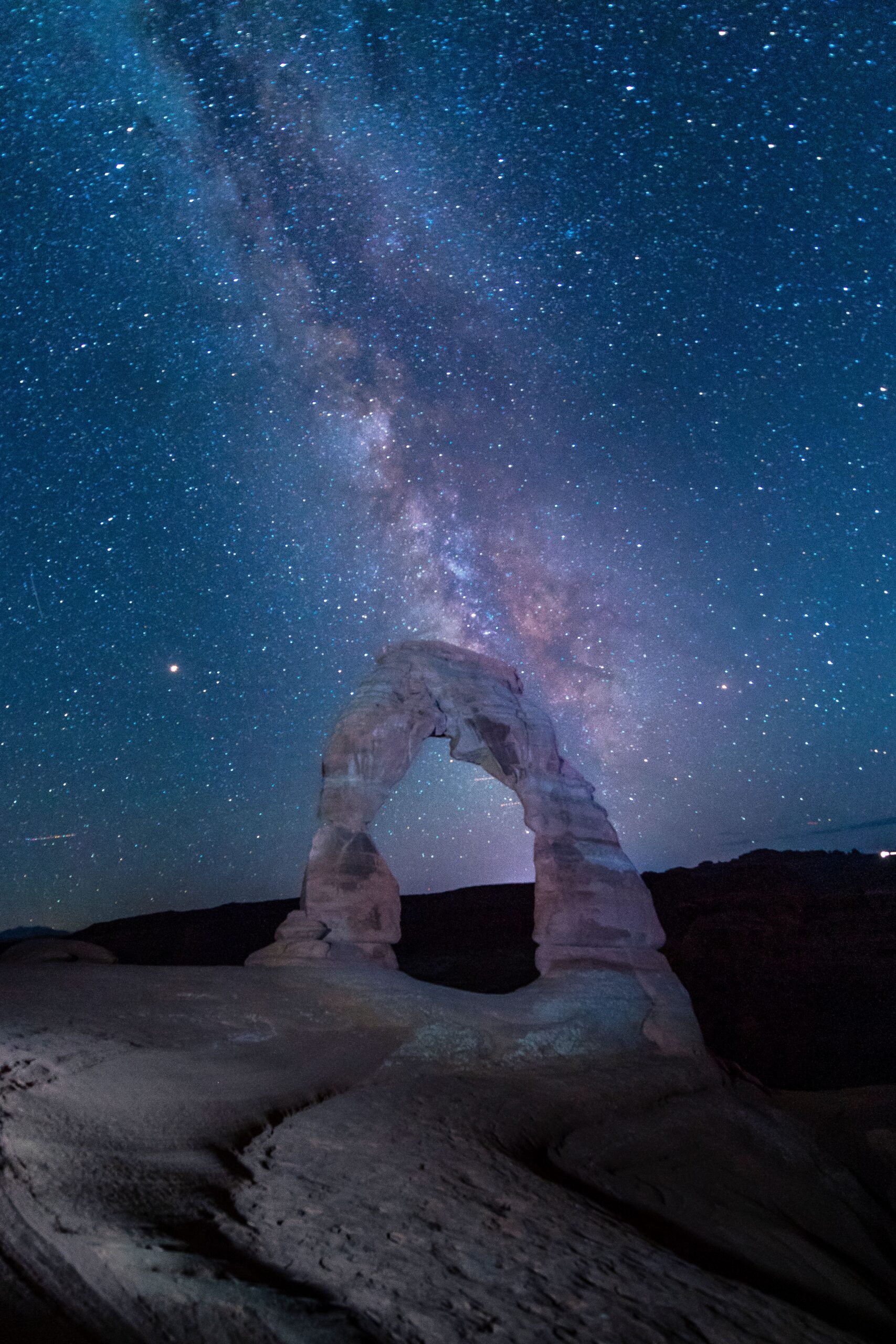
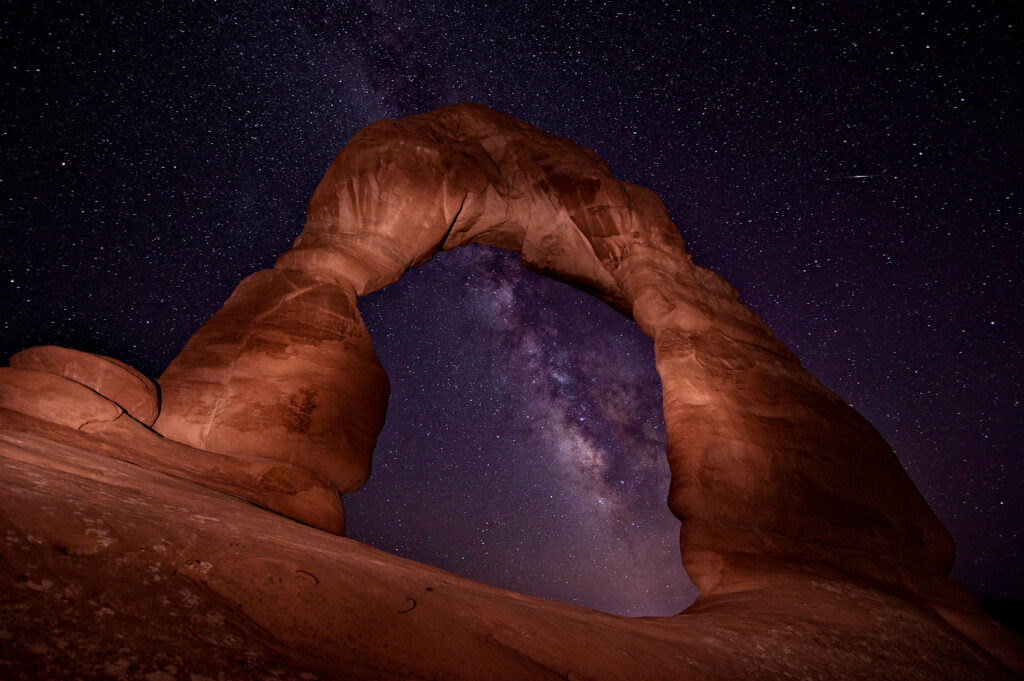
Thousands of stars appear overhead. The Milky Way stretches across the desert sky. Red rock arches and sandstone towers become silhouettes against the stars. And in some of the darkest places in the region, the night sky can look almost nothing like what most of us see from home.
Moab sits at the center of one of the greatest dark-sky regions in the world, surrounded by internationally recognized places including Arches National Park, Canyonlands National Park, Dead Horse Point State Park, and other remote public lands.
This free Moab stargazing guide will help you get started, including:
- The best time to see the Milky Way in Moab
- A few of our favorite stargazing locations
- Where to go with kids
- What to know about moon phases
- Basic astrophotography tips
- What to pack
- Where to stay
- How to combine stargazing with an Arches or Canyonlands trip
- But this is just the starting point.
Our Premium 21-Page Moab Astro Tourism Guide goes much deeper with all 11 of our recommended stargazing and astrophotography locations, exact access details, a complete 3-day itinerary, camera settings, gear recommendations, guided tour information, dark-sky lodging, night-access rules, and everything you need to confidently plan your own Moab night-sky adventure.
👉 Grab the complete Moab Astro Tourism Guide in our shop and take the guesswork out of planning your trip.
Why Is Moab So Good for Stargazing?
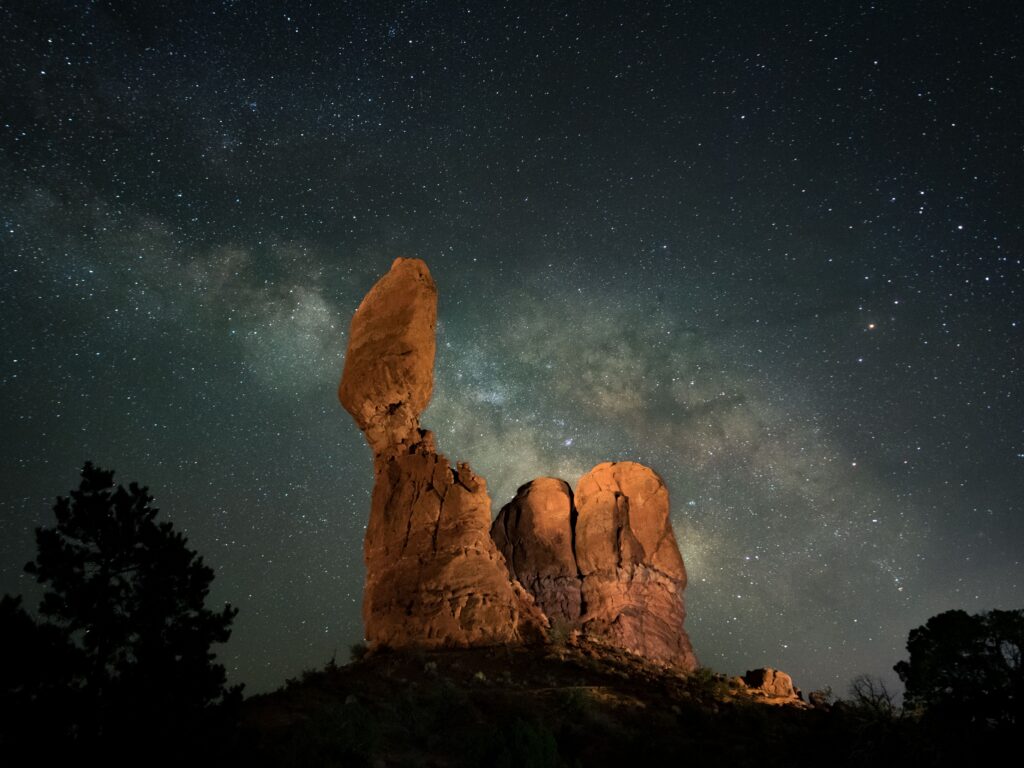
Moab is one of the best places in the United States to experience a truly dark night sky.
Several things come together here:
- Very little light pollution outside town
- High desert elevation
- Dry air
- Huge areas of undeveloped public land
- Multiple protected dark-sky destinations
- Years of local efforts to reduce unnecessary nighttime lighting
Moab itself is now an officially certified International Dark Sky Community, joining a growing number of Utah communities committed to protecting the night sky.
Within easy driving distance of downtown Moab, you can also reach:
- Arches National Park
- Canyonlands National Park
- Dead Horse Point State Park
- Castle Valley
- Fisher Towers
- Potash Road
- The La Sal Mountains
That means you can spend your day hiking beneath towering arches and your night watching the Milky Way above them.
On a clear, moonless night away from town, the difference can be incredible.
You may see:
- Thousands of stars
- The Milky Way stretching overhead
- Star clusters
- Meteor showers
- Planets
- Jupiter’s largest moons with binoculars
- Even more detail through a telescope
For many families, this becomes one of the most memorable parts of a Moab trip.
Best Time for Stargazing in Moab
You can stargaze in Moab year-round, but what you see changes with the seasons.
Spring: March–May
Spring is an excellent time to visit Moab.
The daytime temperatures are usually more comfortable than summer, wildflowers may be blooming, and the Milky Way’s bright galactic core begins becoming visible before sunrise.
Spring works well for travelers who don’t mind getting up very early for a pre-dawn photography session.
Summer: June–August
Summer offers some of the longest opportunities to see the Milky Way’s bright core.
The nights are warmer, which can make sitting outside under the stars more comfortable.
The tradeoffs are:
- Hot daytime temperatures
- Larger crowds
- Summer storms
- Late sunsets
- This can still be an incredible season for night photography.
Fall: September–November
Fall is our favorite overall season for Moab stargazing.
September and early October can offer an ideal combination of:
- Comfortable temperatures
- Thinner crowds
- Clearer air
- Early-evening Milky Way opportunities
- For many visitors, this is the easiest time to combine hiking, photography, and stargazing without dealing with the worst heat of summer.
Winter: December–February
The bright Milky Way core is below the horizon at night during winter, but that does not mean winter is a bad time for stargazing.
Winter can offer:
- Very dark skies
- Clear, dry air
- Far fewer crowds
- Beautiful winter constellations
- Meteor showers
- Deep-sky viewing
It is also much colder than many first-time visitors expect, so dress accordingly.
The Most Important Thing to Check: The Moon
Before you book a stargazing trip, check the moon phase.
For the darkest sky and best view of faint stars and the Milky Way, plan around the new moon.
A good rule is to aim for the few days before or after a new moon.
A bright moon can wash out:
- Fainter stars
- The Milky Way
- Deep-sky details
But a full moon is not necessarily a wasted night.
Moonlight can create a completely different kind of experience, especially for:
- Moonlit desert walks
- Photographing red rock foregrounds
- Viewing canyon landscapes after dark
- Families who don’t need a completely black sky
- The best moon phase depends on what you want to experience.
Our Premium Moab Astro Tourism Guide gives you the deeper planning strategy, including how to match your trip timing to the kind of night-sky experience you want.
Best Places to Stargaze Near Moab
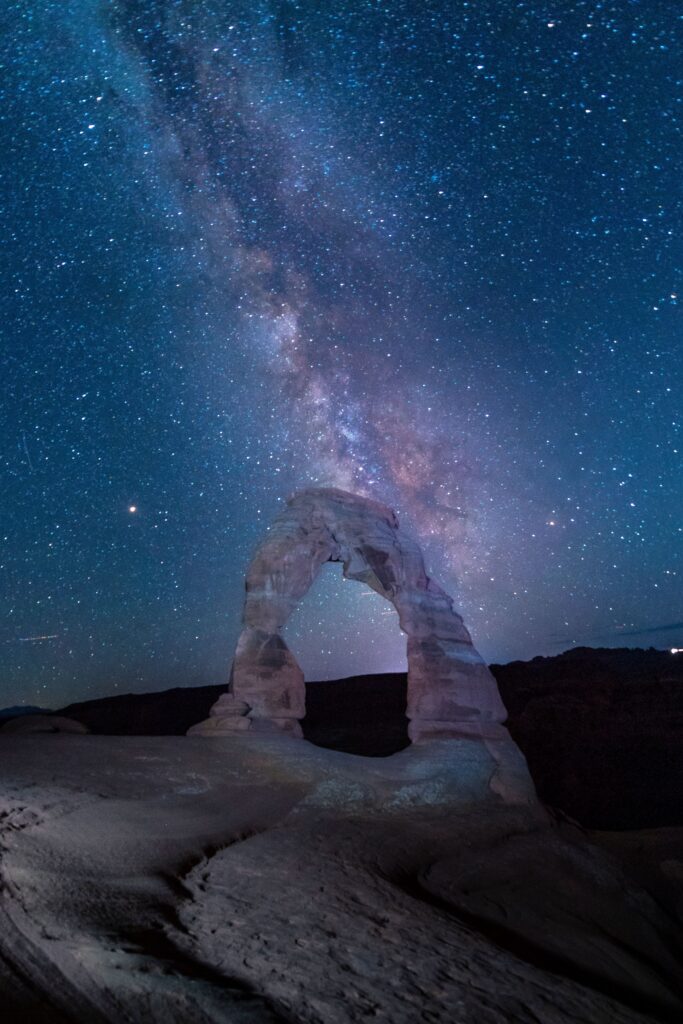
Moab has far more night-sky locations than most first-time visitors realize.
Here are a few of the easiest and most iconic places to start.
Our complete premium guide includes 11 detailed locations, with access information, driving distances, difficulty levels, night-use considerations, and our insider tips for each one.
Canyonlands National Park
Canyonlands is one of the darkest and most spectacular places near Moab.
The Island in the Sky District offers huge open horizons and dramatic canyon views, making it incredible for:
- Naked-eye stargazing
- Milky Way photography
- Wide-angle night landscapes
- Meteor showers
Popular areas include the Mesa Arch and Grand View Point region.
After dark, the busy daytime crowds can disappear, leaving behind a completely different experience.
A few things to remember:
- Bring offline maps.
- Watch your footing around canyon rims.
- Bring multiple light sources.
- Keep white light to a minimum around other stargazers and photographers.
For our exact Canyonlands night locations and planning notes, check out the Premium 21-Page Moab Astro Tourism Guide.
Arches National Park
Arches is one of the easiest places to combine daytime sightseeing with nighttime stargazing.
Famous formations create incredible foregrounds for the night sky.
Popular areas for night viewing include:
- Balanced Rock
- The Windows Section
- Double Arch
- Devils Garden area
Arches can be especially good for first-time visitors because many locations are reached by paved roads and short walks.
The farther you travel into the park, the darker the sky can feel.
💡 Pro Tip: Complete any unfamiliar trail during daylight before attempting it after dark. Navigating slickrock and unlit desert trails is much harder at night.
Potash Road
Potash Road is one of the easiest options for first-time stargazers and families.
This scenic paved road follows the Colorado River just outside Moab, with red rock cliffs rising around it.
Why we like it:
- Short drive from town
- No long hike required
- Multiple pullouts
- Easy to leave when kids are tired
- Great introduction to desert stargazing
It is not necessarily the darkest location in the region, but accessibility can matter just as much as perfect darkness—especially for families.
Castle Valley
Castle Valley is one of the most dramatic places near Moab.
Massive formations including Castleton Tower rise above the valley, creating incredible silhouettes against the stars.
This area is especially popular with photographers because of its:
- Dramatic foregrounds
- Open sky
- Distance from downtown Moab
- Easy roadside access in many areas
It can feel far more remote than locations inside the major national parks.
Dead Horse Point State Park
Dead Horse Point is one of Utah’s most dramatic viewpoints and an internationally recognized dark-sky destination.
The combination of:
- High elevation
- Open horizons
- Deep canyon views
- Dark skies
makes it an incredible place after sunset.
However, this is one location where access rules matter.
Day-use visitors need to plan around the park’s evening closing time. Staying later may require a campground or yurt reservation, participation in an approved program, or another form of authorized access.
This is exactly the type of detail that can change how you plan a night, which is why the full guide includes a complete breakdown of night access for each location.
Want All 11 Stargazing Locations?
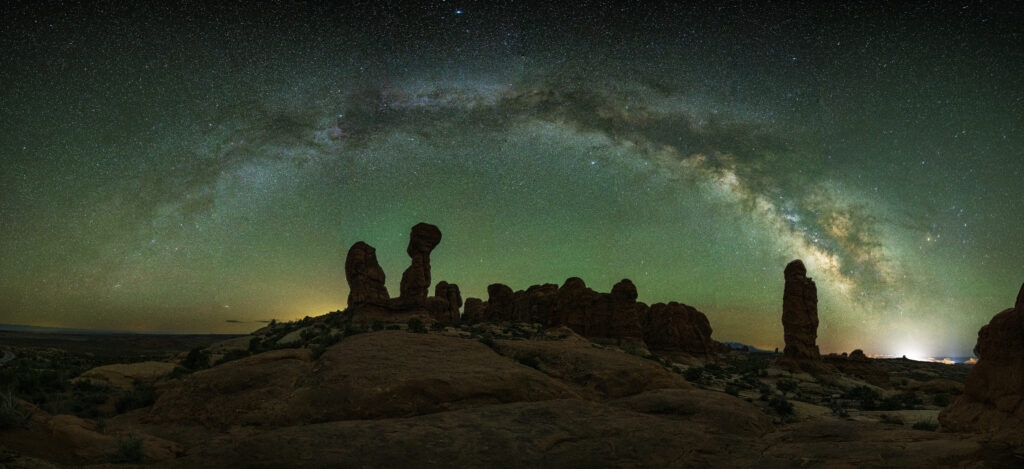
These five spots are only a starting point.
Our Premium Moab Astro Tourism Guide includes 11 complete stargazing and astrophotography locations, including:
- National park locations
- State park options
- Family-friendly spots
- Remote desert sites
- Roadside locations
- High-elevation alternatives
- Arch photography locations
Each location includes details such as:
- Distance from Moab
- Access information
- Difficulty
- Why the location is special
- Photography potential
- Nighttime safety considerations
- Our insider recommendations
👉 Get the complete 21-page Moab Astro Tourism Guide and choose the right location for your trip.
Is Moab Stargazing Good for Families?
Absolutely.
You do not need to hike miles into the wilderness or stay outside until 2 AM to give your kids an incredible night-sky experience.
The easiest family options usually involve:
- Short drives
- Little or no hiking
- Easy access back to your vehicle
- A clear destination
- A guided experience
Good starting points can include:
- Potash Road
- Accessible areas of Arches
- A guided telescope tour
- Bring:
- Blankets
- Reclining chairs
- Warm layers
- Snacks
- A warm drink
- Red-light flashlights
And do not feel like you need to stay out all night.
Even 30 to 45 minutes beneath a truly dark sky can be an unforgettable experience for a child.
Do You Need a Guided Stargazing Tour?
No.
You can have an incredible experience simply driving away from the lights, allowing your eyes to adjust, and looking up.
But guided tours can be especially valuable if you want to:
- Look through powerful telescopes
- See planets and deep-sky objects
- Learn constellations
- Understand what you are seeing
- Get astrophotography help
- Avoid figuring out remote locations on your own
Moab has several operators offering different experiences, including:
- Telescope-based astronomy tours
- Private stargazing sessions
- Small-group programs
- Astrophotography instruction
- Night photography workshops
The full guide includes our overview of the types of tours available and how to decide whether a guided experience is worth adding to your trip.
Southeast Utah AstroFest
AstroFest is one of the best times of the year for travelers who want to experience Utah’s dark skies.
The event brings together multiple parks and dark-sky destinations throughout southeastern Utah for programming that may include:
- Telescope viewing
- Ranger programs
- Astronomy presentations
- Night-sky activities
Programming can take place across several destinations in the region, so check the current schedule when planning your trip.
AstroFest programs are generally free, although normal park entrance fees still apply.
Basic Astrophotography Tips for Beginners
You do not need a professional camera to start photographing the stars.
Modern phones can capture surprisingly good night-sky photos, especially when stabilized on a tripod.
For more advanced photos, a traditional camera setup usually includes:
- DSLR or mirrorless camera
- Wide-angle lens
- Fast aperture
- Sturdy tripod
- Extra batteries
- Remote shutter or timer
A basic starting point might be:
- ISO 3200
- f/2.8
- 10–20 second shutter speed
Your exact settings will depend on:
- Camera
- Lens
- Focal length
- Amount of available moonlight
- How much star movement you are willing to accept
The key is to take a test shot, zoom in, and adjust.
Our premium guide includes a full astrophotography gear section with:
- Camera recommendations
- Lens guidance
- Tripod tips
- Exposure basics
- The 500 Rule
- Smartphone options
- Apps we recommend
- Light-painting tips
Best Apps for Planning a Moab Night-Sky Trip
A few tools can make night-sky planning much easier.
Popular options include:
- PhotoPills
- Stellarium
- SkyView
These tools can help with:
- Milky Way position
- Moon phase
- Moonrise and moonset
- Constellations
- Planets
- Photography timing
Download everything before leaving Moab.
Cell service can be very limited or nonexistent at many dark-sky locations.
Where to Stay for Stargazing Near Moab
Moab has lodging for almost every budget, but travelers specifically planning around the night sky may want to consider staying somewhere with dark-sky-friendly lighting.
The region has officially recognized DarkSky Approved Lodging options, including:
- ULUM Moab
- Under Canvas Moab
Other popular lodging styles include:
- Hotels in downtown Moab
- Riverside resorts
- Glamping
- Vacation rentals
- Campgrounds
- Yurts
Where you stay depends on whether you prioritize:
- Restaurants and town access
- National park convenience
- Staying under dark skies
- Camping
- Photography
Our full guide includes more lodging context specifically for astro-focused travelers.
Where to Eat Before Stargazing
There is generally no food or water available once you leave Moab for most remote stargazing locations.
Plan before you go.
For a longer night outside:
- Eat dinner before leaving town.
- Bring snacks.
- Carry plenty of water.
- Pack a warm drink during colder months.
- Do not assume you can find food late at night.
One of the easiest mistakes to make is starting a sunset photo session, staying for the stars, and suddenly realizing you have not eaten in eight hours.
Pack more than you think you will need.
How to Combine Stargazing With Arches and Canyonlands
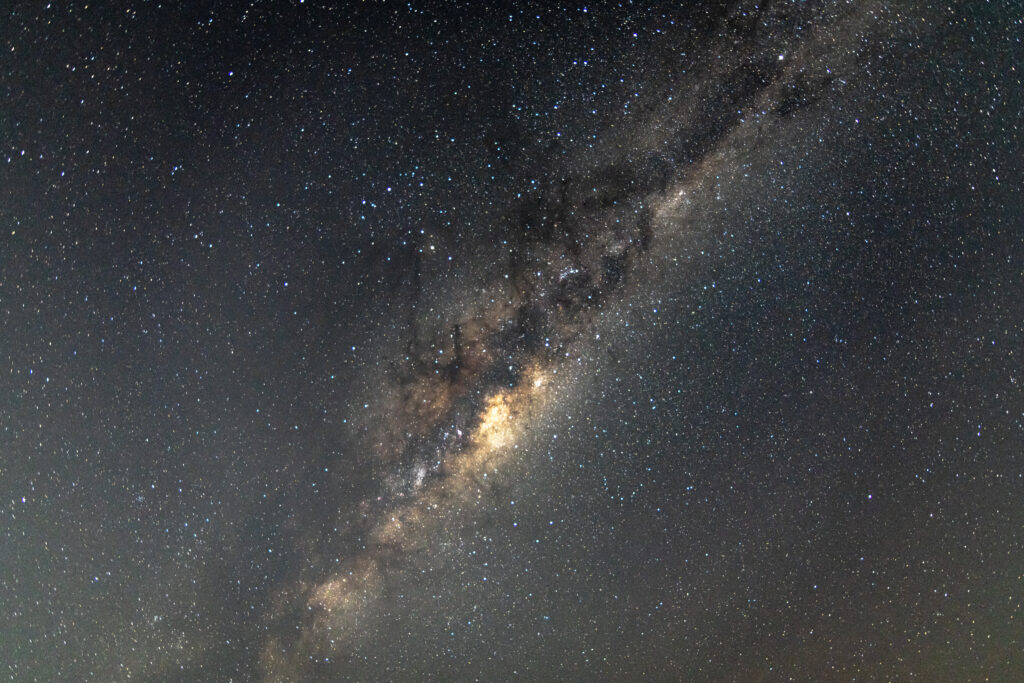
Most people do not visit Moab only for astronomy.
The best trips combine daytime adventures with night-sky experiences.
A few easy combinations include:
Arches by Day + Stars at Night
Explore Arches during the day, watch sunset, then remain in the park for stargazing.
Canyonlands Sunset + Stargazing
Visit viewpoints in Island in the Sky, stay through sunset, then experience the same landscape beneath the stars.
Fisher Towers Golden Hour + Night Photography
Arrive before sunset, photograph the towers during golden hour, and stay as the stars appear.
Canyonlands Needles + Wilson Arch
Spend the day exploring south of Moab, then stop at Wilson Arch as a bonus night-sky stop on your return.
The biggest thing to remember is energy.
A sunrise hike, full day of exploring, sunset shoot, and midnight photography session can be a lot in one day.
Plan recovery time.
What to Pack for Stargazing in Moab
Bring more than just a camera.
We recommend:
- Warm layers
- Red-light headlamp
- Backup flashlight
- Offline maps
- Water
- Snacks
- Blanket or reclining chair
- Extra camera batteries
- Portable charger
- Tripod
- Thermos with a warm drink during colder seasons
Desert temperatures can drop quickly after sunset.
Even when afternoons are hot, nights can feel much colder than expected.
Dark Sky Etiquette
Your actions can affect everyone around you.
Once you reach a shared night-sky location:
- Avoid bright white lights.
- Use a red flashlight when possible.
- Dim your phone screen.
- Be thoughtful with headlights.
- Park without blocking other photographers.
- Keep voices lower around quiet viewing areas.
It can take 20 to 30 minutes for your eyes to fully adjust to darkness.
One bright flashlight can temporarily ruin that adjustment for everyone nearby.
Important Things to Know Before You Go
- Check the moon phase before booking your trip.
- Check the cloud forecast again on the afternoon of your stargazing night.
- Download offline maps before leaving town.
- Tell someone where you are going if visiting a remote location.
- Bring more than one light source.
- Stay on established trails.
- Watch for wildlife after dark.
- Never climb near exposed canyon edges in complete darkness.
- Bring warm layers year-round.
- Do unfamiliar hikes in daylight before repeating them at night.
- Check current park hours and access rules before your visit.
- Never fly drones inside Arches or Canyonlands National Parks.
💡 Pro Tip: Do not plan your entire trip around one night. If stargazing is a priority, leave yourself a backup night in case clouds or weather ruin your first attempt.
Moab Stargazing FAQ
Can you see the Milky Way from Moab?
Yes. The Milky Way can be visible from the Moab region during much of the year, with the bright galactic core generally visible from spring through fall.
For the best experience, travel away from city lights and plan around the new moon.
What is the best month for stargazing in Moab?
September and early October are some of our favorite times because the weather is more comfortable and Milky Way viewing can still be excellent.
Summer offers longer Milky Way visibility but also brings hotter daytime temperatures and larger crowds.
Do you need a telescope?
No.
You can see thousands of stars and the Milky Way with the naked eye under good conditions.
Binoculars add another level of detail, while guided telescope tours can reveal planets, star clusters, nebulae, and other objects.
Is Moab stargazing good for kids?
Yes.
Choose an easy-access location, bring warm clothes and chairs or blankets, and keep the evening shorter.
A guided tour can also be a great way to keep kids engaged.
Can you stargaze inside Arches National Park?
Yes.
Arches is open day and night, and many visitors experience the park after sunset.
Always stay on established routes and use extra caution when walking after dark.
Do you need a permit to take Milky Way photos?
Casual stargazing and most small-scale personal or professional photography do not require a special astrophotography permit.
Larger or more complex productions may have different requirements, so check directly with the appropriate park when necessary.
Looking for the Complete Moab Astro Tourism Guide?
This free guide gives you a helpful starting point, but planning a great night under Moab’s stars takes more than simply driving into the desert and looking up.
Our Premium 21-Page Moab Astro Tourism Guide includes:
- 11 detailed stargazing and astrophotography locations
- Distance and access information for every location
- Beginner-friendly night-sky spots
- Remote photography locations
- National park and public-land options
- Complete Milky Way season planning
- Moon phase strategy
- Dark-sky ratings and information
- Night-access rules
- Park fees and hours
- A complete 3-day astro-focused itinerary
- Guided tour information
- Southeast Utah AstroFest details
- DarkSky Approved lodging
- Where to eat before a long night
- Family stargazing advice
- Dark-sky etiquette
- Wildlife-after-dark tips
- Complete astrophotography gear guide
- Camera settings
- Lens recommendations
- Smartphone photography tips
- Photography planning apps
- Light-painting basics
- Our real first-hand planning recommendations
It is designed to help you spend less time trying to piece together information from dozens of websites and more time actually enjoying the stars.
👉 Grab the complete 21-page Moab Astro Tourism Guide in our shop and take the guesswork out of planning your night-sky adventure!
We hope this guide helps you experience an entirely different side of Moab.
✨ Keep Adventuring, Keep Exploring, and we’ll see you on the next Adventure! ✨