

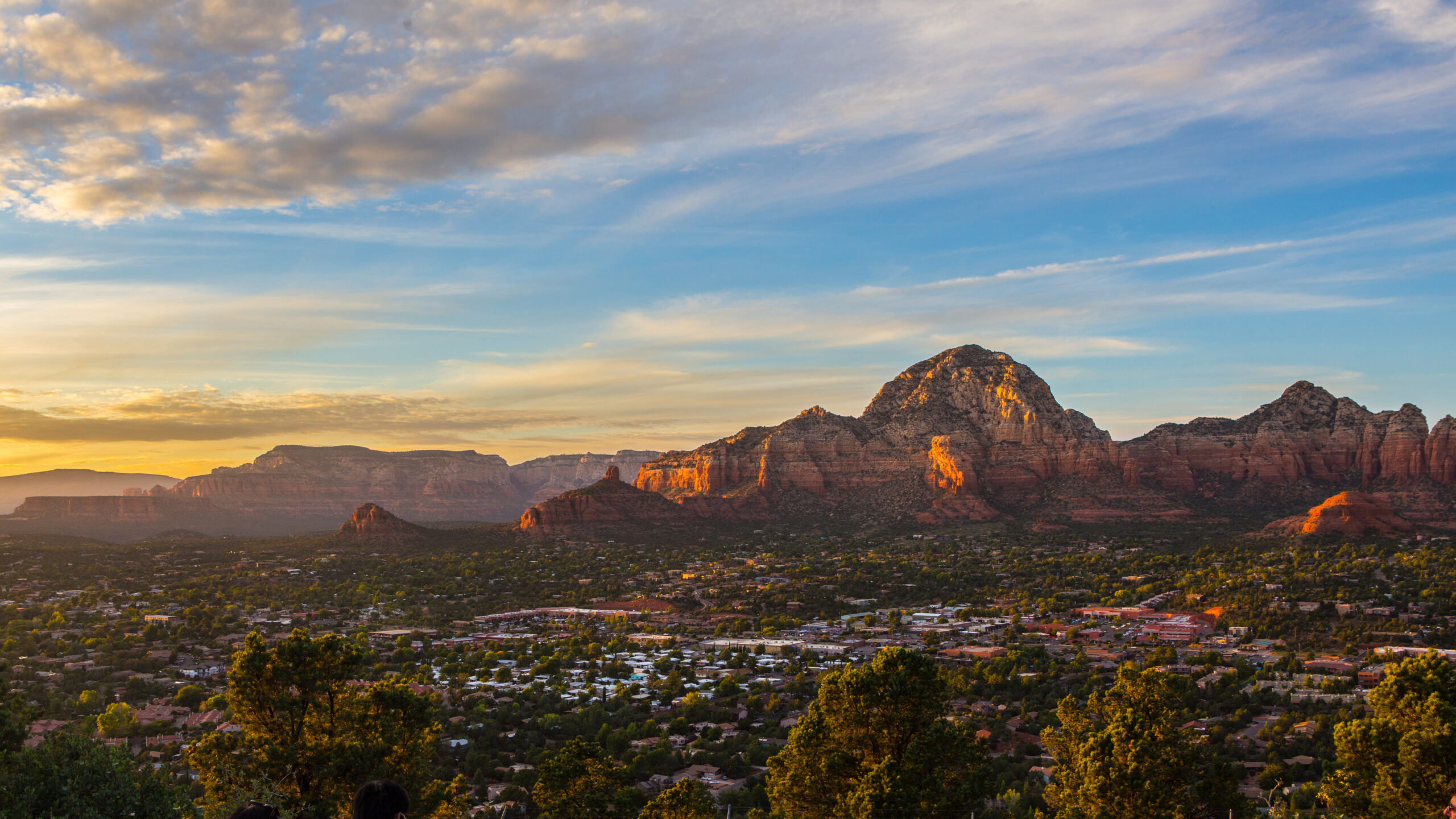
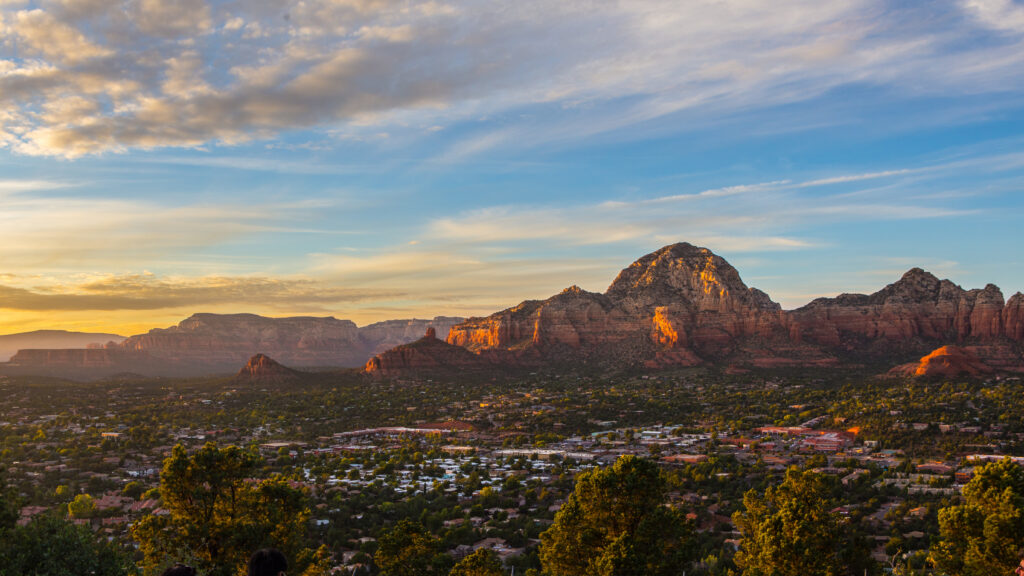
Sedona is one of the most beautiful places in Arizona.
Red rock formations rise out of the desert, trails wind across slickrock and canyon walls, Oak Creek cuts through the landscape, and nearly every turn gives you another postcard-worthy view.
But here’s the thing most first-time visitors get wrong:
Sedona is not just a quick photo stop on the way to the Grand Canyon.
It is a destination that deserves time.
Yes, you can drive through, stop at a few overlooks, walk around Uptown, and say you saw Sedona.
But the best parts of Sedona happen when you slow down, get out of the car, hike the trails, visit the heritage sites, explore Oak Creek Canyon, and build your trip around more than the same five crowded viewpoints.
That’s where this Sedona Arizona travel guide comes in.
This free guide covers the basics you need to start planning, including:
- The best time to visit Sedona
- How many days you need
- Where to stay
- How to get around
- The Red Rock Pass
- Sedona shuttle tips
- The best hikes to know about
- Oak Creek Canyon and Slide Rock
- Sedona vortex sites
- Heritage and culture
- Scenic drives and day trips
- Where to eat
- What to pack
- Common planning mistakes
For the full planning breakdown, our Ultimate Sedona Arizona Travel Guide 2026 includes 20+ hikes and trail cards, all four major vortex sites, Oak Creek Canyon, Slide Rock, West Fork, heritage sites, lodging areas, tours, scenic drives, realistic itineraries, budget planning, safety tips, and quick-reference planning checklists.
👉 Grab the complete Sedona Arizona Travel Guide in our shop and plan your red rock adventure with confidence.
Why Visit Sedona?
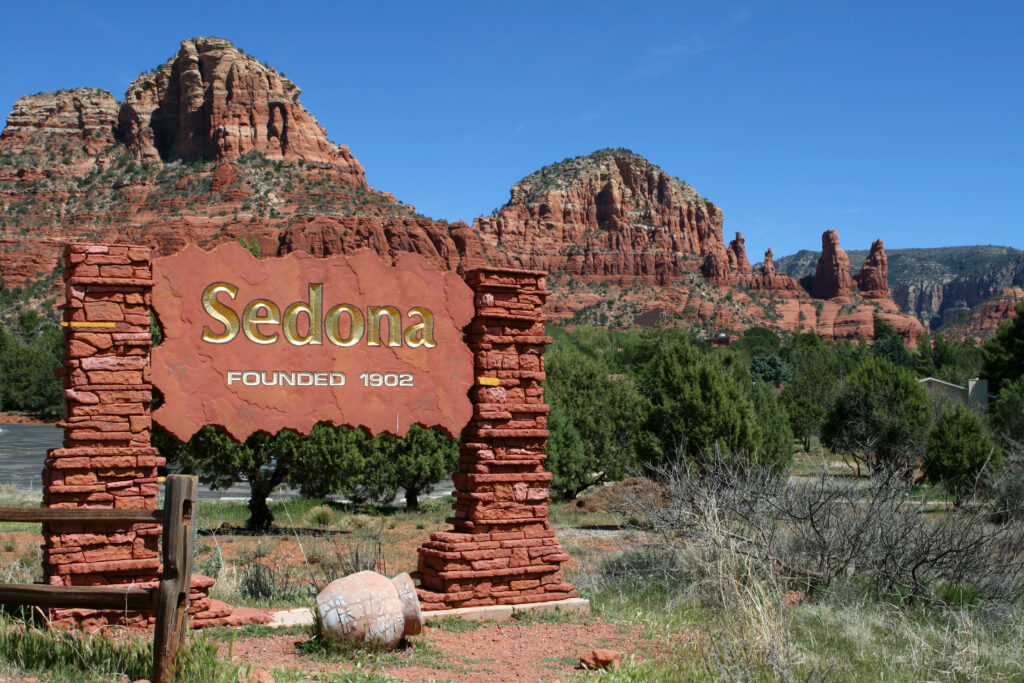
Sedona sits at the mouth of Oak Creek Canyon, where red and orange sandstone formations rise above juniper, pinyon pine, desert trails, and winding canyon roads.
It is one of those places that feels almost unreal the first time you see it.
Sedona is known for:
- Red rock formations
- World-class hiking
- Slickrock trails
- Vortex sites
- Oak Creek Canyon
- Slide Rock State Park
- West Fork Trail
- Chapel of the Holy Cross
- Jeep tours
- Art galleries
- Scenic drives
- Stargazing
- Day trips to Jerome, Flagstaff, and the Grand Canyon
A lot of visitors try to do Sedona as a single-day trip from Phoenix.
You can do that.
But you will mostly see the drive-up viewpoints and the most crowded areas.
Sedona is much better with at least two full days, and three to four days is even better if you want to hike, explore Oak Creek Canyon, visit a heritage site, take a Jeep tour, or add a day trip.
💡 Adventure Family Tip: Budget a minimum of two full days if hiking is part of your plan. Plan three to four days if you want Sedona, Oak Creek Canyon, a heritage site, and a day trip without feeling rushed.
Sedona at a Glance
Recommended Trip Length
For most first-time visitors, we recommend:
- 1 day: Quick highlights only
- 2 days: A better introduction with hiking and town time
- 3 days: Ideal for hiking, Oak Creek, and culture
- 4 days: Best if adding Jerome, Flagstaff, or a longer day trip
Closest Airports
The most common airport options are:
- Phoenix Sky Harbor International Airport: about 2 hours by car
- Flagstaff Pulliam Airport: about 45 minutes to 1 hour by car
Phoenix usually has the most flight options, while Flagstaff is closer and more scenic.
Elevation
Sedona sits around 4,350 feet, which makes it noticeably cooler than Phoenix.
That matters when you are packing.
A trip that starts hot in the Valley may feel cooler in Sedona, especially in the mornings, evenings, and winter months.
Do You Need a Car?
Yes.
Sedona is spread out, and most trailheads, scenic drives, heritage sites, and day trips require driving.
Uptown Sedona is walkable, but Sedona as a whole is not an easy car-free destination.
Understanding Sedona’s Layout
Sedona is compact, but where you stay still matters.
Most visitors choose between four main areas:
Uptown Sedona
Uptown is the most walkable and tourist-friendly area.
It is best for:
- First-time visitors
- Walkable dining
- Shops and galleries
- Easy evening strolls
- Classic Sedona energy
It is also one of the busiest and most expensive areas.
Stay here if you want convenience and do not mind crowds.
West Sedona
West Sedona feels more practical and local.
It is best for:
- Budget-conscious travelers
- Grocery stores
- Casual restaurants
- Easier access to many trailheads
- Lower lodging prices
It is not as scenic as Uptown, but it is very convenient.
Village of Oak Creek
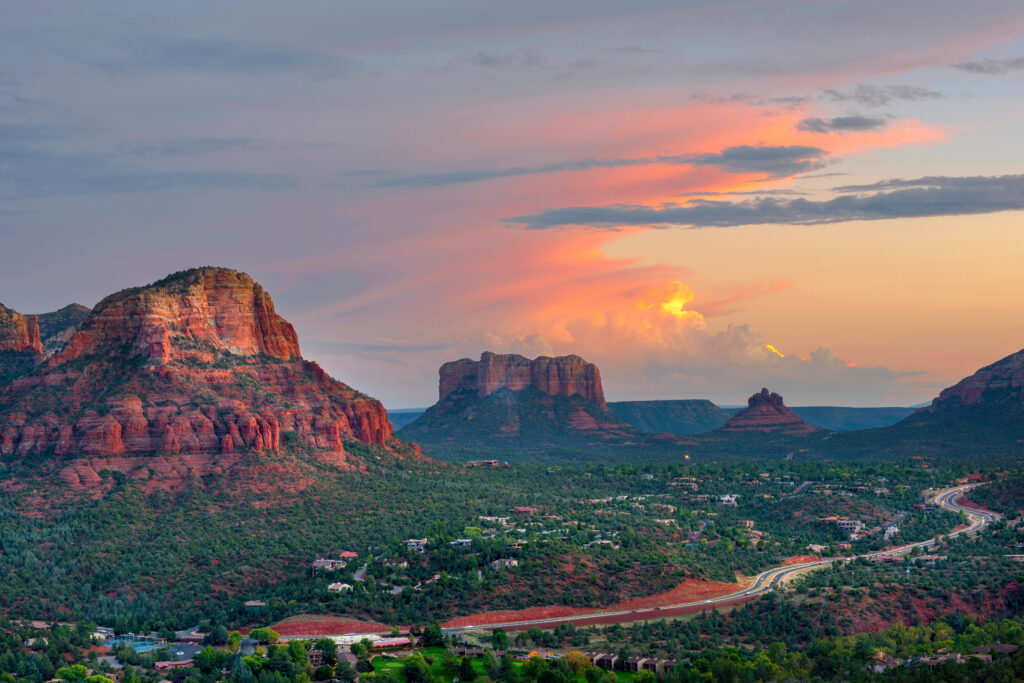
The Village of Oak Creek sits south of Uptown near Bell Rock and Courthouse Butte.
It is best for:
- A quieter base
- Mid-range lodging
- Bell Rock access
- Less tourist traffic
- Dark-sky evenings
This is a great option if you want to be close to some of Sedona’s most iconic formations without staying in the busiest part of town.
Oak Creek Canyon
Oak Creek Canyon is north of Sedona toward Flagstaff.
It is best for:
- Creek-side lodging
- Romantic stays
- Nature-focused trips
- Slide Rock access
- West Fork Trail access
- A quieter, more scenic setting
The tradeoff is that you will drive 15–25 minutes back into Sedona for many restaurants, shops, and trailheads.
Best Time to Visit Sedona
Sedona can be visited year-round, but each season feels different.
Winter
Winter is one of the quietest times to visit Sedona.
Expect:
- Smaller crowds
- Daytime highs often in the 50s and 60s
- Cold mornings and nights
- Occasional light snow on red rock
- Better lodging prices than peak season
Winter can be beautiful for hiking, photography, and travelers who want a slower trip.
Spring
Spring is one of the most popular times to visit Sedona.
Expect:
- Comfortable hiking temperatures
- Wildflowers in some areas
- Busy trailheads
- Heavy traffic
- Higher lodging prices
March and April can be especially crowded.
Book lodging early and start hikes early.
Summer
Summer is hot.
Expect:
- Highs often in the 90s or higher
- Intense sun on exposed slickrock
- Early morning hiking only
- Oak Creek swimming
- Slide Rock crowds
- Monsoon storms from roughly July through September
Summer can work, especially if you want creek time, but heat discipline is essential.
Fall
Fall may be the best overall season.
Expect:
- Cooling temperatures
- Beautiful hiking weather
- Fewer crowds after Labor Day
- Fall color along Oak Creek in October and November
- Great conditions for scenic drives
October is one of the strongest months for a Sedona trip.
💡 Safety Warning: Arizona’s monsoon season can bring sudden afternoon storms, flash flooding, and lightning risk on exposed slickrock. Check the forecast before canyon hikes and get off open rock when storms build.
Getting To and Around Sedona
Most visitors arrive by car.
From Phoenix, the drive is usually about two hours via I-17 North and Highway 179.
From Flagstaff, the drive is about 45 minutes to an hour, often through Oak Creek Canyon depending on your route.
Local Driving Tips
A few things to know:
- Sedona has a lot of roundabouts.
- Traffic can be heavy during peak seasons.
- Trailhead parking fills early.
- Cell service can drop outside developed areas.
- Some roads are rough and not suitable for standard rental cars.
- Highway 89A through Oak Creek Canyon can be affected by winter weather.
A rental car is the easiest way to explore Sedona.
You do not need 4WD for most core hikes and scenic areas, but certain roads and backcountry routes are better left to high-clearance vehicles or guided tours.
Trail Access, Parking, and the Red Rock Pass
Many Sedona trailheads are located on Coconino National Forest land.
Most standard Forest Service trailheads require a Red Rock Pass or an accepted alternative, such as the America the Beautiful Pass.
The Red Rock Pass commonly covers trailheads like:
- Cathedral Rock
- Devil’s Bridge
- Bell Rock
- Fay Canyon
- Courthouse Butte
- Other standard Coconino National Forest trailheads
But it does not cover everything.
Separate fees may apply at places like:
- Slide Rock State Park
- Red Rock State Park
- West Fork / Call of the Canyon
- Crescent Moon
- Campgrounds
- Certain developed day-use or concession-managed areas
💡 Good to Know: Do not assume one pass covers your entire Sedona trip. Trailheads, Arizona State Parks, swimming areas, and heritage sites may all have different access rules or fees.
Sedona Shuttle Tips
Sedona’s most popular trailheads can be difficult or impossible to access by private vehicle during certain times.
Cathedral Rock and Soldier Pass are the two trailheads where shuttle planning matters most.
Parking may close on certain days, commonly Thursday through Sunday, and visitors may need to use the free Sedona Shuttle from designated park-and-ride lots.
Shuttle routes, hours, and operating days can change, so always check the current Sedona Shuttle schedule before planning your hiking day.
This is especially important if you are trying to hike:
- Cathedral Rock
- Soldier Pass
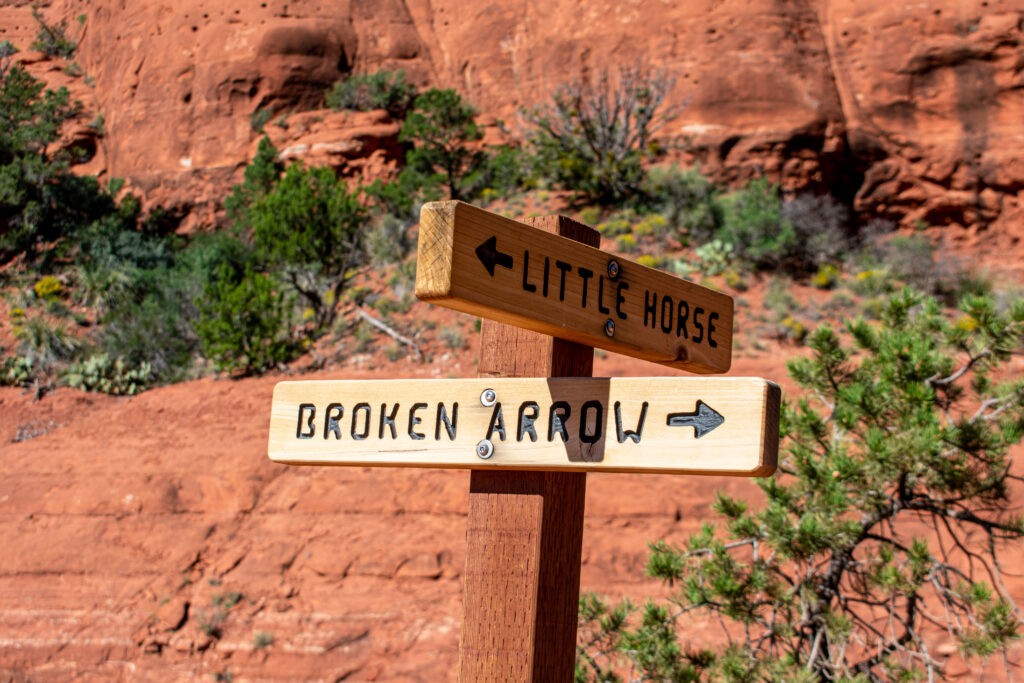
- Little Horse area
- Other shuttle-served trailheads
Do not wait until you are standing at a closed trailhead lot to figure out your shuttle plan.
Best Hikes in Sedona
Sedona is one of the best hiking destinations in the Southwest.
The challenge is not finding trails.
The challenge is choosing the right trail for your time, ability, weather, parking situation, and comfort with slickrock exposure.
Here are a few of the most important hikes to know about.
Cathedral Rock
Cathedral Rock is Sedona’s most iconic hike and one of the major vortex sites.
It is short, steep, and far more challenging than the mileage suggests.
The classic route climbs from the Back O’ Beyond / Cathedral Rock Trailhead to a saddle between the spires.
Expect:
- Short distance
- Steep slickrock
- Hands-on scrambling
- Real exposure near the top
- Huge sunset views
- Heavy crowds
This is one of Sedona’s best sunset hikes for confident hikers, but it is not ideal for young kids, pets, wet weather, icy conditions, or anyone uncomfortable with steep rock.
Devil’s Bridge
Devil’s Bridge is one of the most photographed spots in Sedona.
The trail leads to a dramatic natural sandstone arch that visitors can walk out onto.
The distance depends on which access route you choose.
Some routes are much shorter but require high-clearance vehicle access, while others add mileage from paved trailheads.
Expect crowds, especially for the classic bridge photo.
Start early.
Bell Rock and Courthouse Butte
Bell Rock is one of the easiest ways to experience classic Sedona scenery.
It is also one of the major vortex sites.
You can scramble partway up Bell Rock for views, walk the full loop around Bell Rock and Courthouse Butte, or enjoy a shorter outing without committing to a harder trail.
This is a great first hike for many visitors.
It is also one of the better sunset options if you want big views without the shuttle complication.
Boynton Canyon
Boynton Canyon is a longer, more shaded hike and one of the four traditional vortex sites.
It feels different from the more exposed slickrock hikes because the trail winds through forest and canyon walls.
This is a good option for visitors who want a quieter and more committed hiking experience.
Respect private-property boundaries near resort areas and stay on the public trail corridor.
Fay Canyon
Fay Canyon is one of the best easier hikes in Sedona.
It is mostly flat, partially shaded, and family-friendly.
There is also an optional arch spur that adds more adventure and a better viewpoint.
This is a good choice when the famous trails feel too crowded or when you want a shorter hike with strong scenery.
Soldier Pass
Soldier Pass is one of Sedona’s most varied hikes.
Along the route, you may see:
- Devil’s Kitchen sinkhole
- Seven Sacred Pools
- Soldier Pass Arch
- Red rock scenery
- Seasonal water features
Parking and shuttle rules can make this hike tricky, so check current access before you go.
The premium guide includes the full trail cards with distance, elevation gain, route options, access notes, crowd strategy, photography tips, and safety warnings for Sedona’s best hikes.
👉 Grab the Ultimate Sedona Arizona Travel Guide for the full trail-by-trail hiking breakdown.
Sedona’s Four Vortex Sites
Sedona is famous for its vortex sites.
In Sedona’s New Age tradition, a vortex is described as a place where the Earth’s energy is believed to be especially strong.
Some visitors come for meditation, reflection, energy work, or spiritual interest.
Others simply enjoy the views.
The four traditional Sedona vortex sites are:
- Airport Mesa
- Cathedral Rock
- Boynton Canyon
- Bell Rock
Whether or not the energy side resonates with you, all four are worth knowing because they are also beautiful hikes or viewpoints.
Airport Mesa
Airport Mesa is one of the easiest vortex sites to access and one of Sedona’s best sunset viewpoints.
It gives broad views over town and surrounding red rock formations.
Cathedral Rock
Cathedral Rock is both a major hike and a vortex site.
It is best for visitors comfortable with steep slickrock scrambling.
Boynton Canyon
Boynton Canyon combines canyon hiking with vortex-site interest.
It is longer and quieter than some of Sedona’s more famous hikes.
Bell Rock
Bell Rock is one of the most approachable vortex sites.
It is easy to visit from the Village of Oak Creek area and works well for first-time visitors.
💡 Good to Know: Chapel of the Holy Cross is often described by locals and guides as a fifth vortex site, even though it is not one of the traditional four. It is worth visiting for the architecture and views either way.
Oak Creek Canyon
Oak Creek Canyon is one of the best parts of a Sedona trip.
Highway 89A runs north from Sedona through Oak Creek Canyon toward Flagstaff.
The drive is about 26 miles and includes:
- Sandstone cliffs
- Creek views
- Switchbacks
- Forested canyon scenery
- Fall color in October and November
- Oak Creek Vista
- Access to Slide Rock
- Access to West Fork
This drive is especially beautiful in fall.
It is also a great way to pair Sedona with Flagstaff or make your arrival/departure day feel scenic.
Oak Creek Vista
Oak Creek Vista sits near the top of the canyon switchbacks.
It is a worthwhile overlook even if you are not continuing all the way to Flagstaff.
Seasonally, you may also find Native American vendors at the viewpoint.
Slide Rock State Park
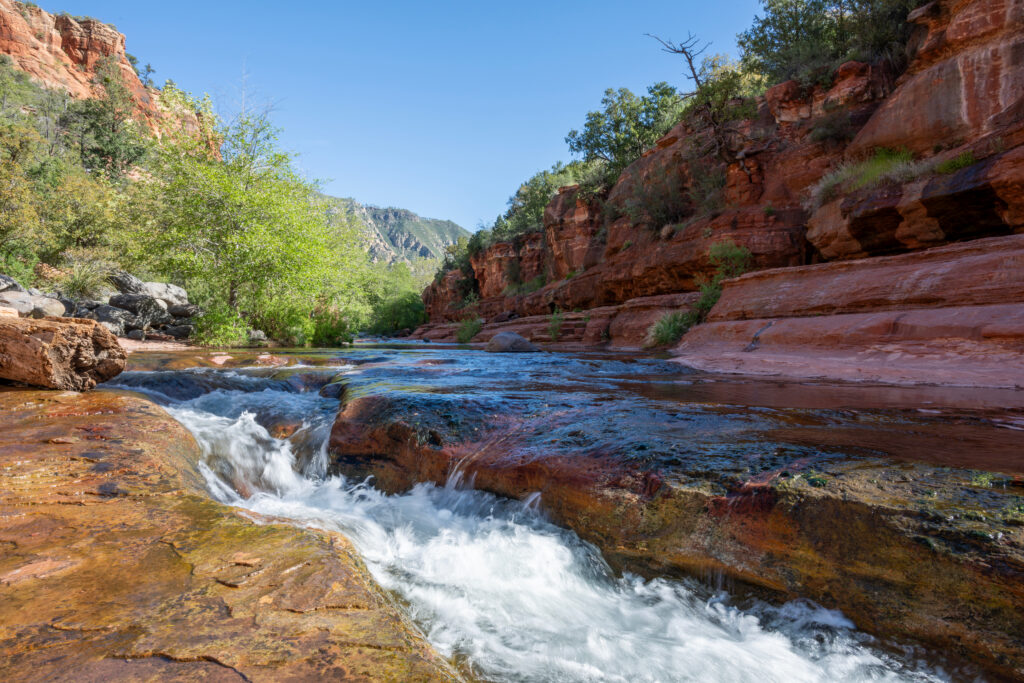
Slide Rock State Park is one of the most popular water stops near Sedona.
It is located about 7 miles north of town in Oak Creek Canyon.
The main attraction is a natural sandstone water slide where Oak Creek flows over slick rock into swimming areas.
It is fun, unique, and very popular with families.
But it requires planning.
A few things to know:
- It charges a separate Arizona State Parks entrance fee.
- It is not covered by the Red Rock Pass.
- No reservations are available.
- Parking fills early.
- When the lot is full, entry may close until space opens.
- Drop-offs, walk-ins, and bicycles are not allowed.
- Pets are not allowed May 1 through September 30.
- Water is cold, even in summer.
- Water shoes make a big difference.
Slide Rock is one of Sedona’s best family stops, but summer weekends can be intense.
Go early.
West Fork Trail
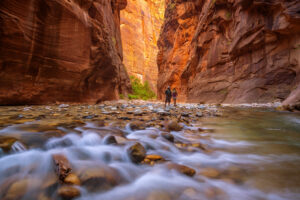
West Fork of Oak Creek is often considered one of the most beautiful canyon hikes in the Sedona area.
The trail follows Oak Creek through a narrowing canyon with tall walls, trees, shade, and repeated creek crossings.
It is very different from Sedona’s exposed red rock hikes.
Expect:
- About 7 miles round trip for the full hike
- Multiple creek crossings
- Wet feet
- Separate day-use fee
- Big crowds on weekends
- Gorgeous canyon scenery
- Flash-flood risk during monsoon season
West Fork is especially beautiful in fall, but it is popular for a reason.
Go on a weekday morning when possible.
Heritage and Culture in Sedona
Sedona’s history goes far beyond red rocks and vortex tourism.
The region includes ancient Sinagua heritage sites, modern architecture, art communities, historic districts, and cultural places that deserve respect.
Palatki and Honanki Heritage Sites
Palatki and Honanki preserve Sinagua cliff dwellings, pictographs, and structural remains dating roughly 1100–1400 AD.
These are not casual photo backdrops.
They are irreplaceable cultural resources.
Important reminders:
- Never touch rock art.
- Never touch structural walls.
- Stay on designated paths.
- Follow guide instructions.
- Respect current reservation requirements.
- Check road conditions before visiting.
Palatki is generally the more accessible of the two and typically involves a guided visit.
Honanki is more self-guided and may involve rougher road access.
Chapel of the Holy Cross
Chapel of the Holy Cross is one of Sedona’s most recognizable landmarks.
Built into the red rock in 1956, the chapel offers dramatic architecture and beautiful views.
Entry is free, but parking can be difficult.
Go early if you want a quieter visit.
Uptown Sedona
Uptown is the most walkable part of Sedona.
You will find:
- Shops
- Galleries
- Restaurants
- Souvenirs
- Tour offices
- Views from town
- Evening strolls
It is touristy, but it is still worth experiencing, especially on a first trip.
Tlaquepaque Arts and Crafts Village
Tlaquepaque is a Spanish colonial-style outdoor shopping and arts village near Uptown.
It is a good place for:
- Art galleries
- Dining
- Shaded walking
- Midday breaks
- Couples trips
- A slower cultural stop between hikes
Where to Stay in Sedona
Sedona lodging can vary dramatically by area, season, and budget.
Instead of choosing only by hotel name, start by choosing the right area.
Best for First-Time Visitors
Stay in Uptown Sedona if you want the simplest, most walkable experience.
You will pay more, but you will be close to shops, restaurants, and the classic Sedona strip.
Best for Budget Travelers
Stay in West Sedona.
It is more practical than scenic, but it often has better prices, grocery access, casual food, and convenient trailhead access.
Best for Quiet Trail Access
Stay in the Village of Oak Creek.
This area is quieter and close to Bell Rock, Courthouse Butte, and the southern red rock formations.
Best for Romantic or Nature-Focused Trips
Stay in Oak Creek Canyon.
This area is more expensive but gives you creek-side settings, forested scenery, and easier access to Slide Rock and West Fork.
Book early for March and April, because Sedona’s peak season can sell out popular properties months in advance.
Where to Eat in Sedona
Sedona has a strong food scene for a town its size.
You will find Southwestern flavors, prickly pear, local produce, casual cafes, upscale dining, and plenty of restaurants with red rock views.
The strongest dining areas are:
Uptown
Best for walkable dinner after sightseeing or shopping.
Expect crowds and higher prices.
Tlaquepaque
Best for a more scenic dinner or gallery-and-meal combination.
This is a good choice for couples or a slower evening.
West Sedona
Best for more casual, local-feeling food and easier grocery access.
This is also a good place to stock up on snacks, trail food, and water.
💡 Food Tip: Pack trail snacks and water before you leave for hikes. Most trailheads and heritage sites do not have food available.
Tours and Adventure in Sedona
Sedona is one of the best places in Arizona for guided outdoor experiences.
Jeep Tours
Jeep tours are a classic Sedona experience.
They can take you into backcountry areas that standard rental cars should not attempt.
Tours vary from scenic sightseeing routes to very bumpy off-road adventures.
They are especially useful if you want local geology, history, and vortex context without trying to navigate rough roads yourself.
Mountain Biking
Sedona has a serious mountain biking scene.
The same red rock and slickrock terrain that makes hiking beautiful also makes biking exciting.
Routes range from beginner-friendly flow trails to technical slickrock routes with real exposure.
Rent from a local bike shop and choose a trail that matches your skill level.
Hot Air Ballooning
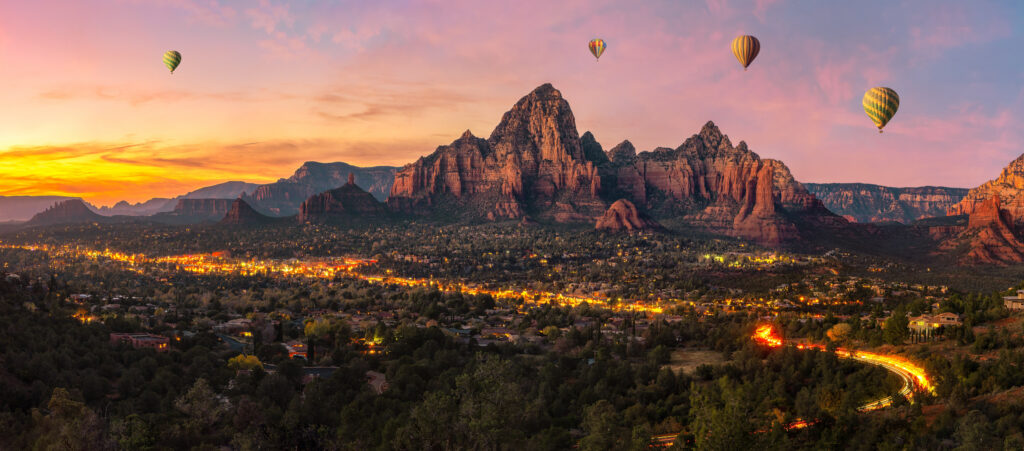
Sunrise hot air balloon rides are a memorable way to see Sedona’s red rock formations from above.
Flights are weather-dependent and can be canceled if winds are not safe.
Stargazing
Sedona is a certified International Dark Sky Community, and the nearby Village of Oak Creek also has Dark Sky certification.
That means Sedona can be surprisingly good for stargazing for a town this popular.
Bring a red-light headlamp, get away from bright parking areas, and give your eyes time to adjust after sunset.
Scenic Drives and Day Trips from Sedona
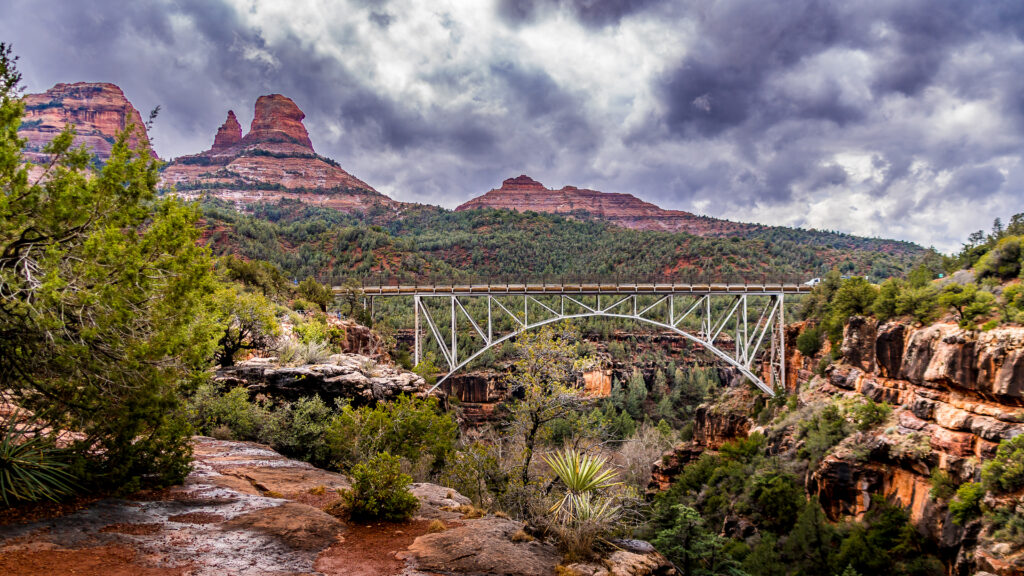
Sedona works well on its own, but it also pairs beautifully with nearby Arizona destinations.
Red Rock Scenic Byway
Highway 179 connects the Village of Oak Creek area with Sedona.
It passes some of the region’s most iconic formations, including Bell Rock and Courthouse Butte.
This is one of the best first drives for new visitors.
Oak Creek Canyon to Flagstaff
The drive through Oak Creek Canyon to Flagstaff is one of the most beautiful drives in the region.
It is especially good in fall.
Schnebly Hill Road
Schnebly Hill Road offers dramatic backcountry views, but it is rough.
Do not take a standard rental sedan beyond the easier first stretch.
Use a proper high-clearance vehicle or take a guided tour.
Jerome
Jerome is about 45 minutes from Sedona.
It is a former copper-mining boomtown turned artsy hillside town with views over the Verde Valley.
This is one of the easiest Sedona day trips.
Flagstaff
Flagstaff is about 45 minutes to 1 hour away, depending on the route.
It pairs naturally with the Oak Creek Canyon drive.
Montezuma Castle National Monument
Montezuma Castle is a well-preserved Sinagua cliff dwelling and an easy add-on to a Verde Valley or Jerome day.
Grand Canyon South Rim
The Grand Canyon South Rim is doable from Sedona, but it is a long day.
Plan on about 2.5 hours each way before you spend any time at the rim.
This is not a casual half-day add-on.
An overnight near the Grand Canyon gives you a much better experience.
How Many Days Do You Need in Sedona?
One Day
With one day, keep it simple.
Focus on:
- Bell Rock or a short hike
- Chapel of the Holy Cross
- Uptown evening walk
- A scenic drive
This gives you a taste of Sedona, but it will feel quick.
Two Days
Two days is a much better introduction.
You can add:
- Cathedral Rock at sunset
- Slide Rock or West Fork
- Bell Rock
- Uptown or Tlaquepaque
Three Days
Three days is ideal for many first-time visitors.
You can include:
- A signature hike
- Oak Creek Canyon
- A heritage site
- A Jeep tour
- A sunset viewpoint
- Town time
Four Days
With four days, you can slow down and add:
- Jerome
- Flagstaff
- A longer hike
- More vortex sites
- A second Oak Creek stop
- More photography time
The paid guide includes realistic itinerary options so you do not have to guess how to organize the trip.
Is Sedona Good for Families?
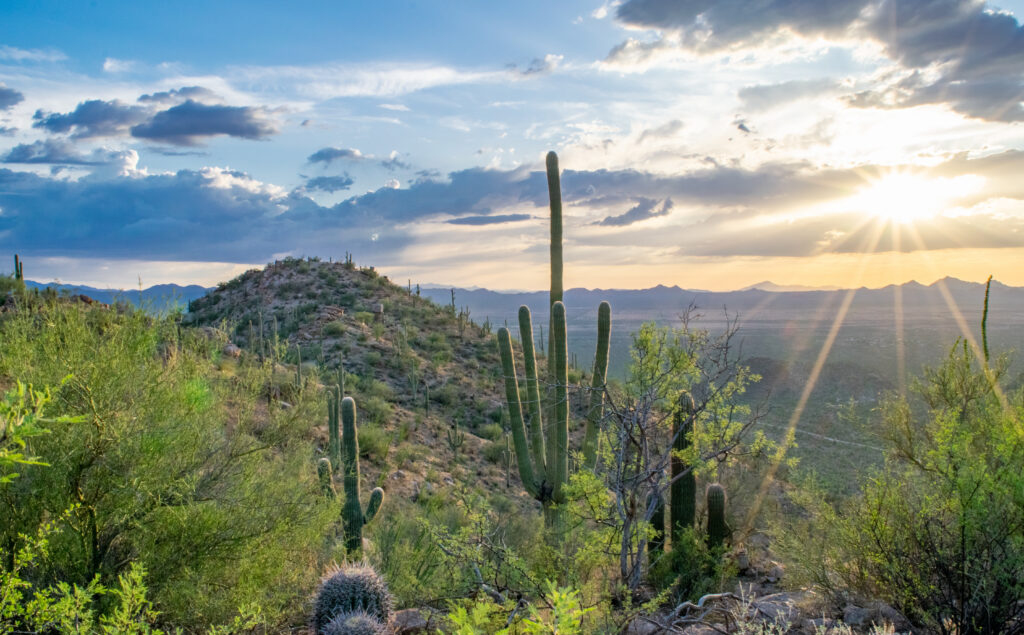
Yes, Sedona can be great for families — with the right plan.
Family-friendly options include:
- Bell Rock
- Fay Canyon
- Slide Rock
- Red Rock State Park
- Uptown strolls
- Tlaquepaque
- Chapel of the Holy Cross
- Easy scenic drives
- Jeep tours
- Oak Creek stops
The biggest family challenges are:
- Heat
- Exposed trails
- Scrambles
- Crowded parking
- Long waits at popular spots
- Creek crossings
- Slippery rocks
- Choosing hikes that are too hard
Save steep scramble hikes like Cathedral Rock and Devil’s Bridge for older kids, teens, and adults who are comfortable with exposure.
What to Pack for Sedona
General Sedona Trip
Bring:
- Sun hat
- Sunglasses
- High-SPF sunscreen
- Sturdy hiking shoes
- Refillable water bottles
- Layers
- Camera
- Portable phone charger
Hiking Trip
Bring:
- Daypack
- 2+ liters of water per person
- Trail snacks
- Offline maps
- Trekking poles if helpful
- First aid basics
Water Activities
For Slide Rock, West Fork, or Oak Creek stops, bring:
- Water shoes
- Quick-dry towel
- Change of clothes
- Dry bag
- Waterproof phone pouch
Families With Kids
Bring:
- Extra snacks
- Extra water
- Sun shade
- Stroller for Uptown or Tlaquepaque
- Patience for parking and crowds
Sedona Safety Tips
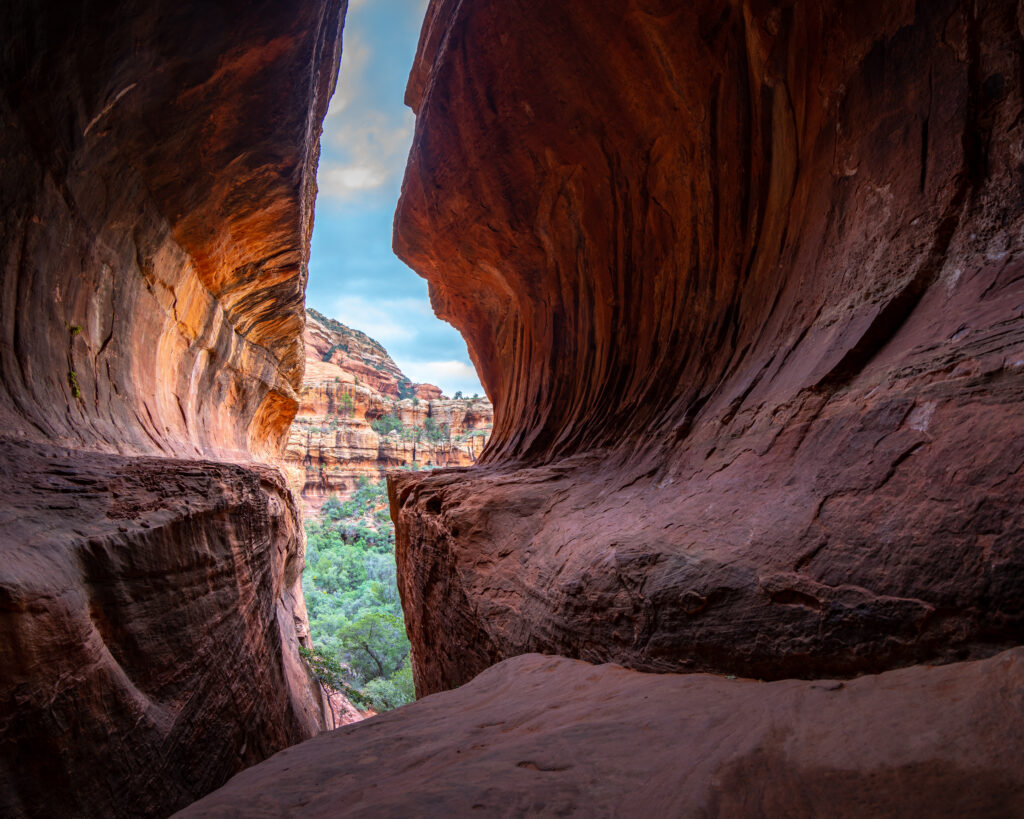
Sedona is beautiful, but it is not a theme park.
Take the terrain seriously.
Heat
Heat illness is a real risk from May through September.
Plan hikes early or late.
Avoid exposed slickrock in the middle of the day.
Carry more water than you think you need.
Flash Floods
Monsoon storms can create flash-flood danger in canyons like West Fork.
Check the forecast the morning of your hike.
Do not enter canyon terrain when storms are possible.
Slickrock Exposure
Cathedral Rock and Devil’s Bridge both involve sections where exposure matters.
Turn around if the scramble feels beyond your comfort level.
Wet or icy rock can be dangerous.
Lightning
Exposed red rock formations are not where you want to be when storms build.
Get off open slickrock at the first sign of lightning risk.
Cell Service
Cell service can be unreliable outside developed areas.
Download offline maps before heading out.
Common Sedona Planning Mistakes
Avoid these:
- Treating Sedona as only a one-day Phoenix add-on
- Not checking shuttle schedules before hiking Cathedral Rock or Soldier Pass
- Skipping the Red Rock Pass
- Assuming Slide Rock and West Fork are covered by the Red Rock Pass
- Starting hikes too late in summer
- Wearing poor footwear on slickrock
- Taking young kids onto exposed scrambles
- Driving rough roads in a standard rental car
- Not reserving Jeep tours or dinners in peak season
- Planning the Grand Canyon as a casual half-day trip
- Forgetting that Sedona can still be crowded even outside summer
A little planning makes Sedona much easier and more enjoyable.
Sedona FAQ
How many days do you need in Sedona?
Two to four days is best for most visitors.
Two days gives you a strong introduction, while three to four days lets you add Oak Creek Canyon, a heritage site, a Jeep tour, and a day trip.
Is Sedona expensive?
Sedona can be expensive, especially in spring and fall.
West Sedona is usually more budget-friendly, while Uptown and Oak Creek Canyon tend to cost more.
Do you need a 4WD vehicle in Sedona?
No, not for the core hikes and scenic areas.
A standard car works for most first-time visitors, but rough roads like Schnebly Hill Road, parts of the Devil’s Bridge approach, and some heritage-site access roads may require high-clearance or 4WD.
What is a Sedona vortex?
A vortex is a place believed by some to have unusually strong Earth energy.
Whether or not you believe in the energy side, Sedona’s traditional vortex sites are also beautiful hikes and viewpoints.
Is Sedona good for kids?
Yes, with the right trail choices.
Bell Rock, Fay Canyon, Slide Rock, Red Rock State Park, Uptown, Tlaquepaque, and Jeep tours can all work well for families.
Can you visit the Grand Canyon from Sedona?
Yes, but it is a long day.
The South Rim is about 2.5 hours each way, so an overnight near the Grand Canyon is better if you want a slower experience.
What is the best month to visit Sedona?
October is one of the best all-around months because temperatures are cooler, crowds begin thinning, and Oak Creek Canyon may have fall color.
January and February are quieter, while March and April are beautiful but very busy.
Looking for the Complete Sedona Arizona Guide?
This free article gives you a strong starting point.
But the real planning questions begin when you start building your actual trip:
Which hikes are worth your limited time?
How do you plan around the shuttle?
Which vortex sites should you visit?
Which trail is best for sunset?
Should you stay in Uptown, West Sedona, Village of Oak Creek, or Oak Creek Canyon?
How do you visit Slide Rock without wasting half the day in parking traffic?
Is West Fork worth the separate fee?
Which heritage site should you prioritize?
Can you add the Grand Canyon without making the trip exhausting?
That is exactly what our Ultimate Sedona Arizona Travel Guide 2026 is designed to solve.
Inside the complete premium guide, you’ll find:
- Sedona trip-planning overview
- Sedona at a glance
- Best seasons and timing
- Detailed lodging-area breakdown
- Red Rock Pass and trail access guidance
- Sedona shuttle planning
- 20+ hikes and trail cards
- Cathedral Rock planning
- Devil’s Bridge route options
- Bell Rock and Courthouse Butte details
- Boynton Canyon information
- Fay Canyon planning
- Soldier Pass guidance
- All four major vortex sites
- Oak Creek Canyon chapter
- Slide Rock State Park information
- West Fork Trail planning
- Red Rock State Park notes
- Palatki and Honanki heritage-site guidance
- Chapel of the Holy Cross
- Uptown and Tlaquepaque
- Where to stay by area
- Where to eat planning
- Jeep tours and adventure options
- Mountain biking, ballooning, and stargazing
- Scenic drives and day trips
- Weather and outdoor safety
- What to pack
- Sample itineraries
- Budget planning
- Common mistakes to avoid
- Sedona FAQ
- Quick-reference final checklist
- Our real first-hand recommendations
It is designed to help you stop piecing together your Sedona trip from dozens of websites and start planning with confidence.
👉 Grab the complete Ultimate Sedona Arizona Travel Guide in our shop and plan your red rock adventure with confidence.
We hope this guide helps you plan an unforgettable trip to Sedona, Arizona.
✨ Keep Adventuring, Keep Exploring, and we’ll see you on the next Adventure! ✨